A look at Boynton’s business ads from 1914 shows a town grounded in farming and steadily growing into a permanent community.
Plenty of Cheap Land
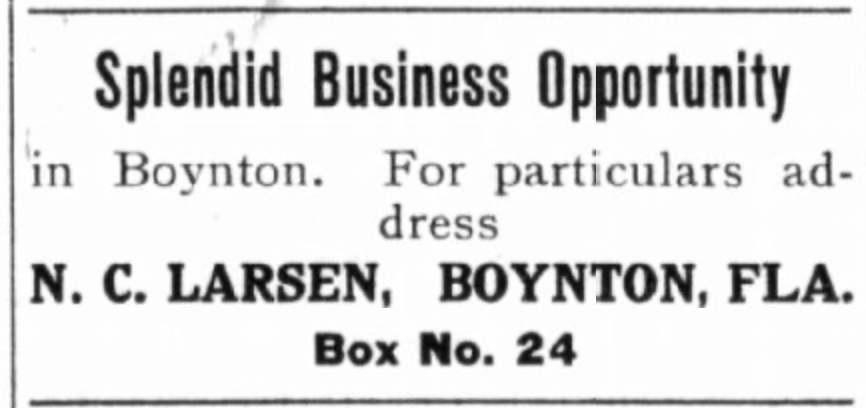
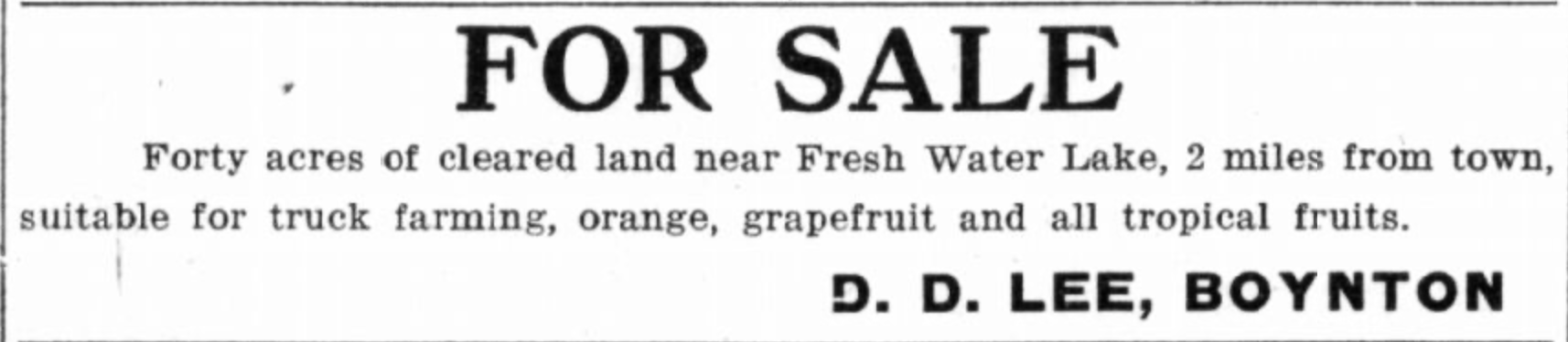
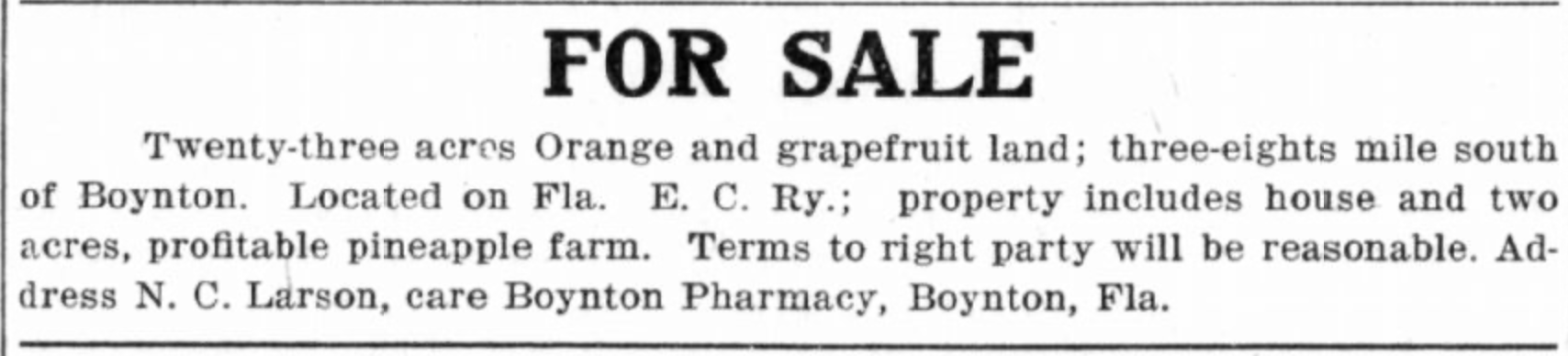
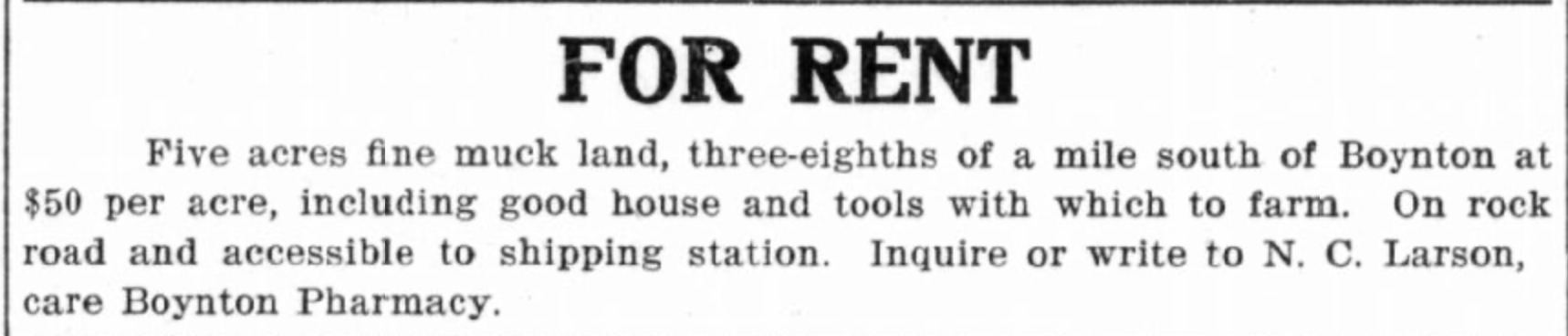
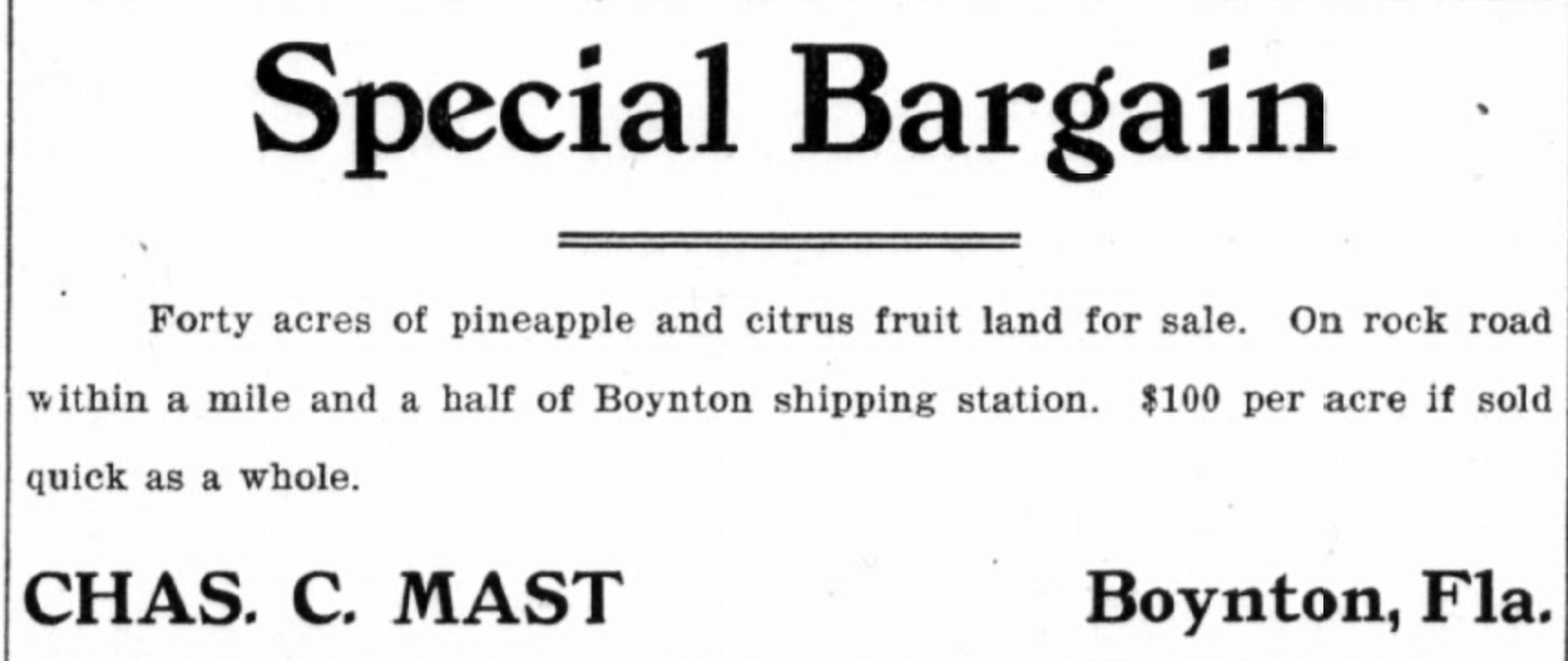
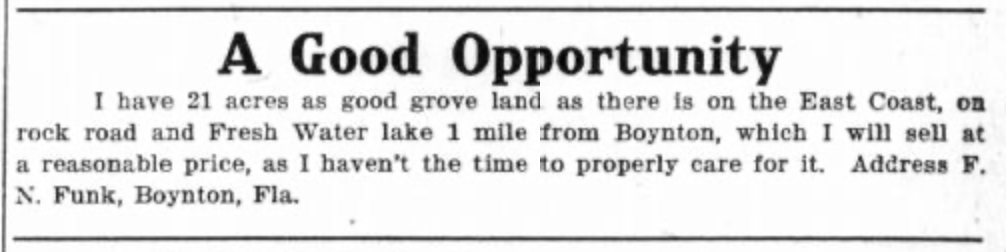
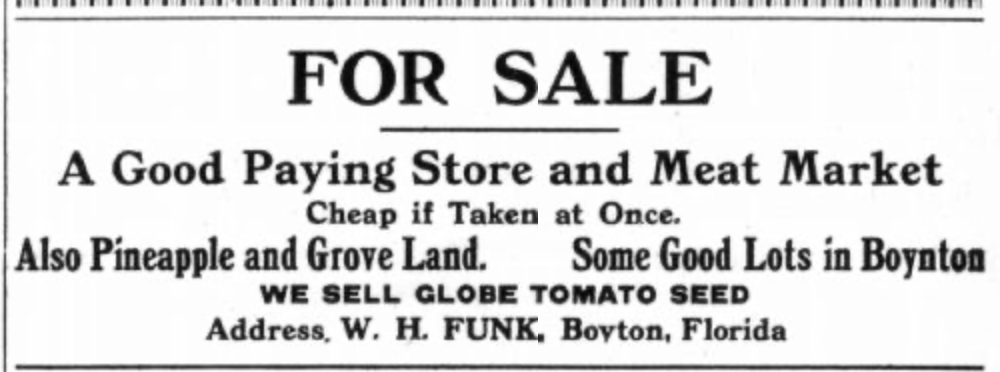
Land was actively being bought, sold, and rented. D. D. Lee offered 40 acres near Fresh Water Lake (Lake Boynton) suited for truck farming and citrus, while Chas. C. Mast promoted pineapple and citrus land close to the shipping station. N. C. Larsen handled grove property and muck land, reflecting the demand for productive acreage.
Clearing the Land
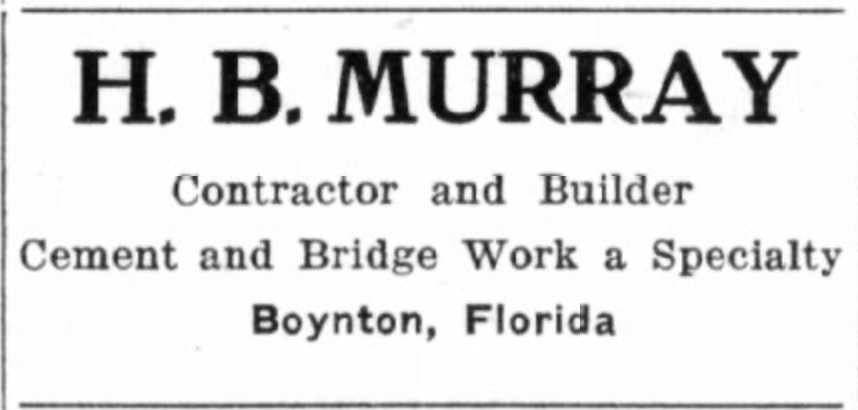
Supporting this farm economy were essential local services. A. L. Fuller provided heavy hauling, W. F. Riddle managed teaming and lighterage for muck and marl, and contractor H. B. Murray helped transform cleared land into working farms and homes by building homes and even bridges.
Shopkeepers
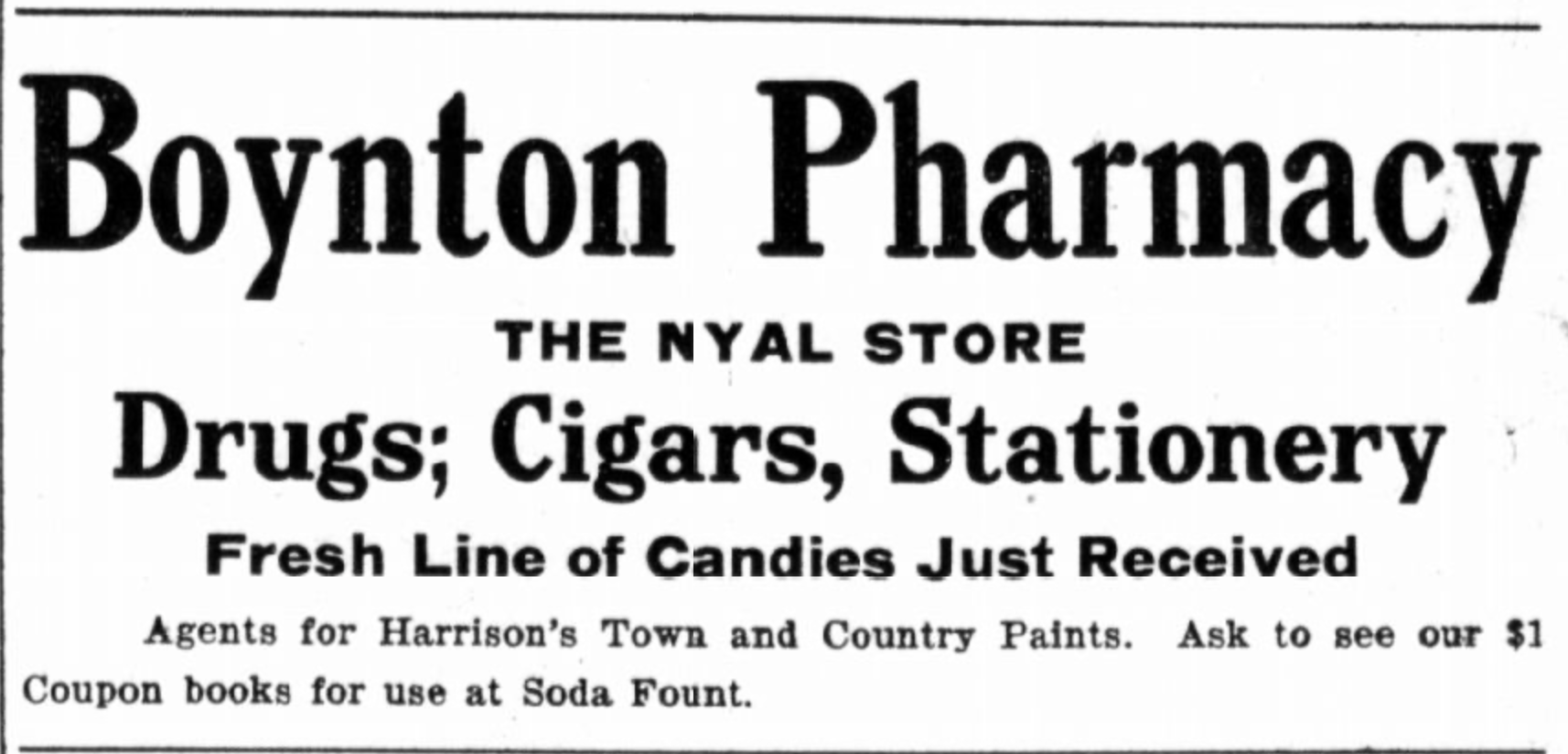
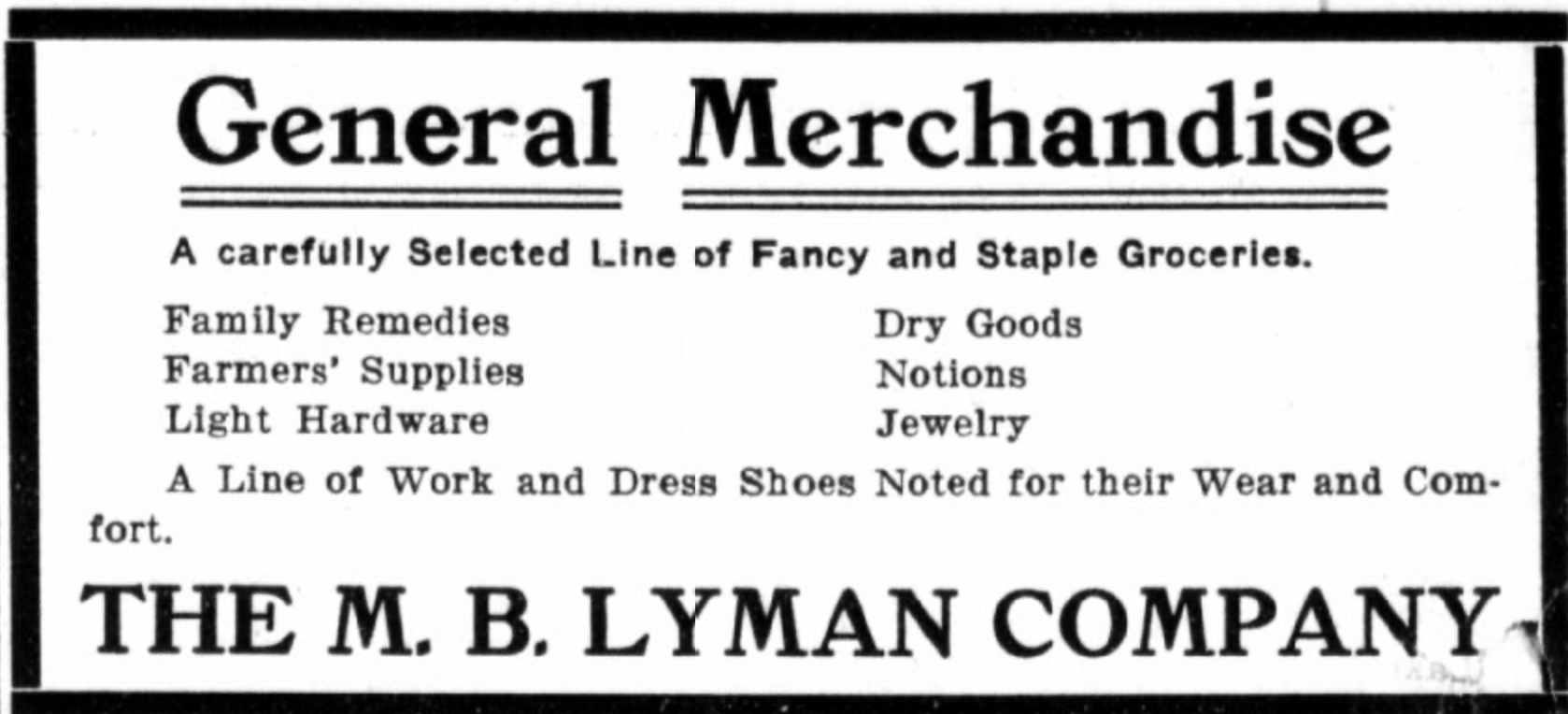
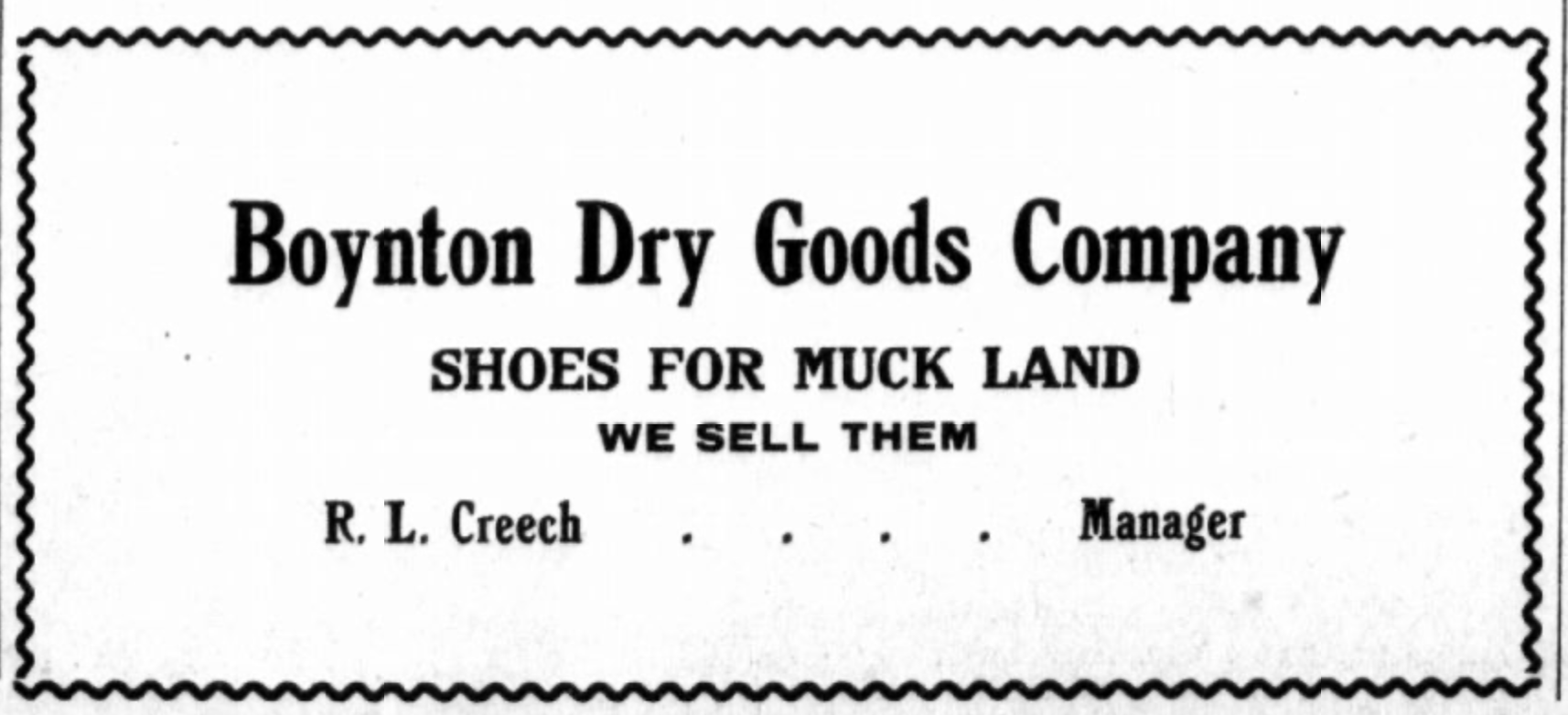
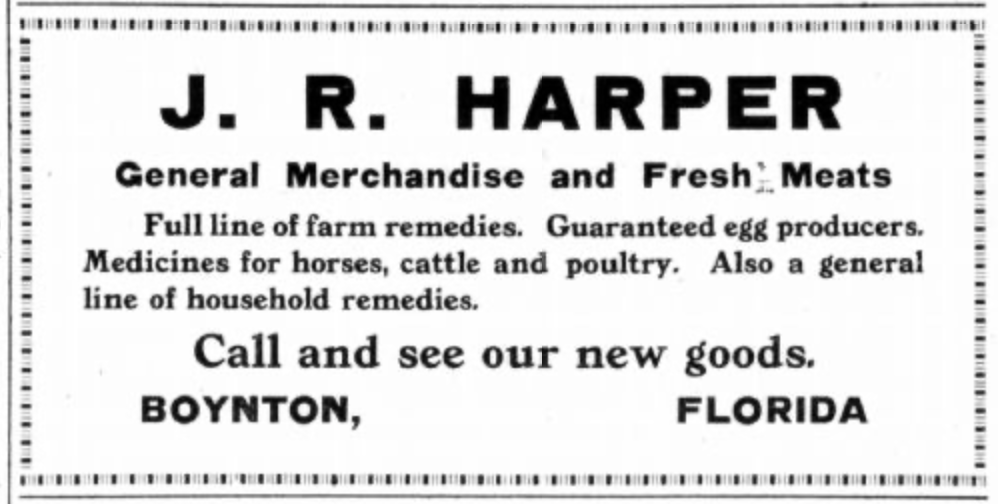
Merchants supplied both household and agricultural needs. J. R. Harper sold general merchandise, fresh meats, and livestock remedies, while the M. B. Lyman Company stocked groceries, dry goods, shoes, and hardware. The Boynton Pharmacy — the Nyal Store — carried medicines, paints, cigars, stationery, and candy.
Rooms for Rent
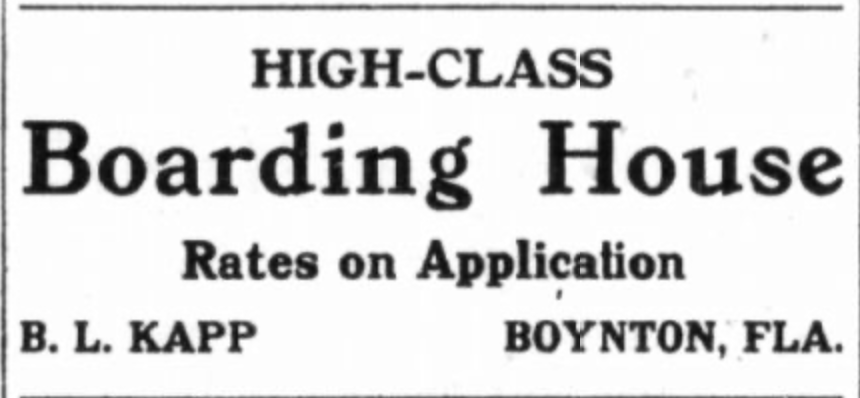
Hospitality and everyday life were also part of the picture. Hotel Vera, operated by J. F. Triplett and W. G. Keller, provided lodging and meals, while Holmes’ Amusement Parlor offered pool and billiards. Charlie A. Carter sold sprouted coconuts and even advertised a small bachelor home.
Early Developers
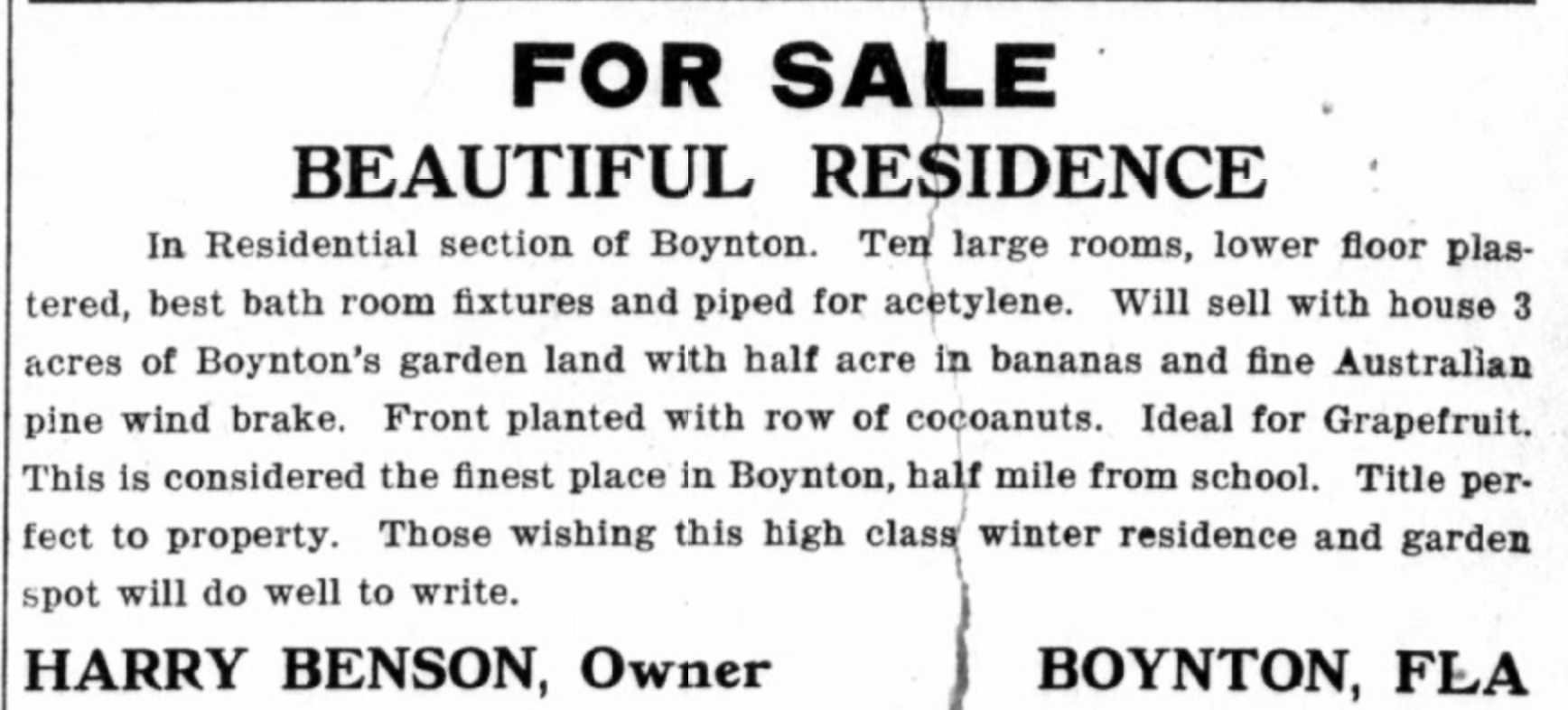
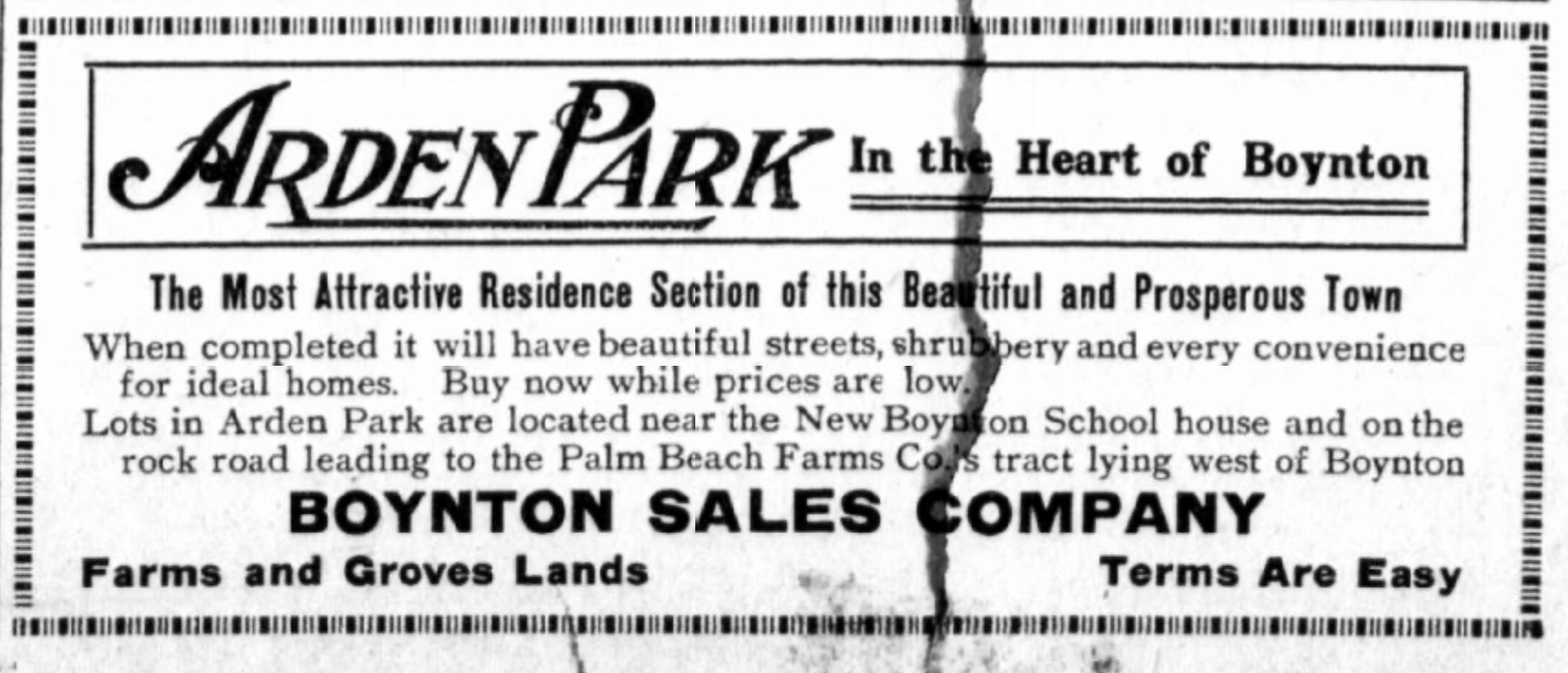
Developers were promoting Boynton’s future. Arden Park was marketed as a planned residential section near the school, and Harry Benson offered a winter residence on garden land.
These ads reflect a working agricultural town supported by tradesmen, merchants, builders, and land developers, a place where both business and community life were firmly taking hold.
Source: January 8, 1914 Lake Worth Herald