Boynton Beach’s Soap Box Derby: A Family Sport

For a generation of Boynton Beach children, the Soap Box Derby was a familiar summer event. Boys built gravity-powered cars, local businesses sponsored them, families followed the preparations, and crowds gathered to watch the races. Although the contestants were boys under the national rules of the time, the Derby involved parents and siblings, merchants, civic organizations, volunteers and spectators from communities throughout South Palm Beach County.

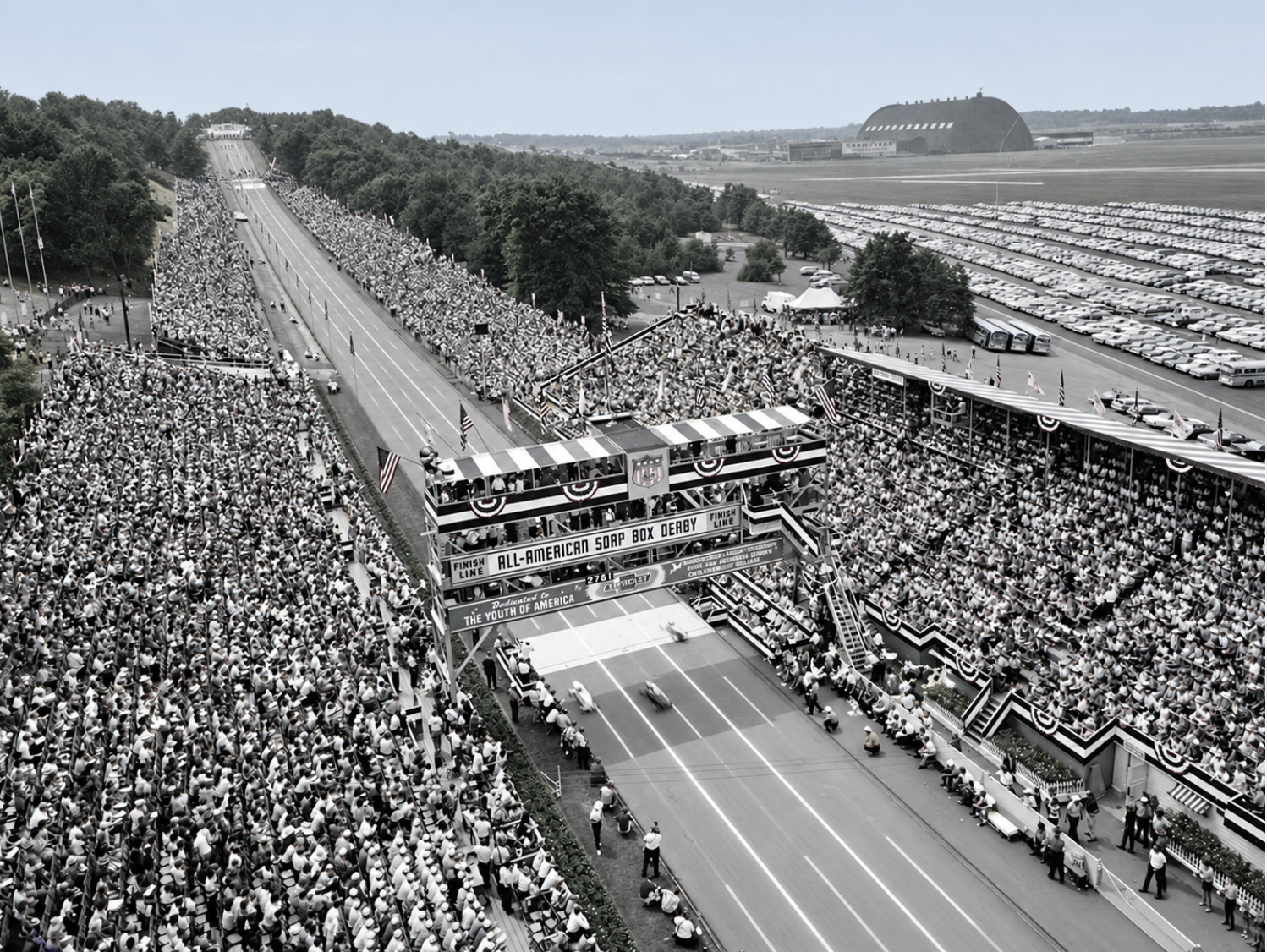
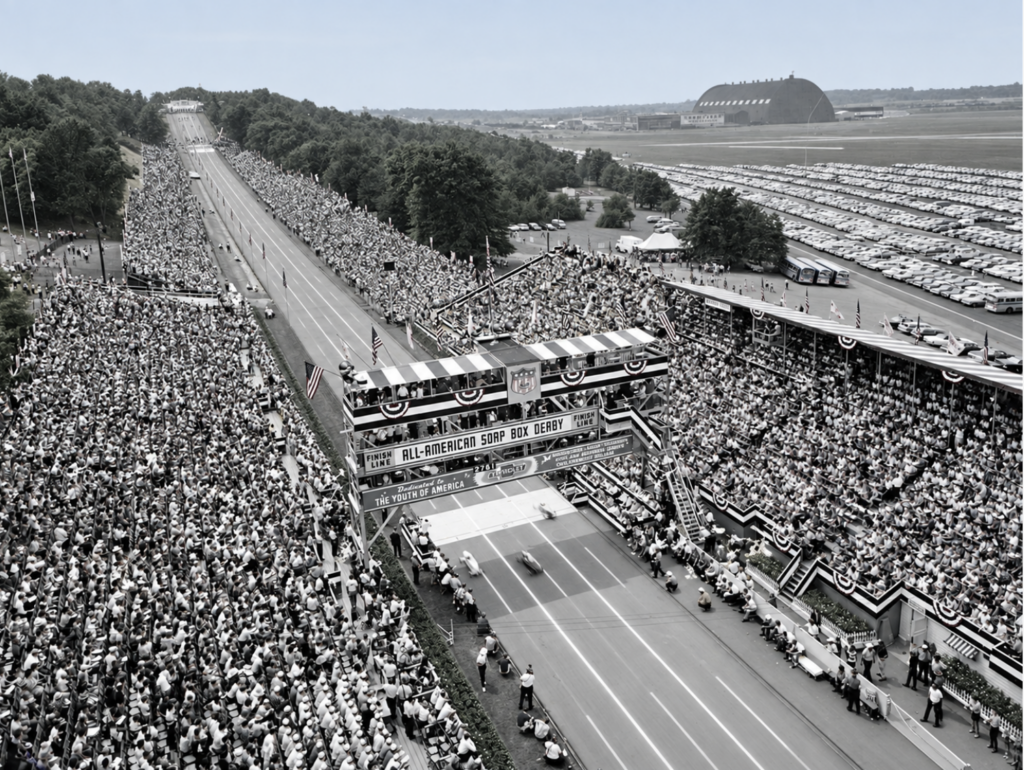
Boynton Beach joined the national Soap Box Derby program in 1963, thirty years after the first informal races that led to the competition. The Derby began in Dayton, Ohio, in 1933,  Chevrolet soon became involved, and the first All-American Soap Box Derby was held in Dayton in 1934. The national championship moved to Akron the following year, and Derby Downs opened there in 1936. By the postwar years, sanctioned local races across the country gave young builders and drivers the opportunity to compete for a trip to the championship in Akron.

The program combined a child’s building project and competition with family participation, local business sponsorship and the work of civic organizations. Boynton Beach’s Soap Box Derby soon reflected all of those elements.
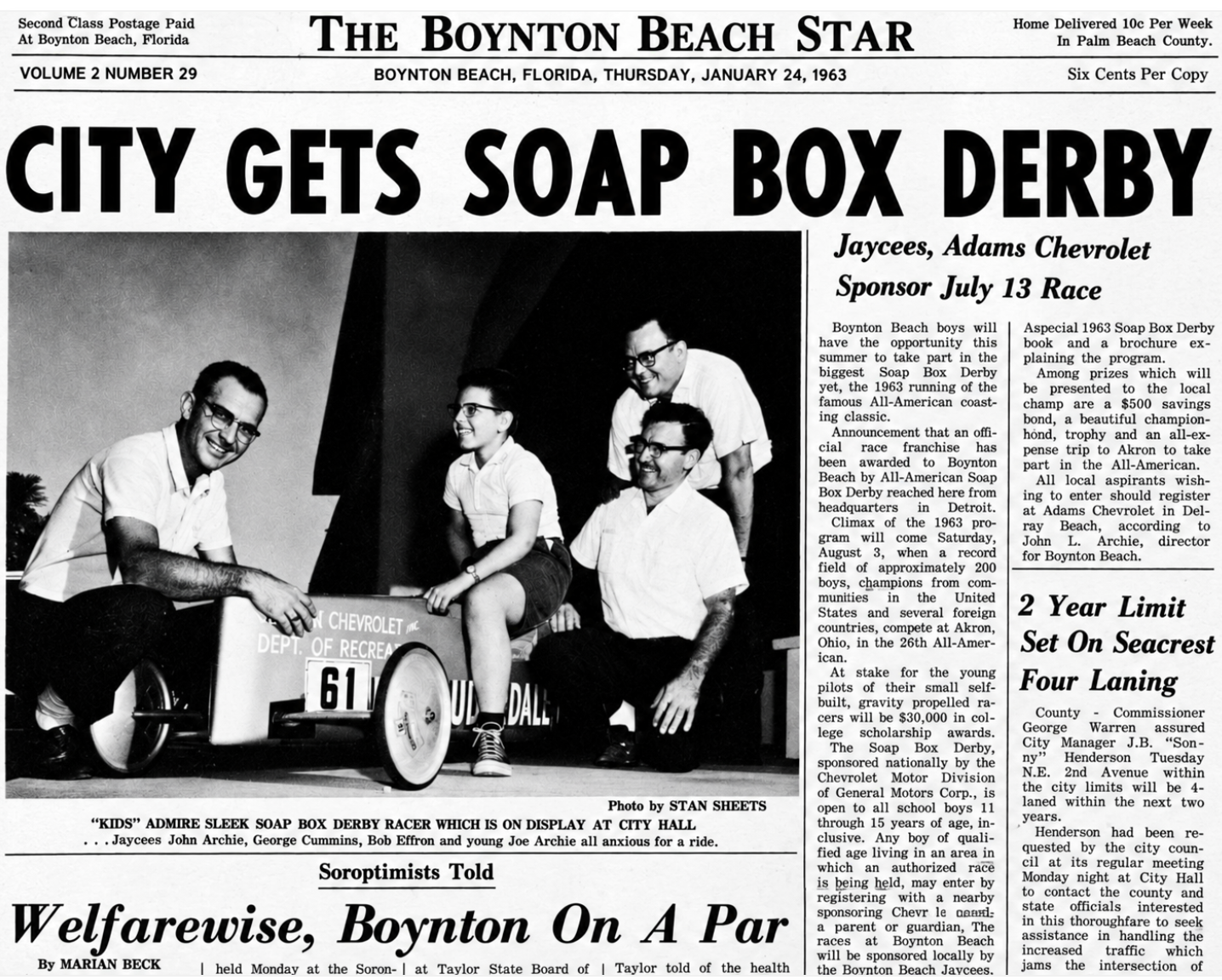
The January 24, 1963, Boynton Beach Star announced the new event across its front page with the headline “CITY GETS SOAP BOX DERBY.” Boynton Beach had been awarded an official race franchise, and the Boynton Beach Jaycees and Adams Chevrolet would sponsor the first local race on July 13.

The competition was open to schoolboys ages 11 through 15. The newspaper described their entries as small, self-built, gravity-propelled racers and directed boys wishing to compete to register at Adams Chevrolet in Delray Beach with a parent or guardian. John L. Archie was named Derby director for Boynton Beach.

A photograph by Stan Sheets accompanying the announcement shows a Derby car on display at City Hall with Jaycees John Archie, George Cummins and Bob Effron and young Joe Archie. The display, nearly six months before the race, shows how early the community began promoting the event.

There was also a big prize for the winner. The local champion would receive a $500 savings bond, a championship award and an all-expense trip to Akron to compete in the All-American Soap Box Derby.
The First Boynton Beach Derby

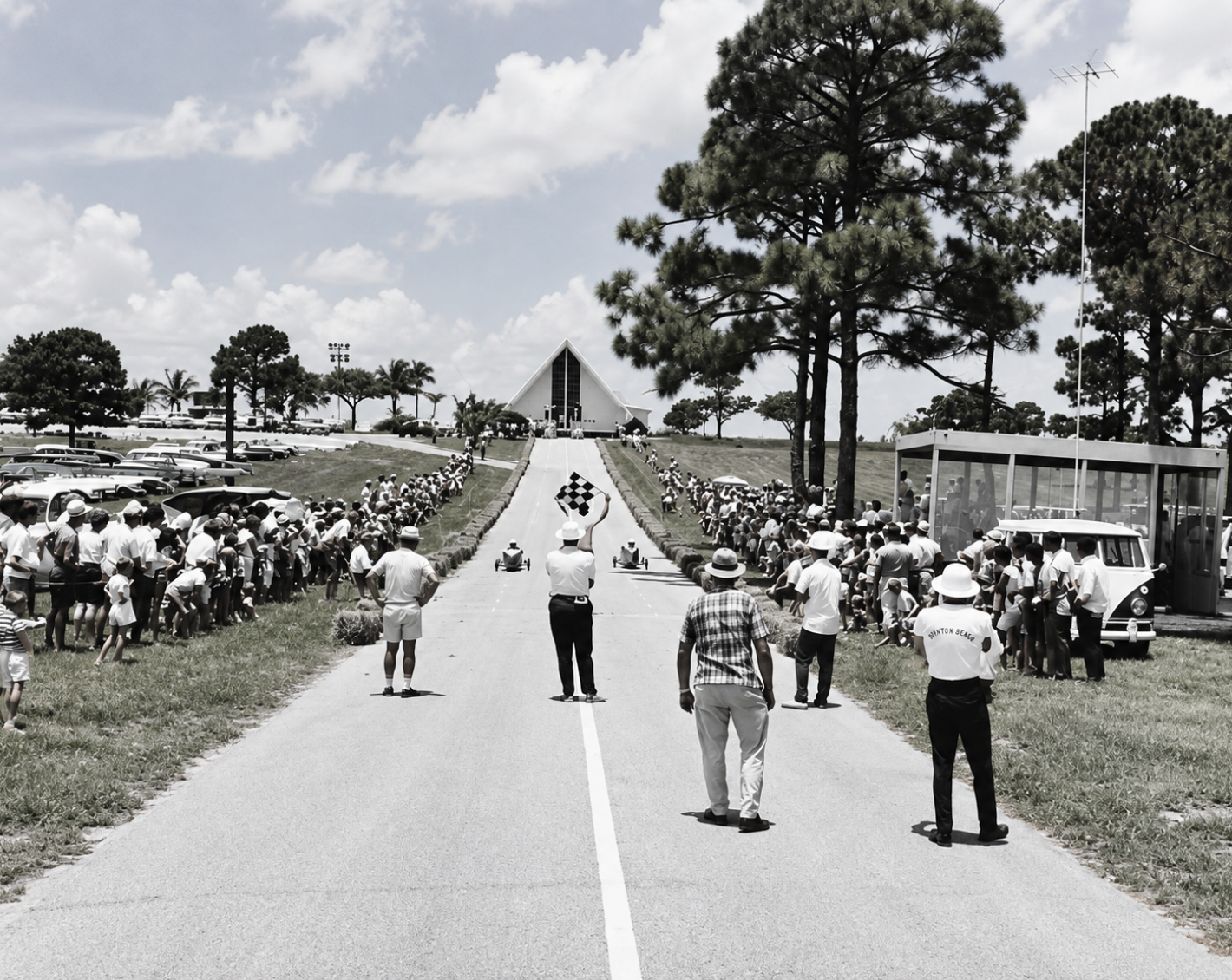
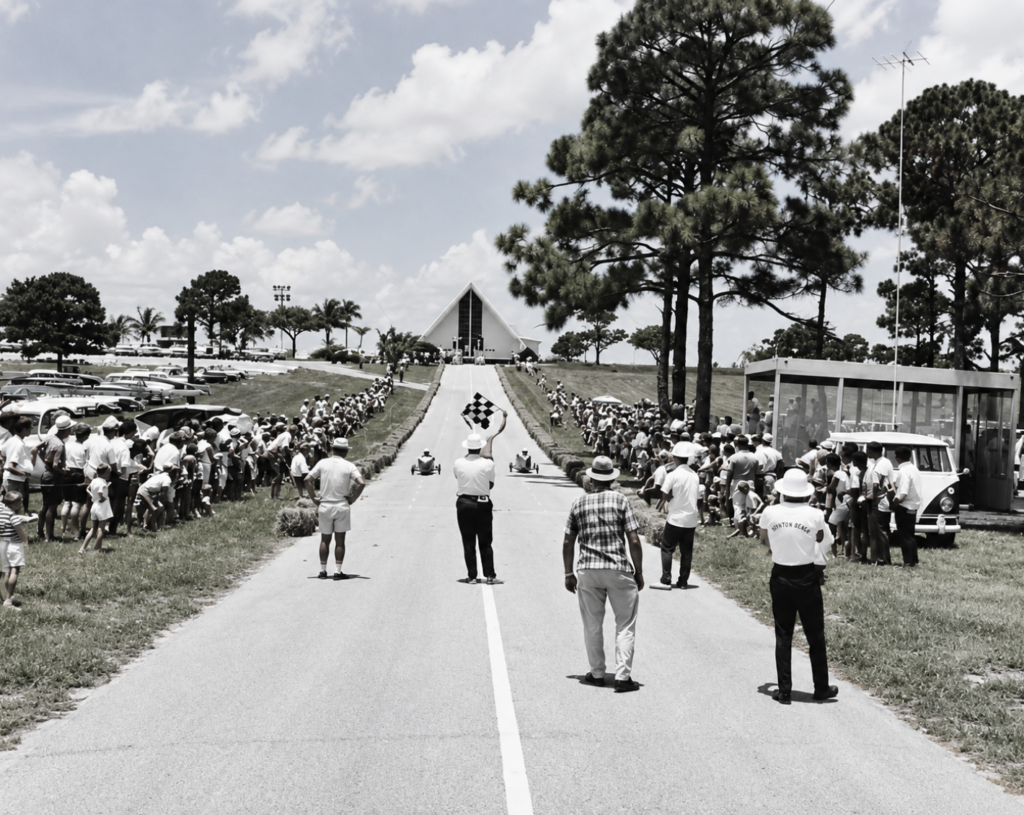
The first Boynton Beach Soap Box Derby was held on July 13, 1963, at St. Joseph’s Episcopal School and church off Seacrest Boulevard. Forty-two boys competed, and 14-year-old Wally Bryant, sponsored by Pierce Tire Company, became Boynton Beach’s first champion.

A photograph published in the Boynton Beach Star five days later shows two racers approaching the finish while spectators line both sides of the course. St. Joseph’s stands in the distance, with parked automobiles and spectators extending along the hill.

Race day was part of a larger weekend of activities. A sock hop was held at the Boynton Civic Center on Friday night, followed by a parade and motorcade Saturday morning. From its first year, the Derby was organized as a community event rather than simply a race.

A Family Sport

The boys were expected to build their own cars according to Soap Box Derby rules, with adults serving as advisers. Even so, getting a car to race day required considerable family involvement. Parents and siblings followed the construction, helped contestants obtain materials and sponsors, transported cars, attended inspections and participated in Derby activities.

The surviving photographs show this broader involvement. Adults and children gather around the cars, volunteers organize displays and events, and families crowd the race course. At the Civic Center, completed racers were assembled before competition.

By 1965, the local Derby had grown to 83 contestants from Lantana, Boynton Beach, Delray Beach and Boca Raton. The boys received Derby shirts and helmets on Friday, followed by a parade that evening ending at the Civic Center. The cars were then impounded there until Saturday’s race, and parents and other interested residents could view them.

The parade included the Junior Woman’s Club, Kiwanians, the VFW, a Dixieland band and the young racers. The Boynton Beach Jaycees remained at the center of the organization. What had begun with 42 contestants in 1963 had become a regional family and community event.
The Names on the Cars

Local sponsorship gave Boynton’s Derby a character of its own. The names painted on the cars provide a record of the businesses and organizations that supported the racers.

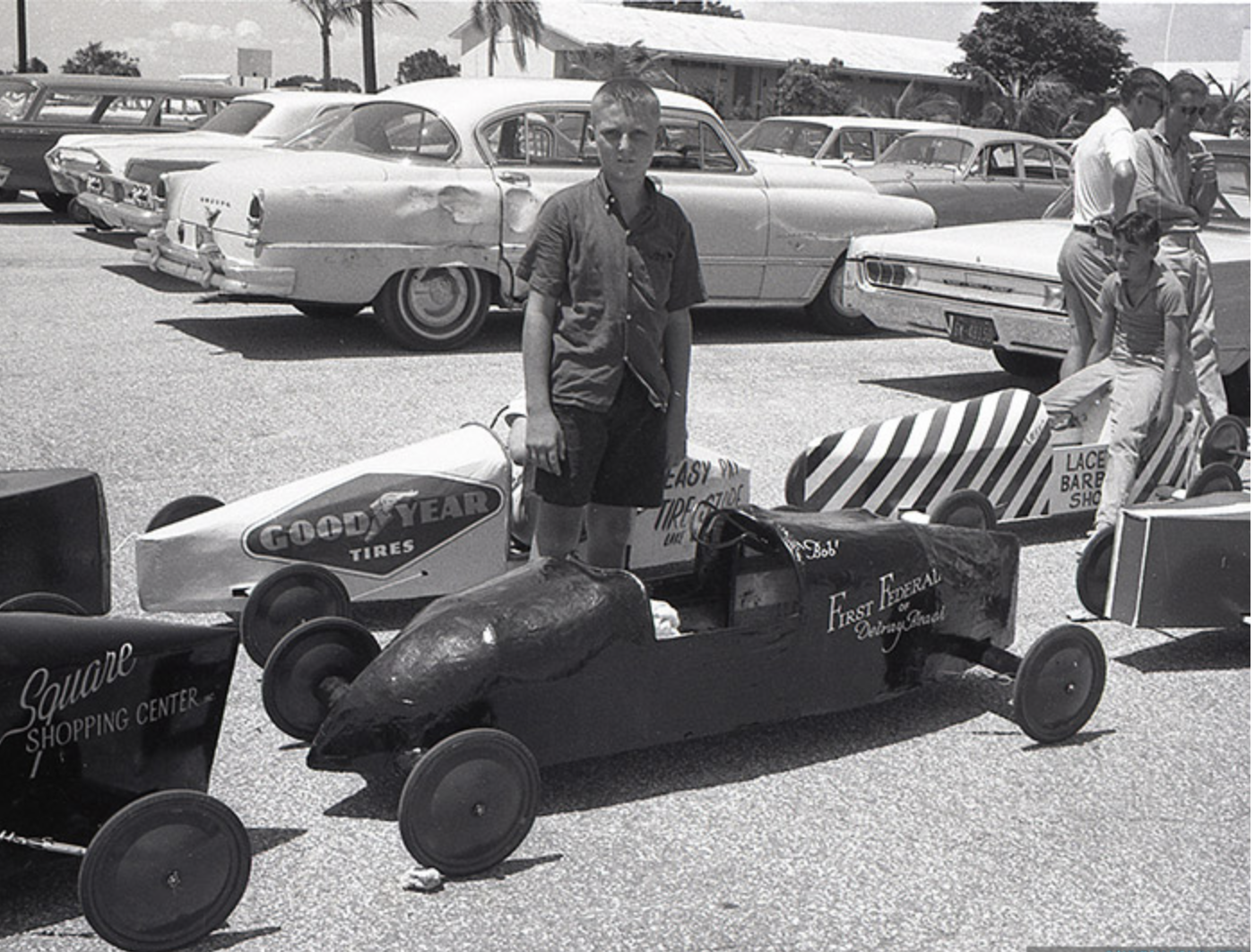
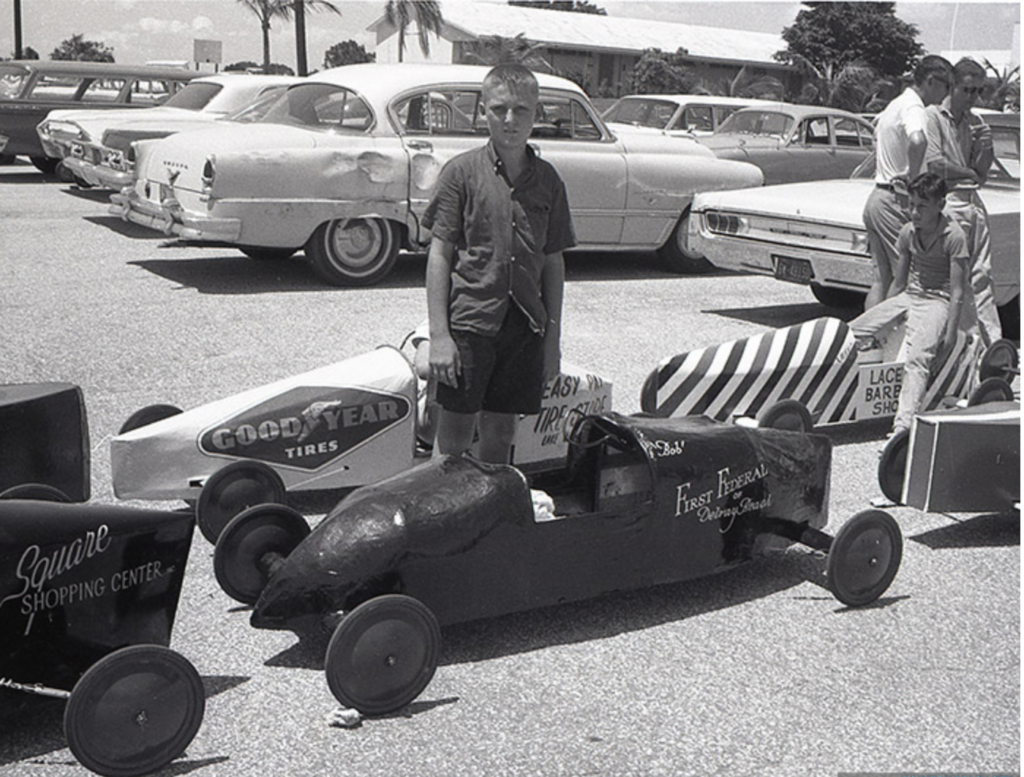
Among the documented sponsors were Pierce Tire Company, First Federal of Delray Beach, Easy Pay Tire Store of Lantana, Sunshine Square, Boynton Builders Supply, Lantana Boatyard, the Boynton Beach Chamber of Commerce, the Lions, Boynton Beach Police, the Boynton Beach Jaycees and Lacey’s Barber Shop.

A photograph from about 1964 shows several sponsored cars lined up together, including entries for First Federal, Easy Pay Tire Store, Sunshine Square and Lacey’s Barber Shop. Many years later, Joel Lacey recalled that his brother Jeff raced around 1964 or 1965 with sponsorship from their uncle’s barber shop. He remembered the car as being painted like a barber pole.

Such recollections help explain the Derby’s lasting place in family memory. The national organization supplied the rules and the opportunity to compete in Akron, but local families, businesses and civic groups made the Boynton races their own.
Derby Weekend

The Boynton Civic Center became an important part of Derby activities. A 1965 photograph shows cars gathered inside the building before the race. Contemporary newspaper coverage explains that the Friday parade ended there and that the racers were impounded at the Civic Center until the following day’s competition.

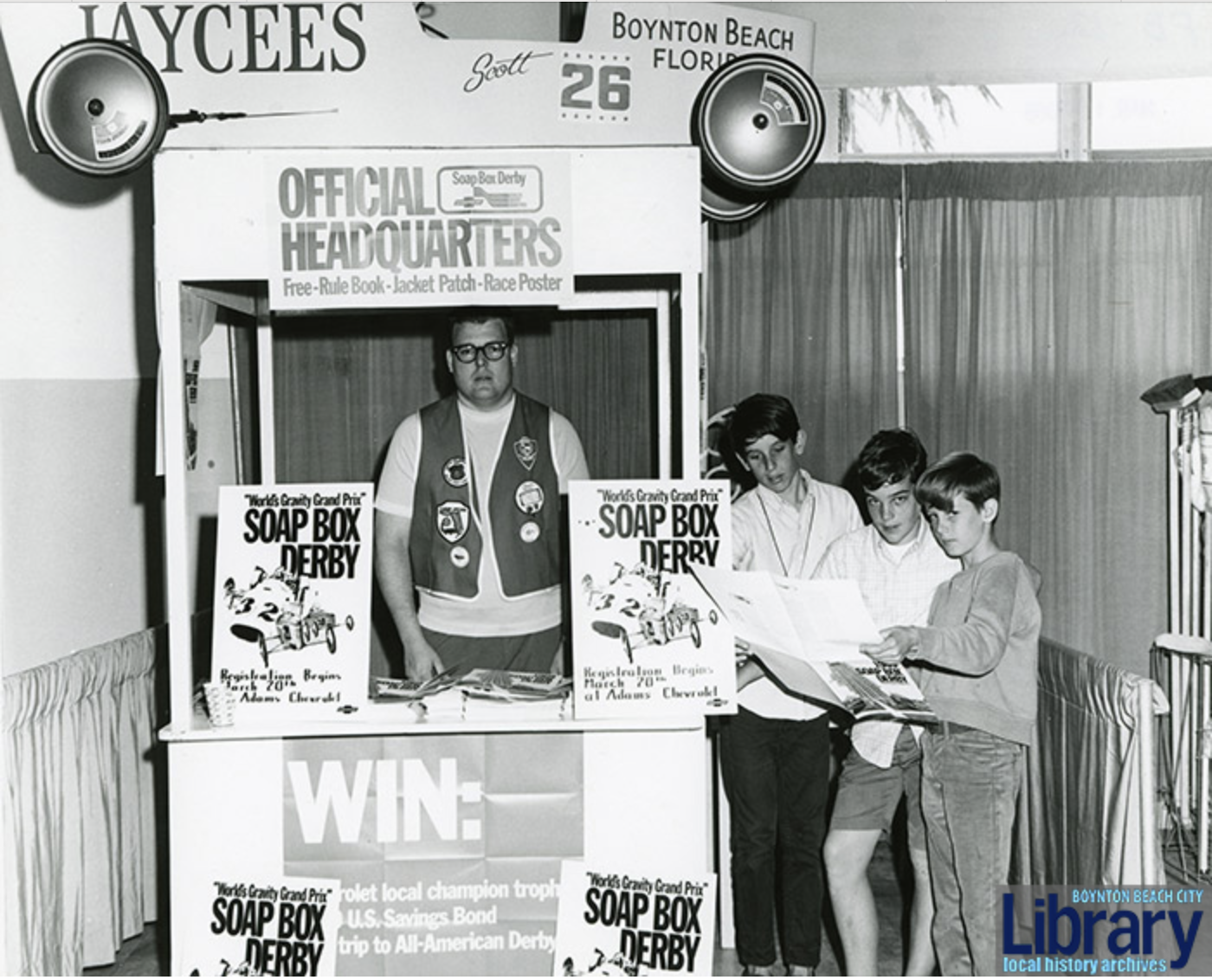
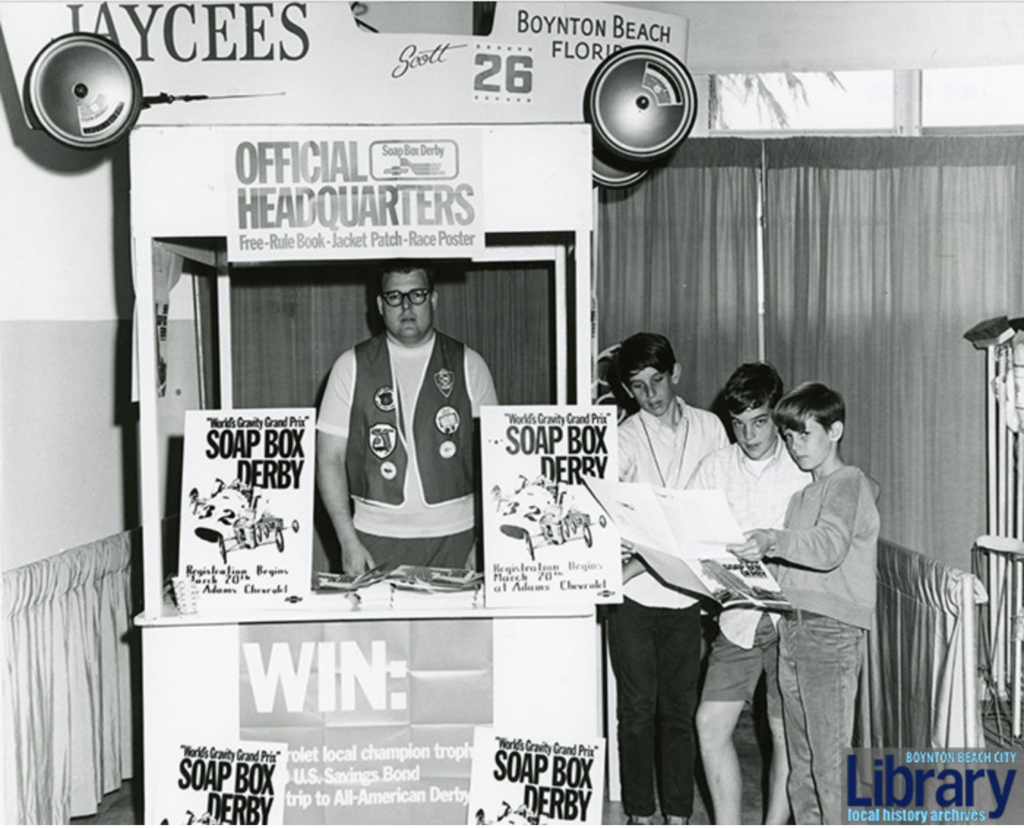
Other photographs show how much activity preceded race day. Derby headquarters distributed rule books, jacket patches and race posters, while Adams Chevrolet served as a registration point. Contestants had to register, build their cars according to the rules and prepare for inspection before they could compete.

From St. Joseph’s Hill to the 15th Avenue Bridge

\The inaugural 1963 race was held at St. Joseph’s Episcopal School and church off Seacrest, and the location remained in use several years later. In July 1967, volunteers Diane Albright and Linda Levreault posed at First Bank of Boynton Beach with the Derby trophies and a sign announcing, “Be there for the action, St. Joseph’s Church Hill.”

Newspaper accounts also referred to the course simply as “Derby Hill.”

Sometime between 1967 and 1971, the race moved. A June 1971 newspaper account places the Soap Box Derby on the 15th Avenue bridge in Boynton Beach. Longtime residents remember the same location as the Woolbright Road bridge, and family 8mm film from the early 1970s preserves racing there.

The 1971 newspaper also records a close contest between Dale Brisson and Don Whitaker. After a dead heat, Brisson won the final race with a time of 21 seconds. The newspaper reported that the local winner would go to Akron and that Brisson planned to save the $50 bond he had won for college.
The Road to Akron

The opportunity to represent Boynton Beach at the All-American Soap Box Derby gave the local competition a connection to the national event.

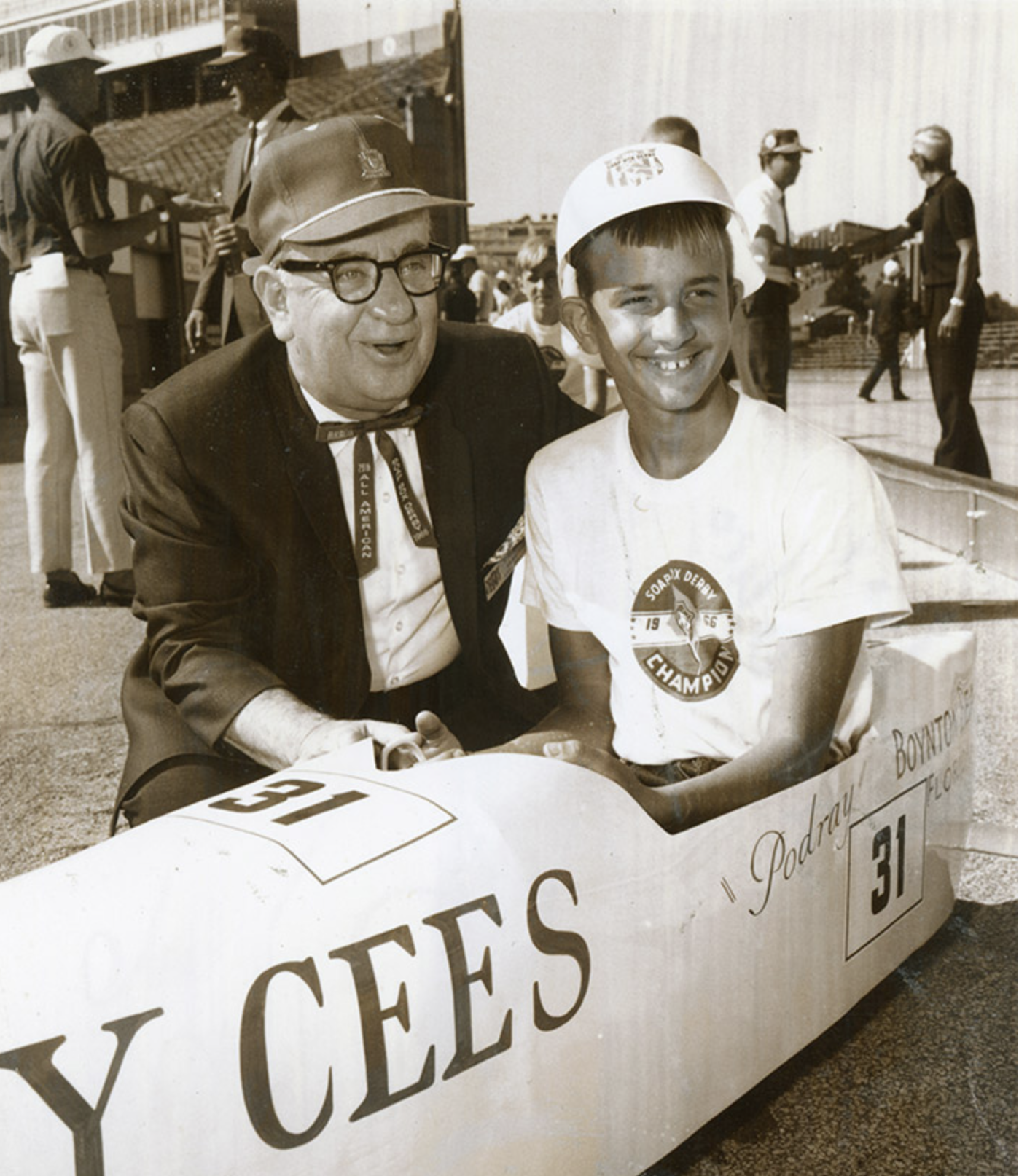
Several Boynton champions are preserved in newspaper and archival records. Wally Bryant won the first race in 1963, followed by Bobby Banting in 1964. Greg Shepack became another local champion and represented Boynton at Akron. Andrew “Andy” Podray was Boynton’s 1966 champion, and Robert Greenaway won in 1967, edging Don Yeoman for the trip to Akron.
The Derby also reflected the conventions of its time. Girls participated locally as Derby queens and volunteers but were excluded from sanctioned competition under the national rules. Girls were not officially admitted as Soap Box Derby drivers until 1971. Whether any girls competed in the Boynton Beach race has not yet been determined.

A Baby-Boom Community Tradition

The records document Boynton Beach Soap Box Derby racing from 1963 through at least 1971. A 1975 city directory still listed the Soap Box Derby among Boynton Beach’s amusements, along with the Boynton Beach Beauty Pageant Parade and annual Christmas Parade. No  newspaper account of a Boynton race in 1975 has yet been located, however, and the directory listing may have been carried forward from an earlier edition. For now, 1971 remains the last local race documented in contemporary newspaper coverage.

The Derby belonged to a special time in Boynton Beach history, when the children of the baby boom were growing up along with the rapidly expanding community around them. Its success depended on local institutions: families, neighborhood businesses, civic clubs, churches, newspapers, automobile dealers and local government.

The surviving photographs and home movies show boys with their cars, families and spectators lining the course, trophies displayed in local businesses, volunteers preparing for race day and rows of sponsored racers waiting at the Civic Center. Decades later, residents still remember where they stood, who raced and which local business sponsored a brother’s car.

The cars were small, homemade and powered only by gravity, but getting them to the starting line involved the community. For Boynton Beach families of the 1960s and early 1970s, that was an important part of the Soap Box Derby’s appeal.

Do you remember the Boynton Beach Soap Box Derby? If you raced, helped a family member, sponsored a car, volunteered or watched from the roadside—or if you still have photographs, programs, trophies or home movies—we would like to hear from you.

Sources

  • Boynton Beach City Library Local History Archives. Soap Box Derby photographs, newspaper clippings, and materials from the Boynton Beach Jaycees Collection, 1963–1970s. Boynton Beach Local History Archives
  • Historic Boynton Beach. Facebook posts, photographs, and community recollections concerning the Boynton Beach Soap Box Derby. Historic Boynton Beach on Facebook
  • Miller, John Jr. “Boynton Beach, FL Soap Box Derby racing on the Woolbright Rd. bridge, early 1970’s.” Family 8mm home movie. Watch John Miller’s Soap Box Derby film
  • International Soap Box Derby. History of the All-American Soap Box Derby and national competition in Akron, Ohio. International Soap Box Derby History
  • Boynton Beach Star and Boynton Beach News Journal. Contemporary race announcements, results, photographs, contestant information, and local coverage, consulted through the Boynton Beach City Library Local History Archives.
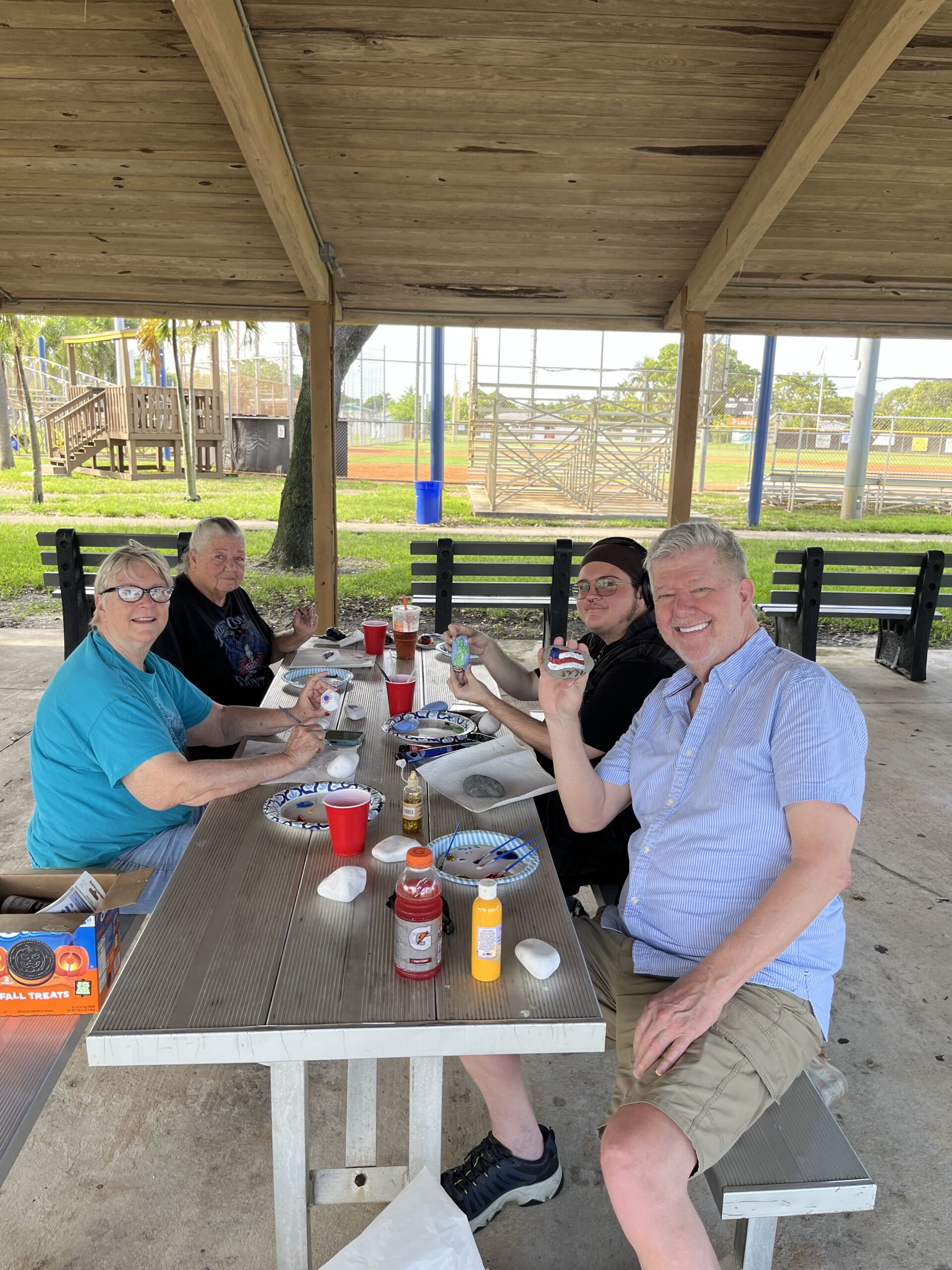
Rock On America!

🇺🇸 Rock On America! 🇺🇸

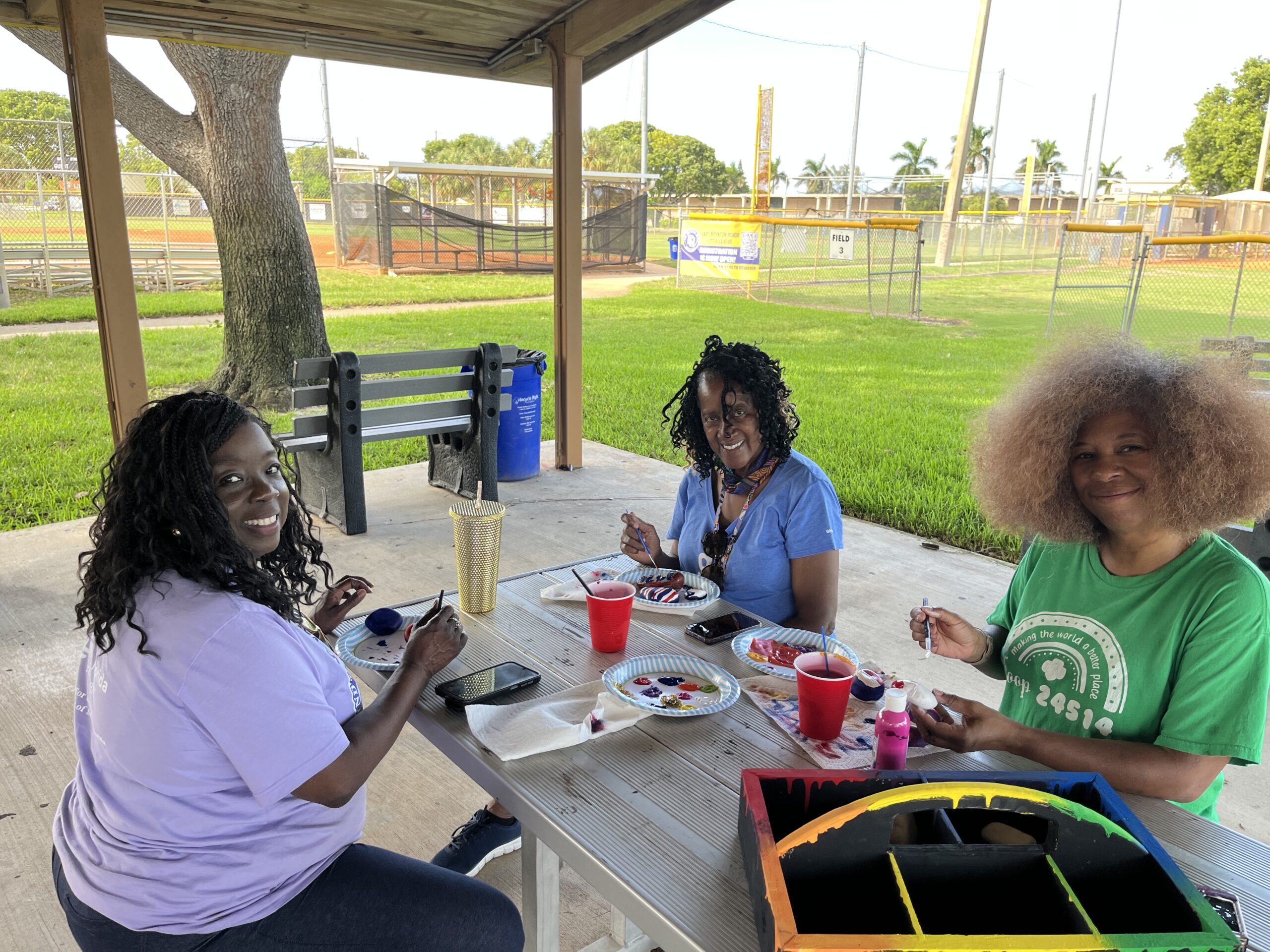
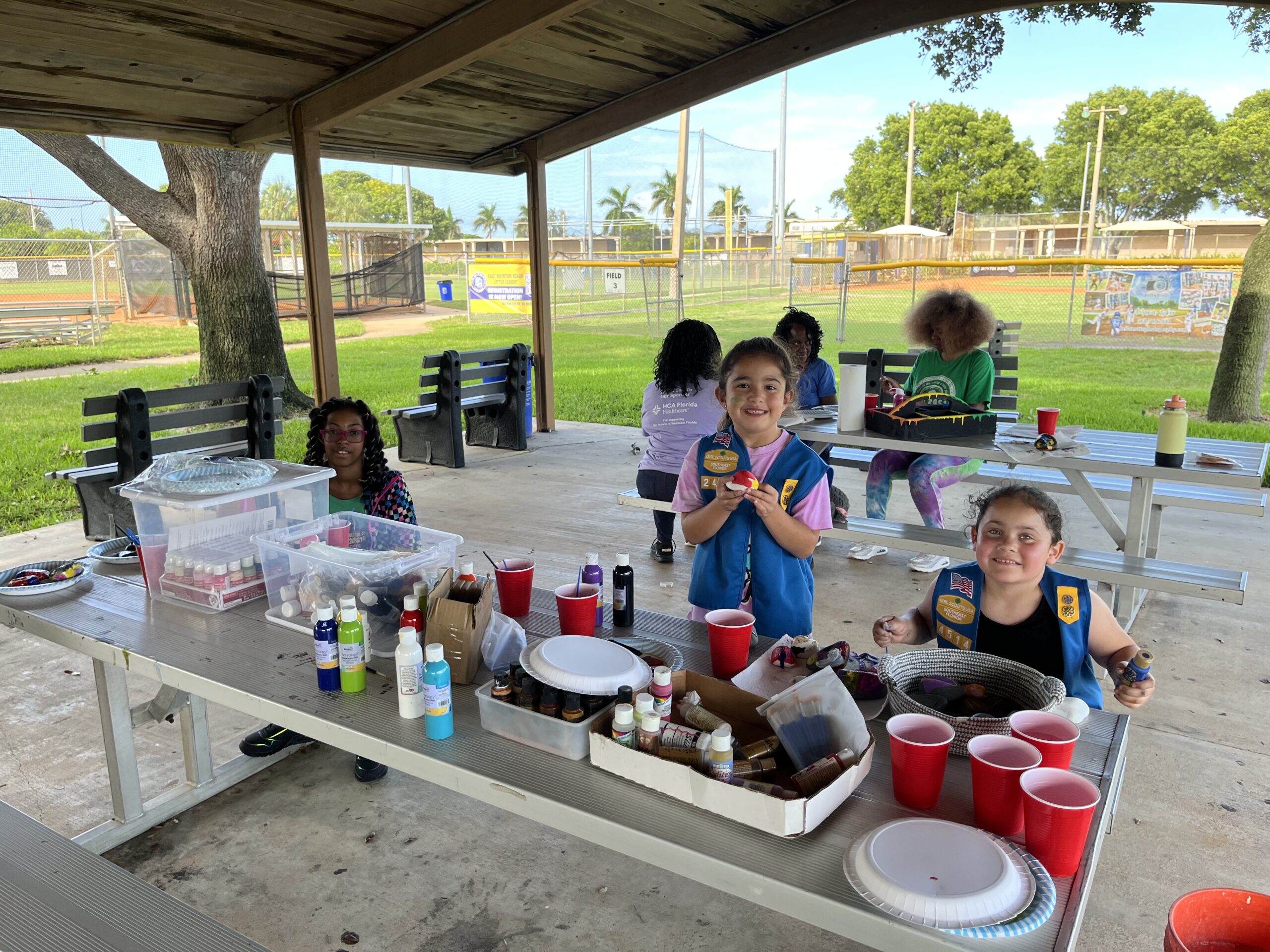
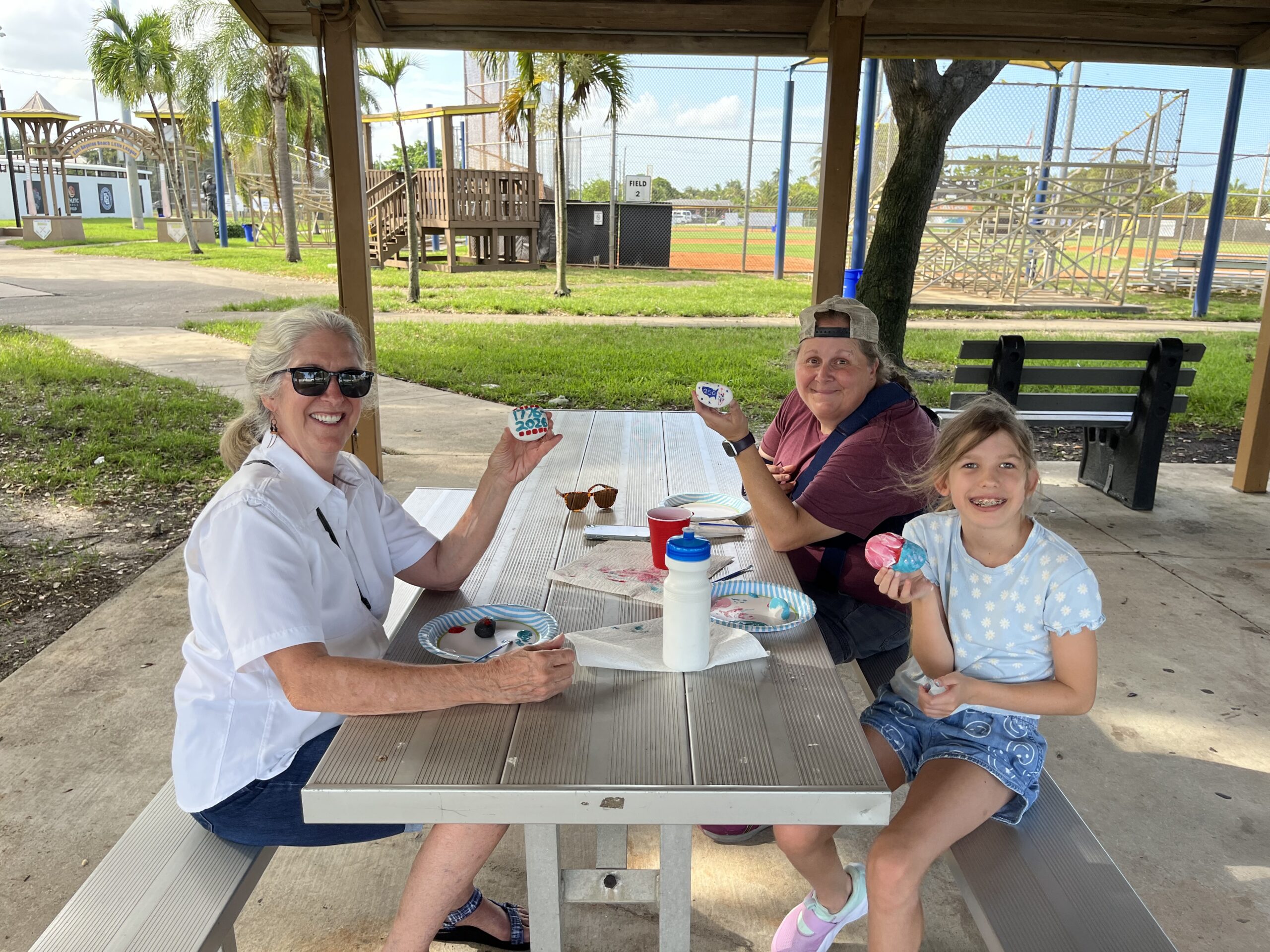
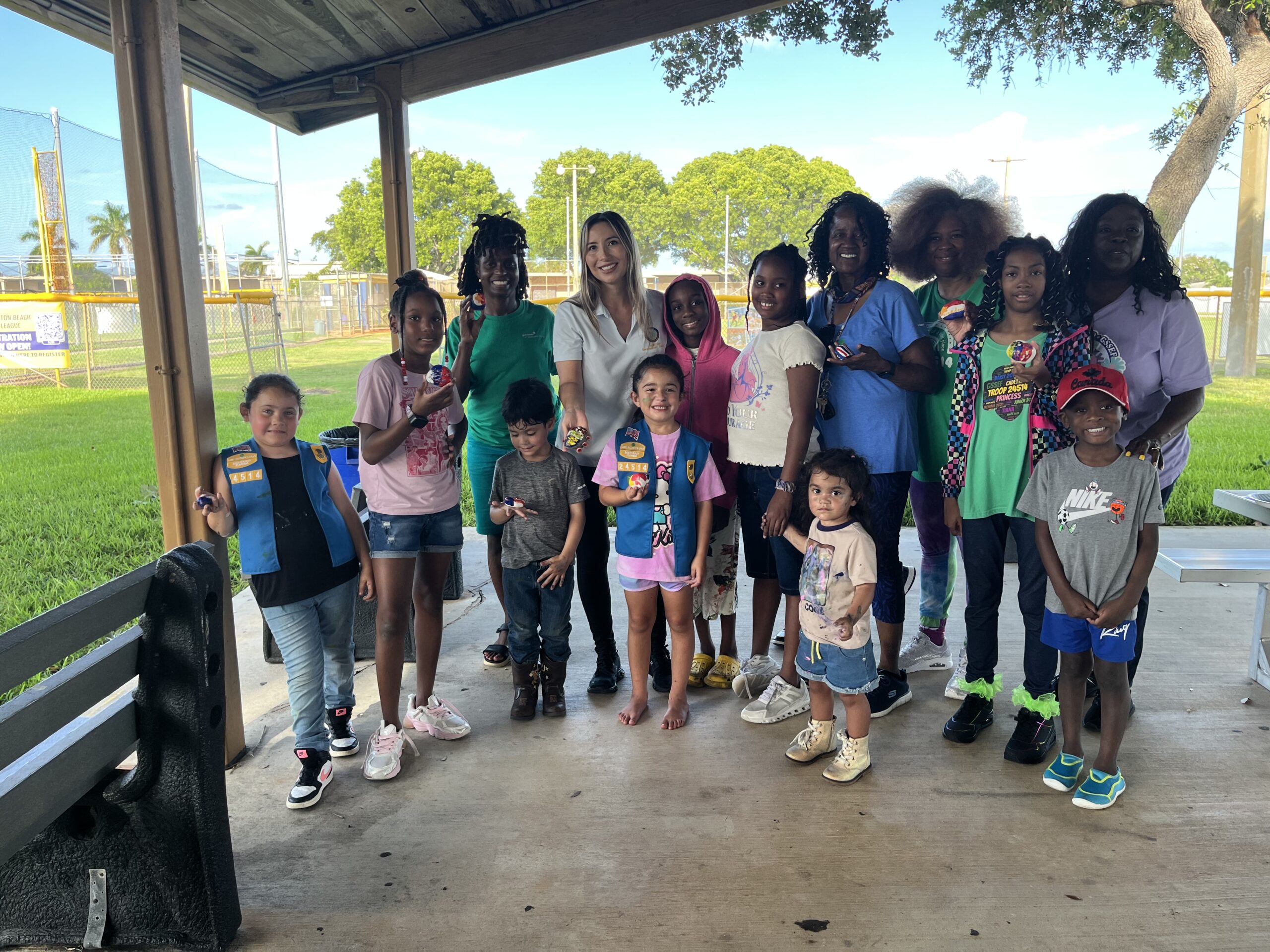
As we celebrate Independence Day, the Boynton Beach Historical Society is proud to share one of our favorite America 250 projects—Rock On America!

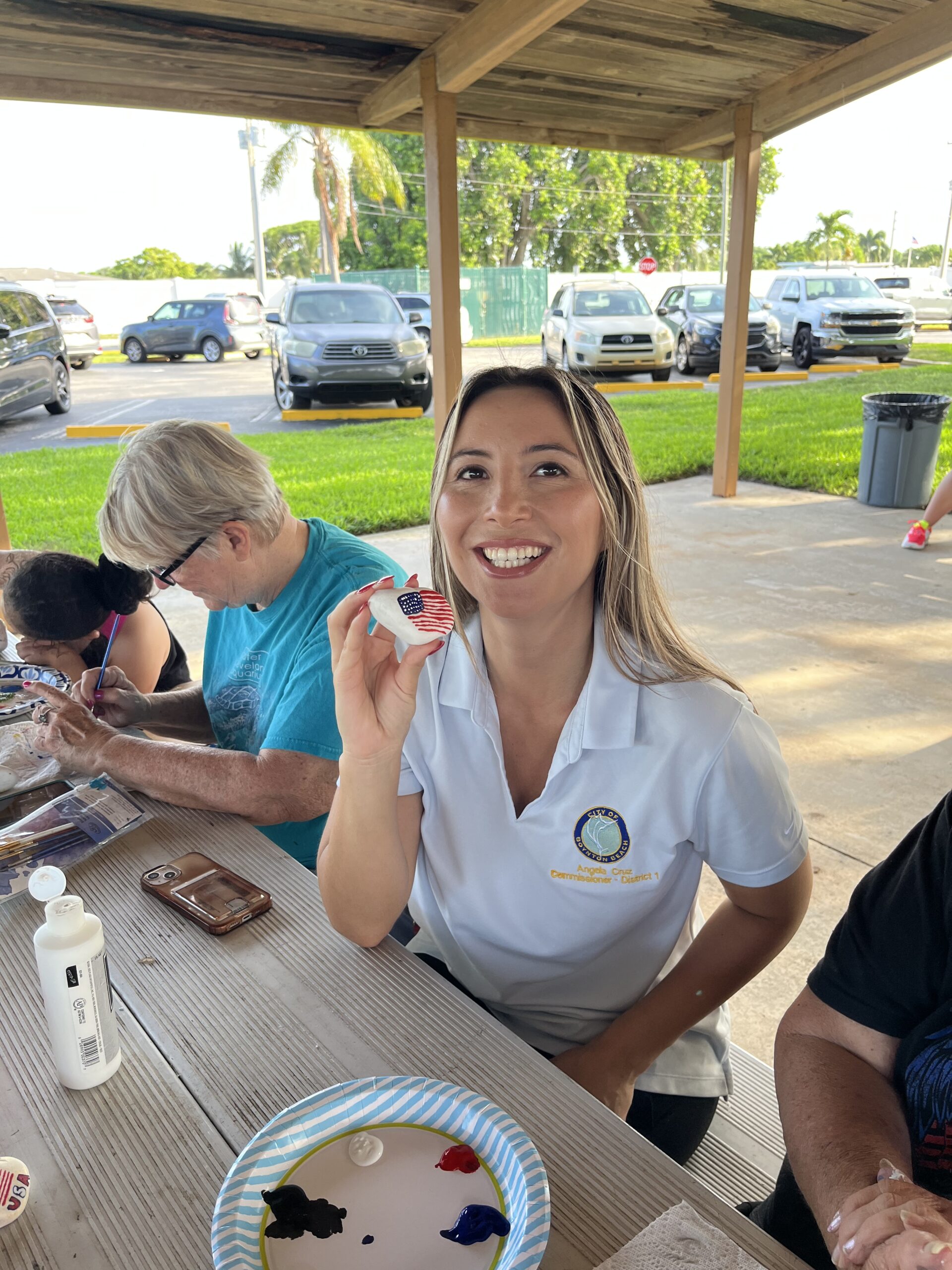
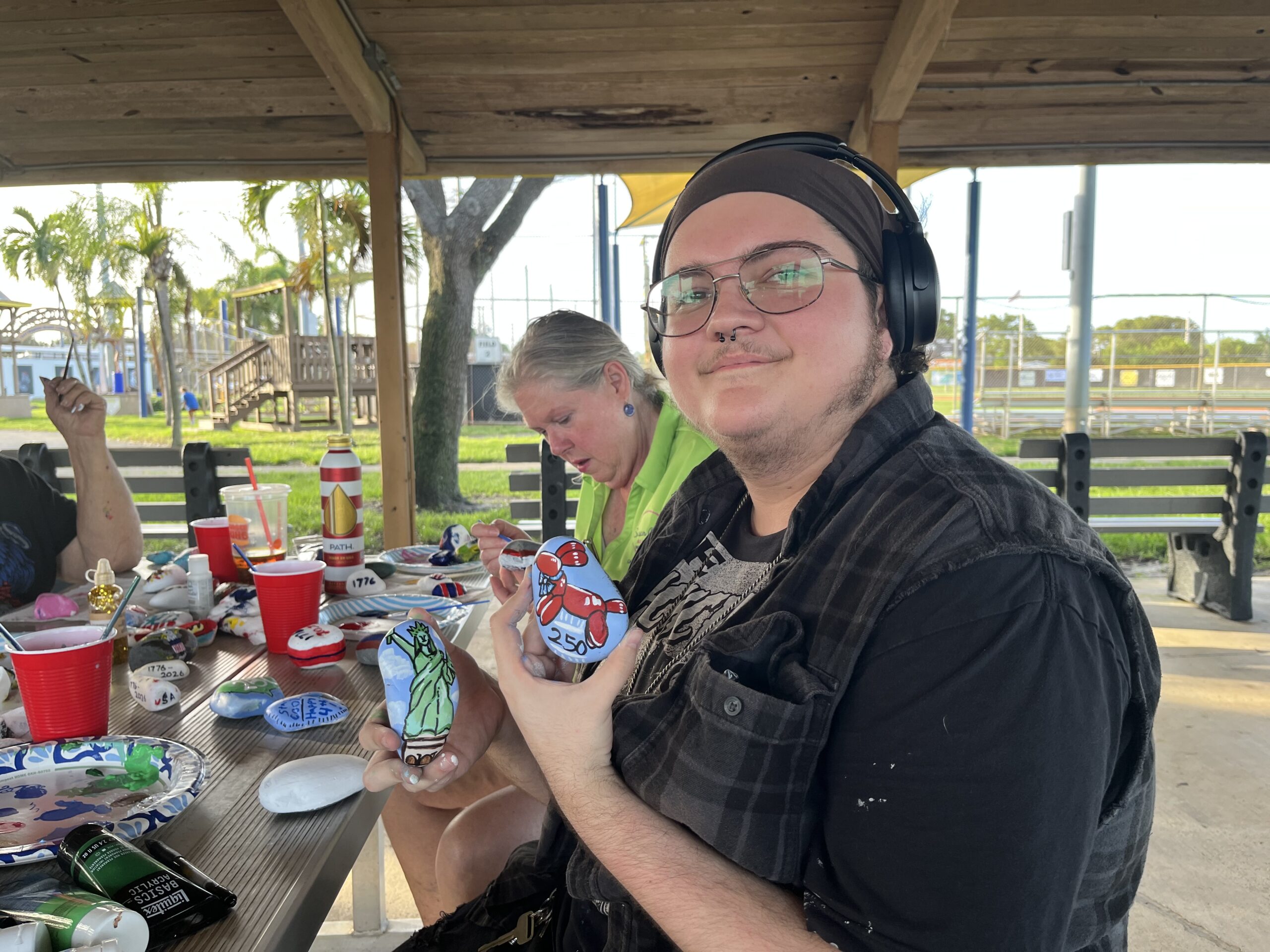
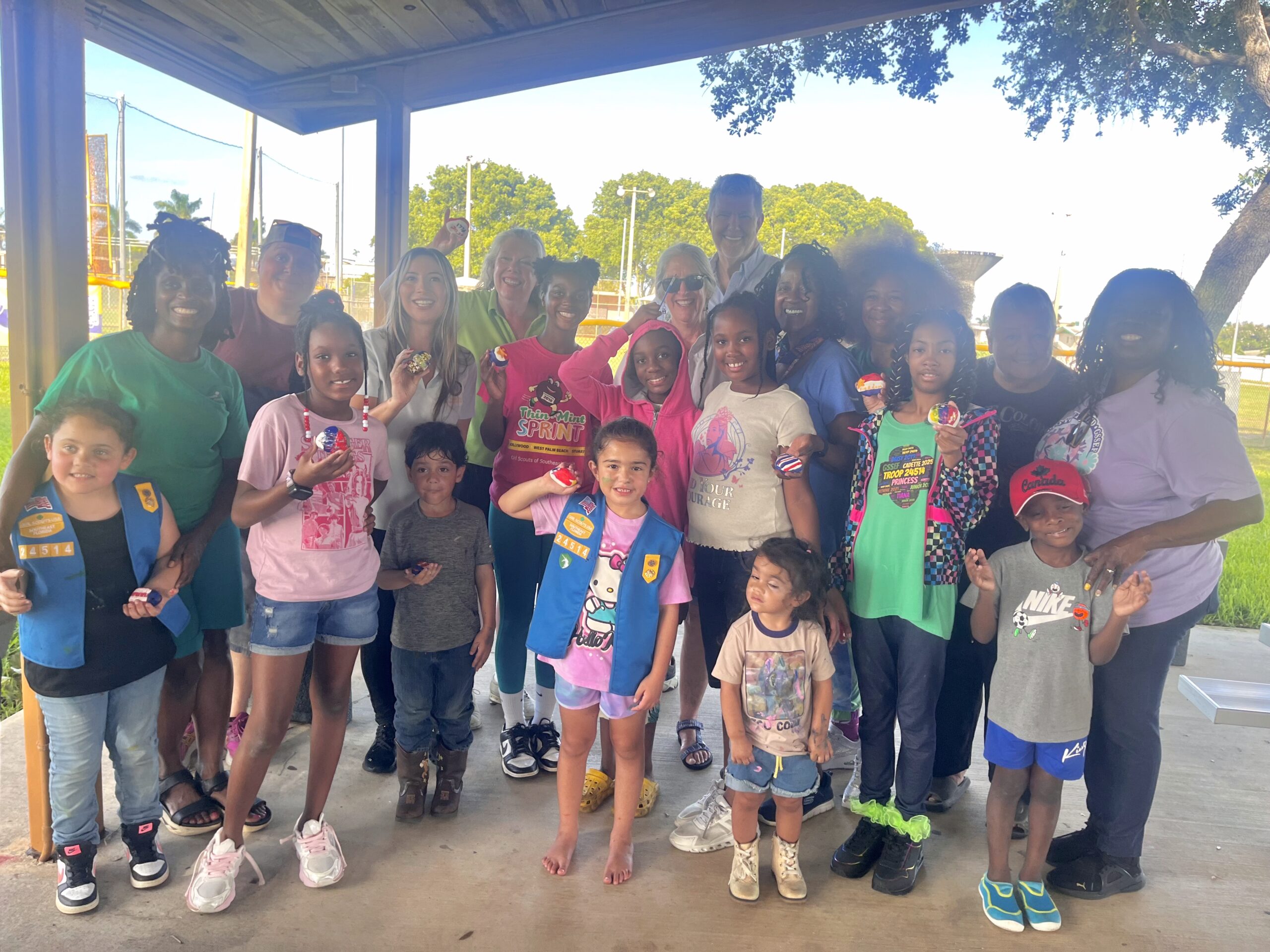
On June 25, we were honored to welcome Boynton Beach City Commissioner Angela Cruz and Girl Scout Troop 24514 as we gathered to paint patriotic rocks filled with messages of encouragement, hope, and love of country.

These special rocks are now being placed throughout our community for neighbors to discover. If you find one, we hope it brings a smile to your face and serves as a reminder that our freedom, our history, and our democracy are precious gifts that deserve to be appreciated and protected.

As you celebrate this Fourth of July, keep an eye out—you just might find a little piece of patriotism waiting for you!

❤️🤍💙 Happy Independence Day from the Boynton Beach Historical Society! 🇺🇸

#RockOnAmerica #America250 #BoyntonBeachHistoricalSociety #IndependenceDay #FourthOfJuly #Patriotism #Community #BoyntonBeach

A Look Back at Boynton in 1914

A look at Boynton’s business ads from 1914 shows a town grounded in farming and steadily growing into a permanent community.

Plenty of Cheap Land

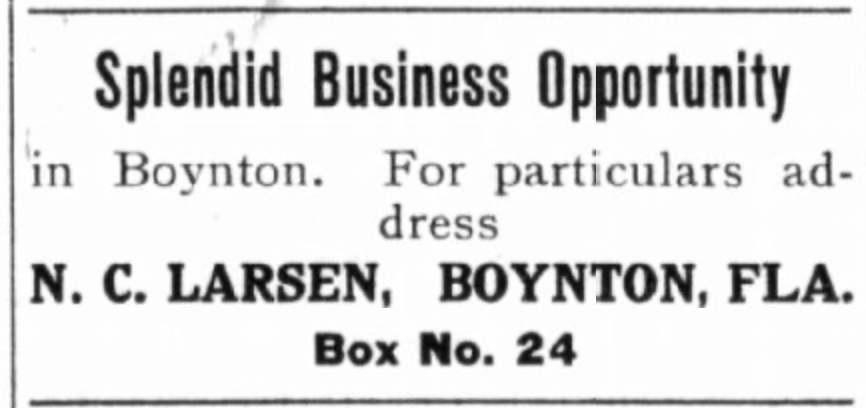
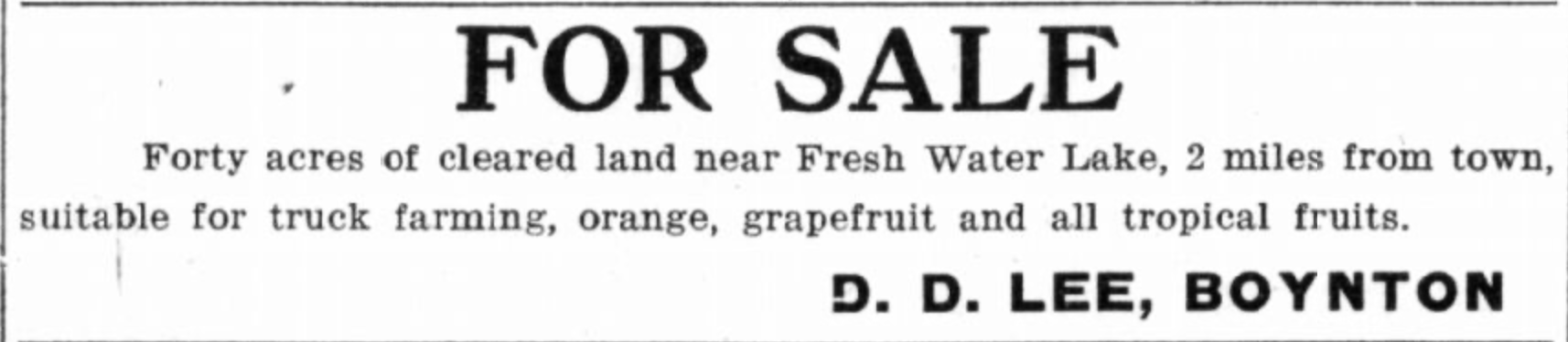
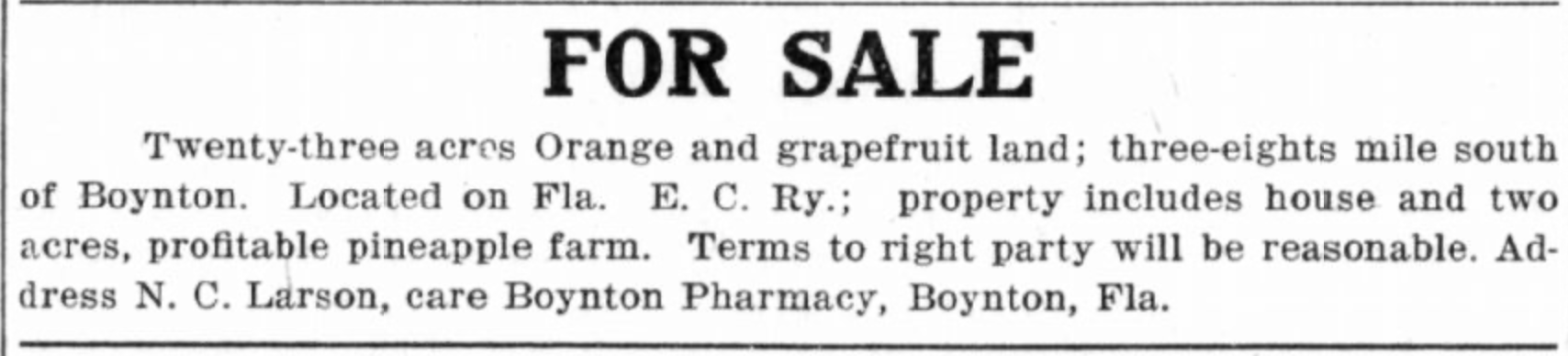
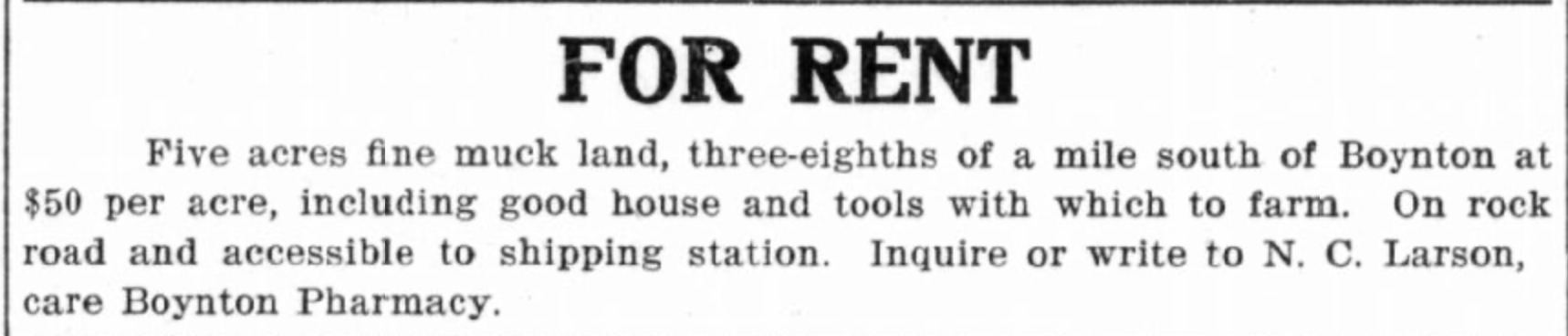
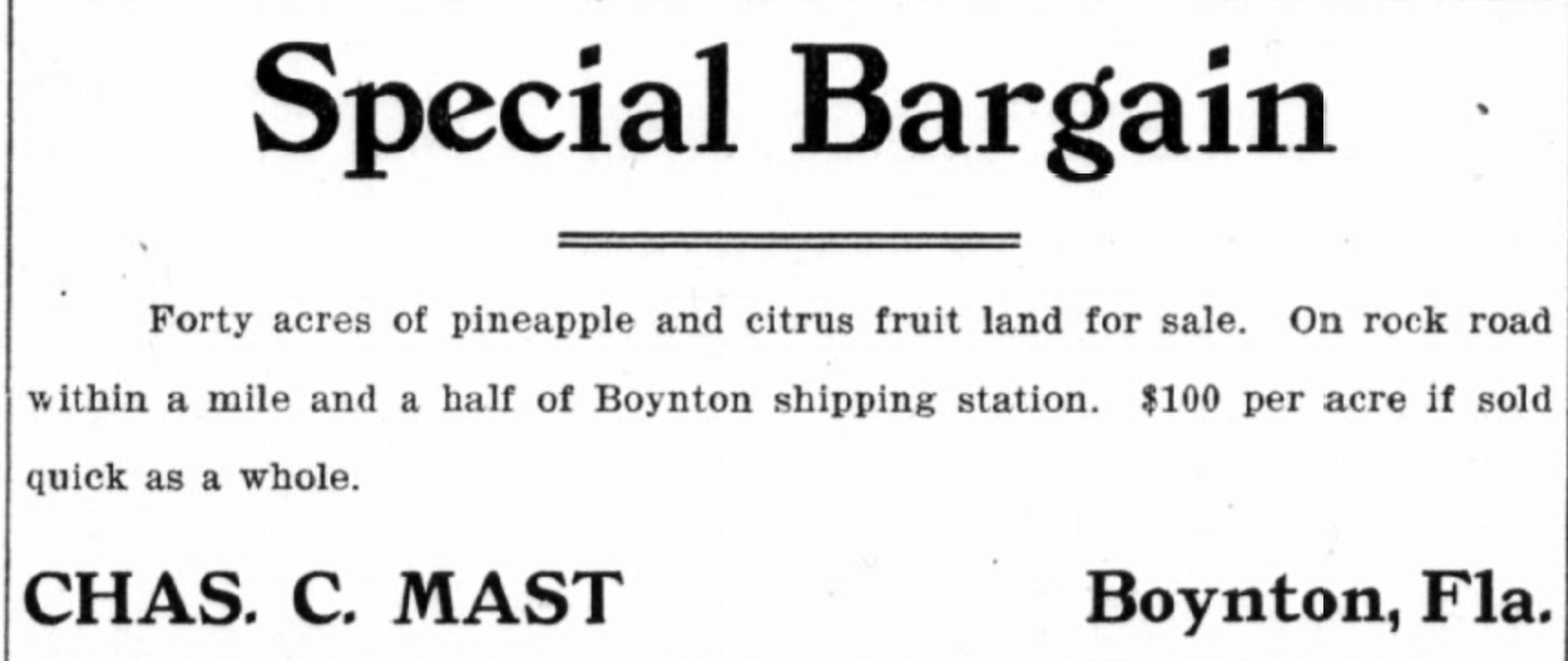
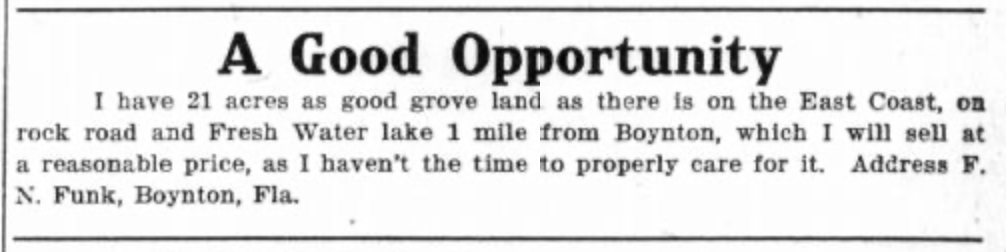
Land was actively being bought, sold, and rented. D. D. Lee offered 40 acres near Fresh Water Lake (Lake Boynton) suited for truck farming and citrus, while Chas. C. Mast promoted pineapple and citrus land close to the shipping station. N. C. Larsen handled grove property and muck land, reflecting the demand for productive acreage.

Clearing the Land

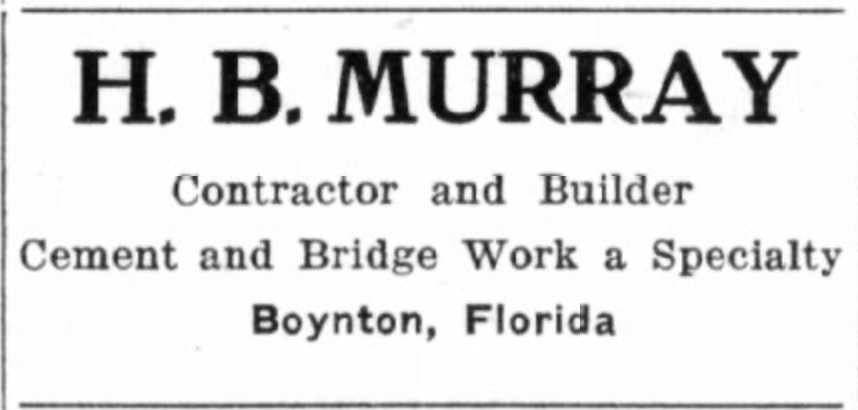
Supporting this farm economy were essential local services. A. L. Fuller provided heavy hauling, W. F. Riddle managed teaming and lighterage for muck and marl, and contractor H. B. Murray helped transform cleared land into working farms and homes by building homes and even bridges.

Shopkeepers

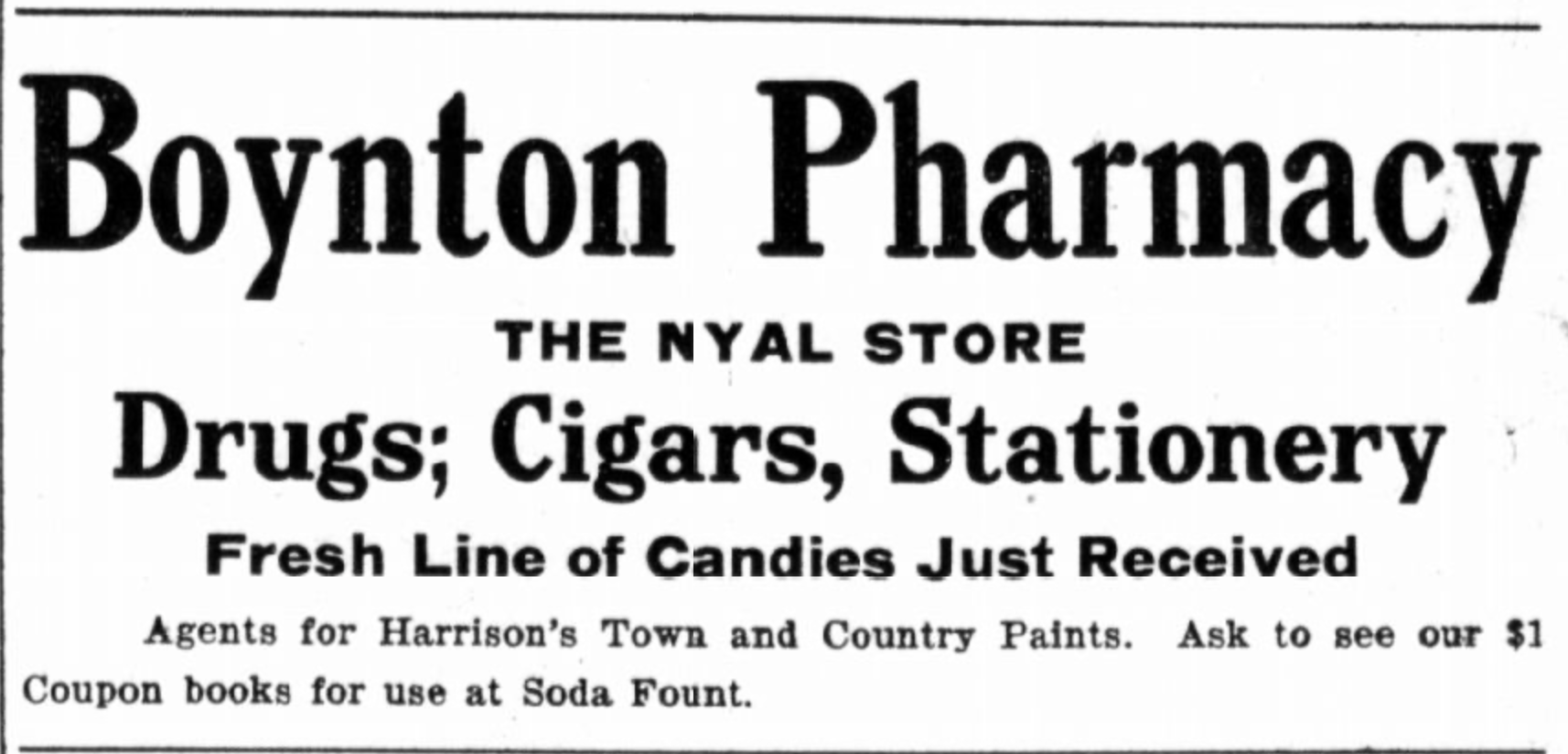
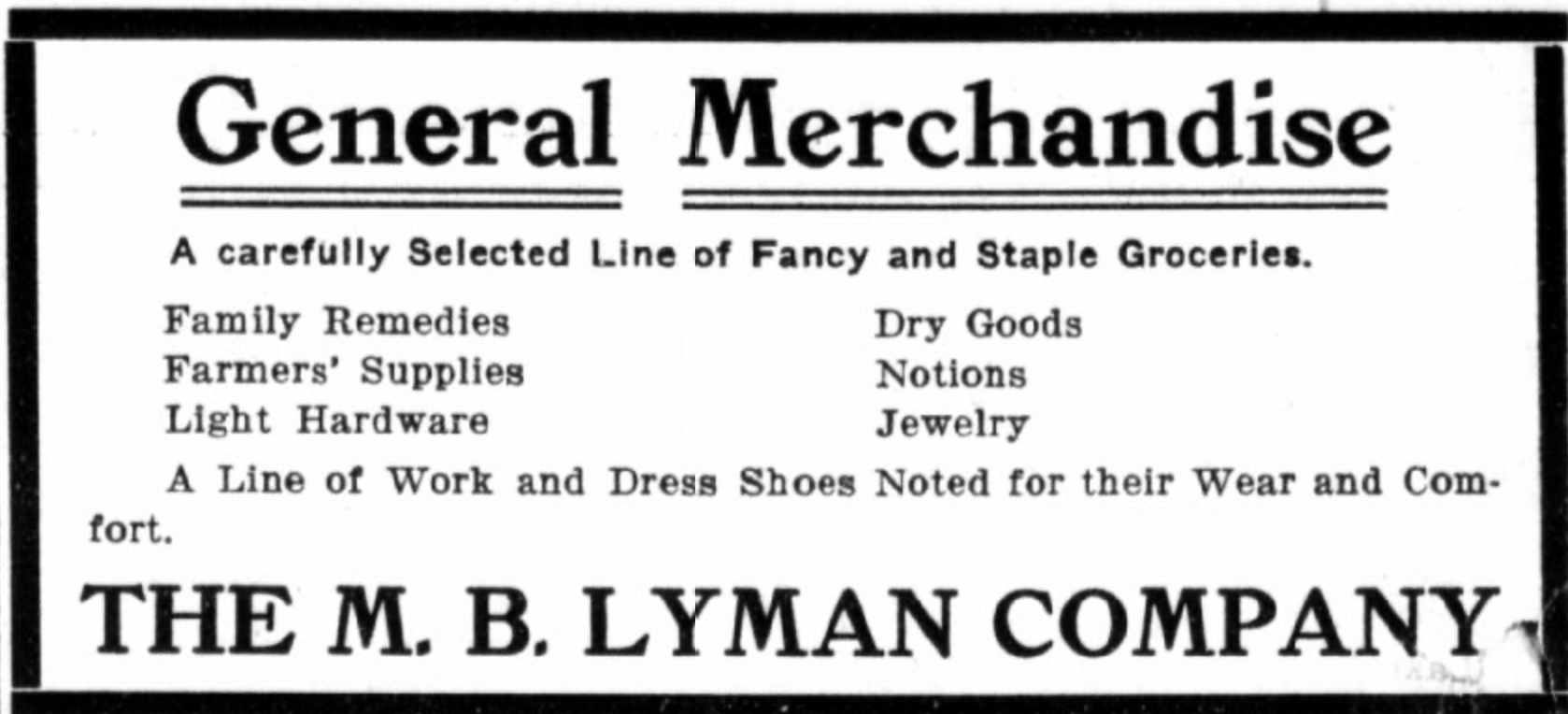
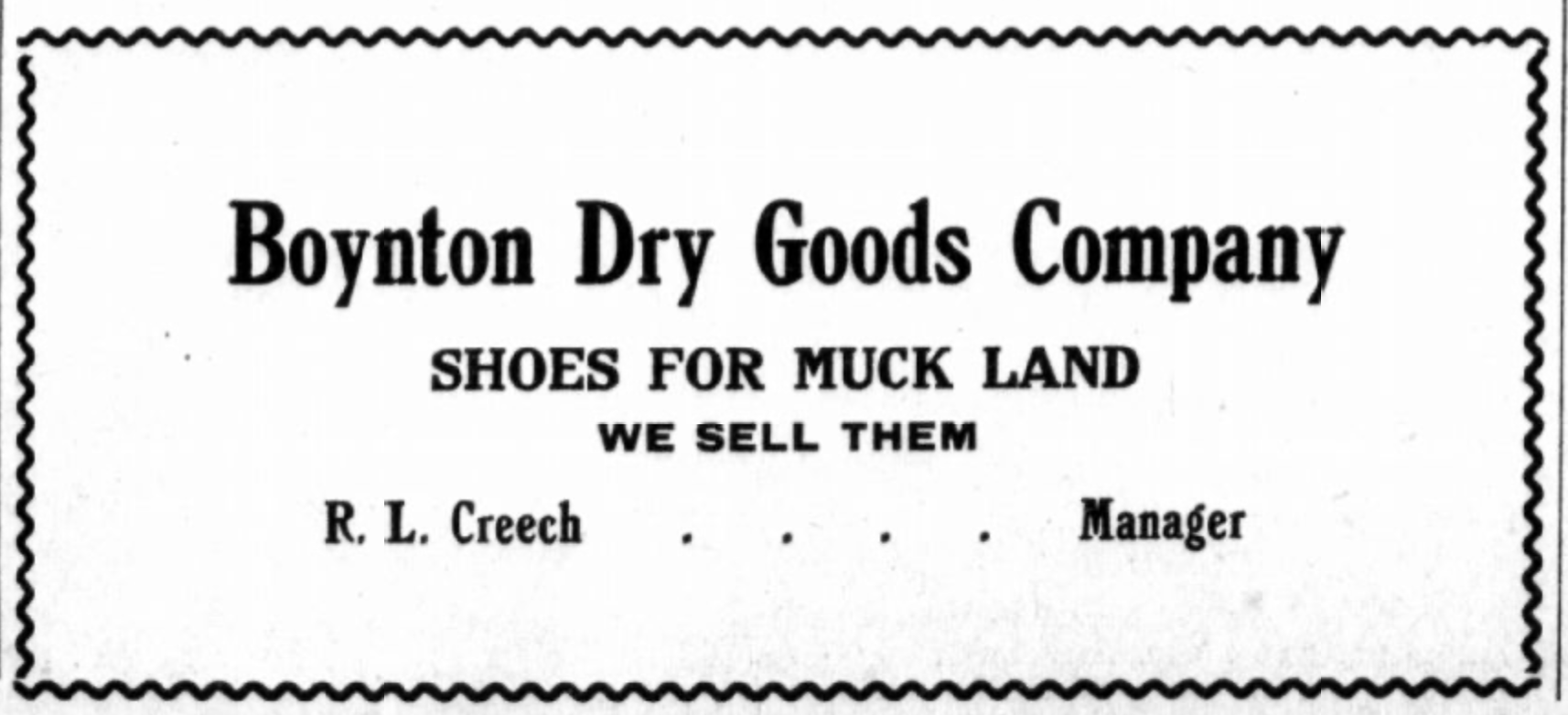
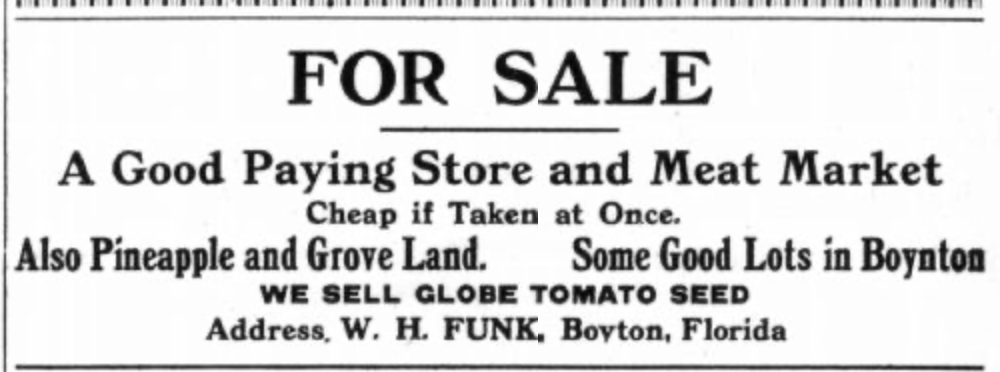
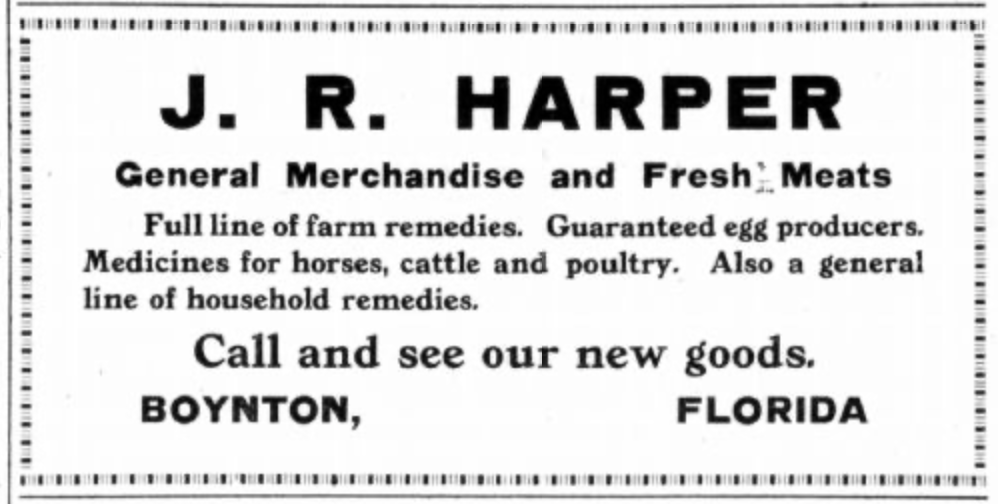
Merchants supplied both household and agricultural needs. J. R. Harper sold general merchandise, fresh meats, and livestock remedies, while the M. B. Lyman Company stocked groceries, dry goods, shoes, and hardware. The Boynton Pharmacy — the Nyal Store — carried medicines, paints, cigars, stationery, and candy.

Rooms for Rent

Hospitality and everyday life were also part of the picture. Hotel Vera, operated by J. F. Triplett and W. G. Keller, provided lodging and meals, while Holmes’ Amusement Parlor offered pool and billiards. Charlie A. Carter sold sprouted coconuts and even advertised a small bachelor home.

Early Developers

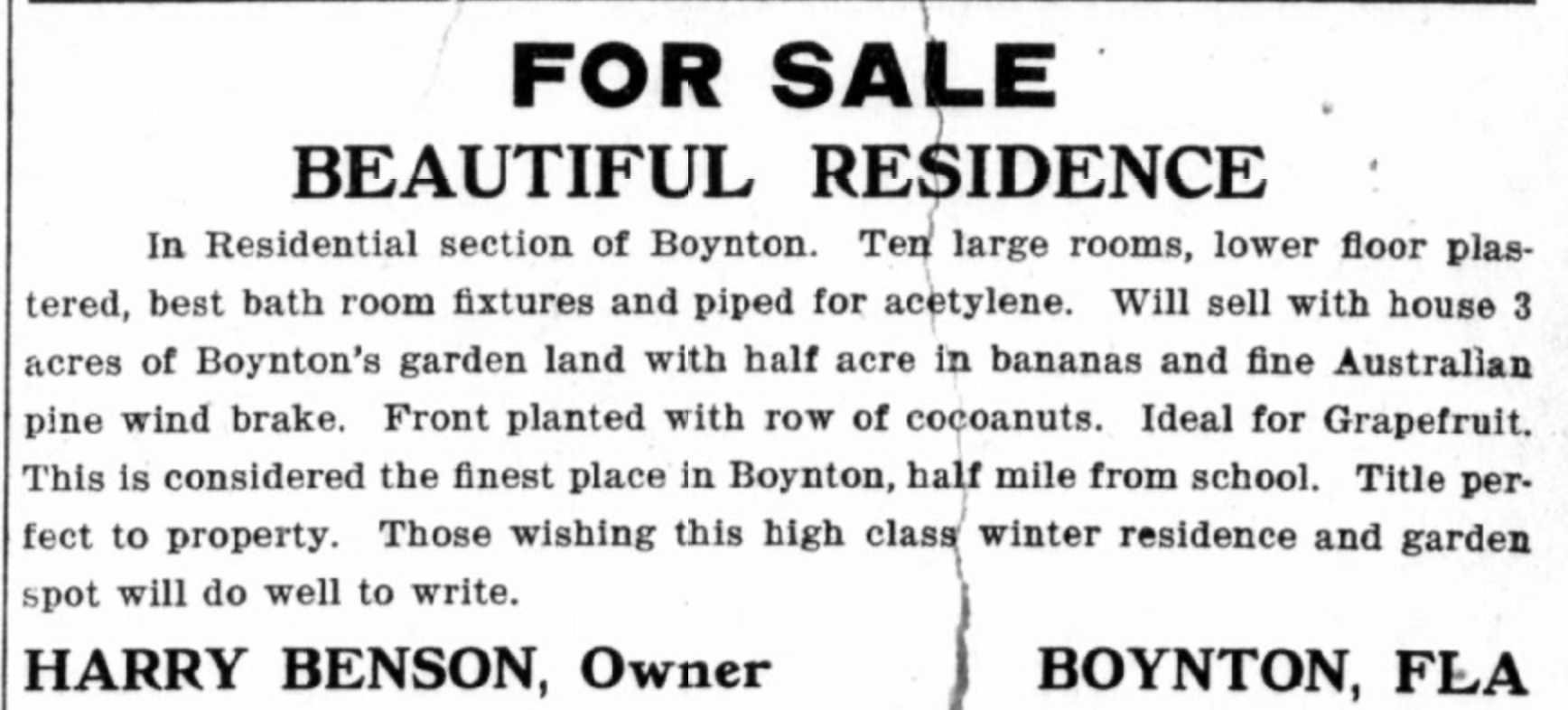
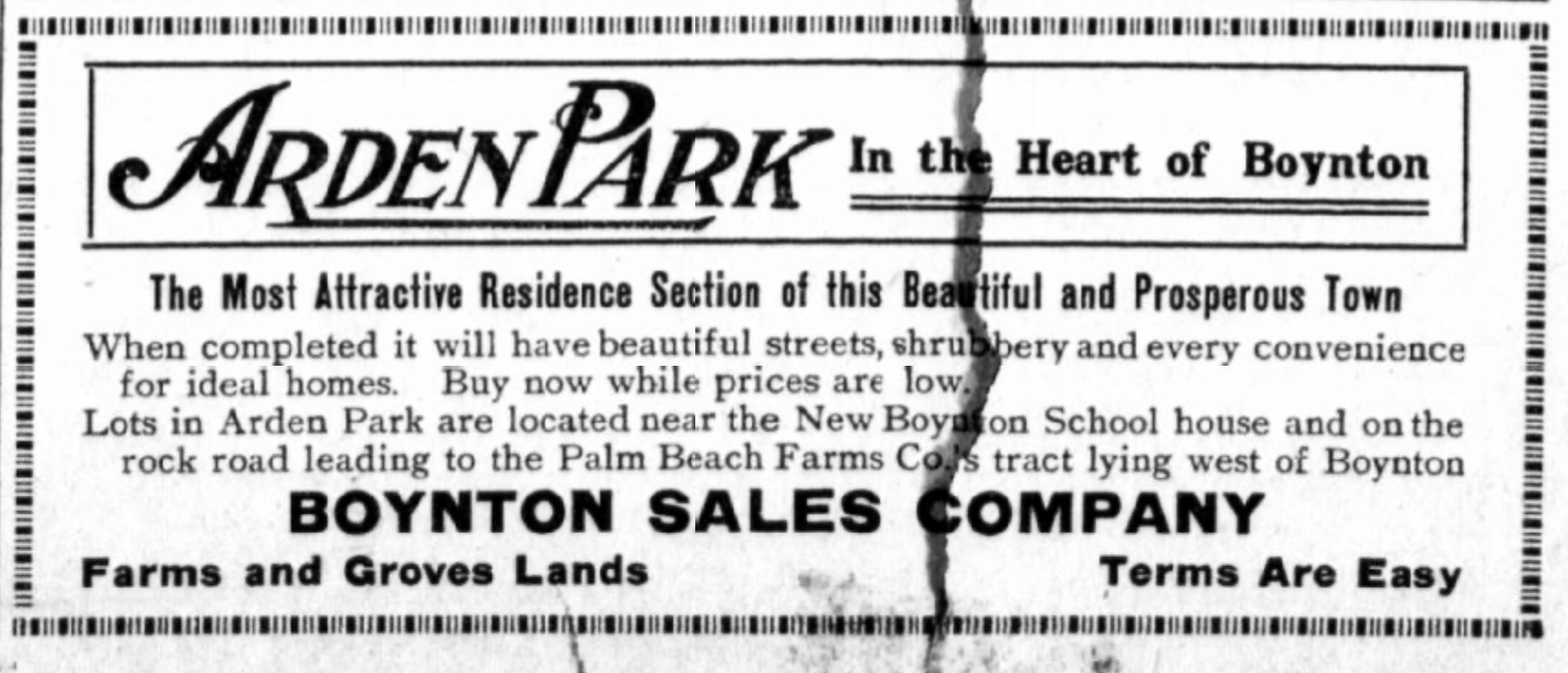
Developers were promoting Boynton’s future. Arden Park was marketed as a planned residential section near the school, and Harry Benson offered a winter residence on garden land.

These ads reflect a working agricultural town supported by tradesmen, merchants, builders, and land developers, a place where both business and community life were firmly taking hold.

Source: January 8, 1914 Lake Worth Herald


Pioneers of Boynton: Samuel B. Cade and Alonzo L. King

Did your ancestors farm in early Boynton? If you have old photos of early families like Cade, King, or others, please contact us. These stories should be documented, and shared with future generations.

Long before the formal establishment of the Town of Boynton, the area that would become Boynton Beach was a frontier landscape of palmetto scrub, tall grasses, and untamed farmland. Among its earliest settlers were two African-American families whose contributions helped lay the foundation for the community: the families of Samuel B. Cade and Alonzo L. “L.A.” King.

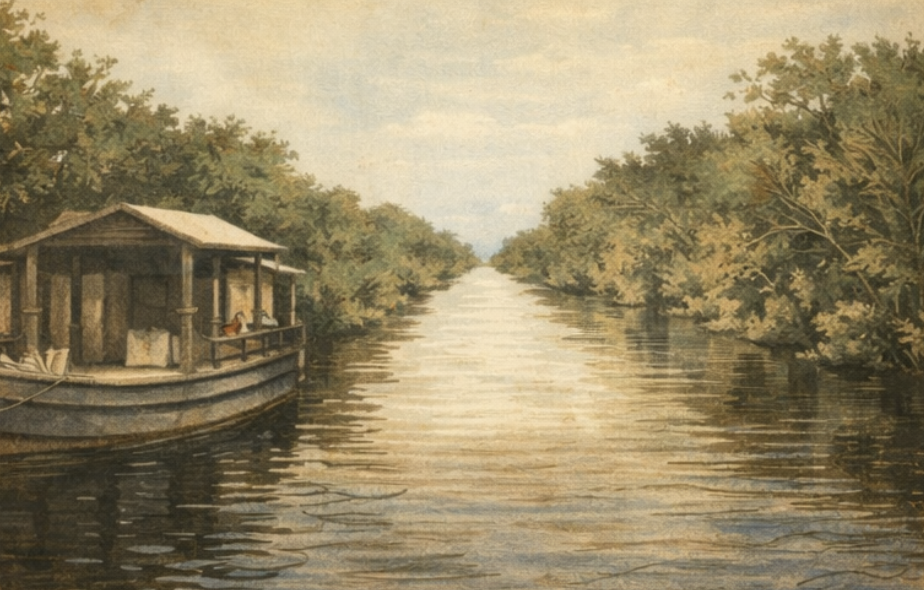
Boynton Canal, 1890s (AI Reimagined)

Farmers, Landowners, and Community Builders

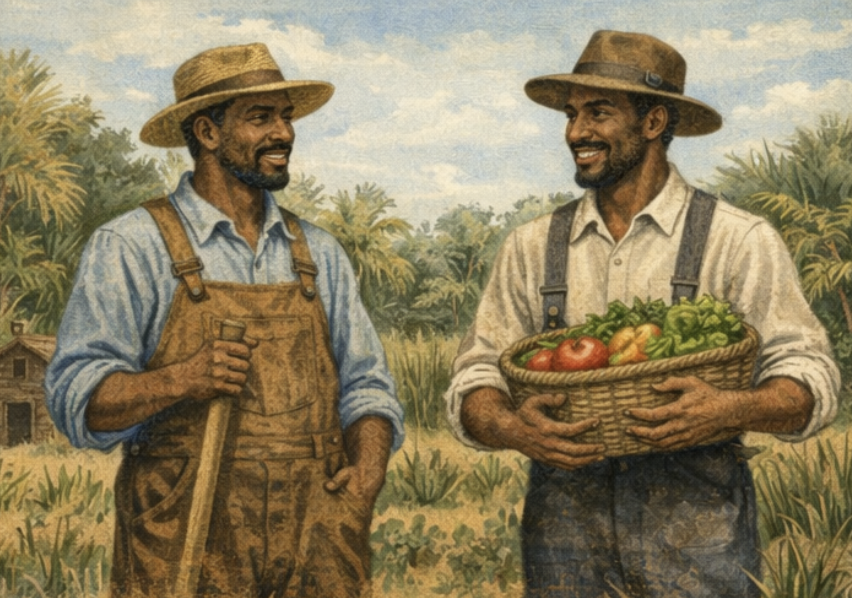
Samuel B. Cade and Alonzo L. King were working farmers who transformed raw land into family farms. Through determination and labor, they established homesteads, raised families, and contributed to the region’s early economy. When new white settlers from Michigan arrived, Mr. Cade and Mr. King taught the newcomers best practices for farming in the unfamiliar sandy soil.

Early African American settlers (AI Reimagined)

Both men brought with them experiences shaped by the post–Civil War South. Samuel B. Cade, born in Georgia in 1852, came of age during Reconstruction. Alonzo L. King, born in 1862 in Virginia, later migrated southward to Florida as part of broader patterns of African-American movement in search of land and opportunity.

Alonzo drove the surrey for the Boynton Hotel owned by Nathan Boynton and Albert & Annie Parker. Samuel Cade lived and farmed nearby, building his household alongside other early settlers. Alonzo King’s son Willie worked as a bell boy in the hotel, and later became a cook.

Census records from 1910 list both men as heads of household in Boynton, identified as farmers and neighbors. Their families were part of a tight-knit agricultural community that contributed materially and socially to the area’s growth.

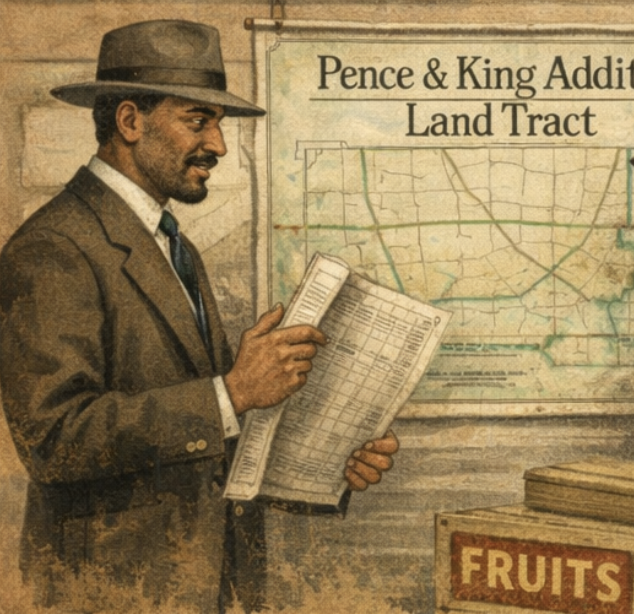
Alonzo King became a landowner of particular note. Historical records indicate his involvement in the development of the Pence/King Addition, a tract created for farming and settlement in partnership with local fruit shipper Cullen Pence. King’s name appears in county commission proceedings during the early twentieth century, reflecting a level of civic participation not always recognized in accounts of early Boynton history.

Pence & King addition (AI Reimagined)

Together, the Cade and King families formed part of a small but significant African-American farming community in the area.

Before the Town Was Platted

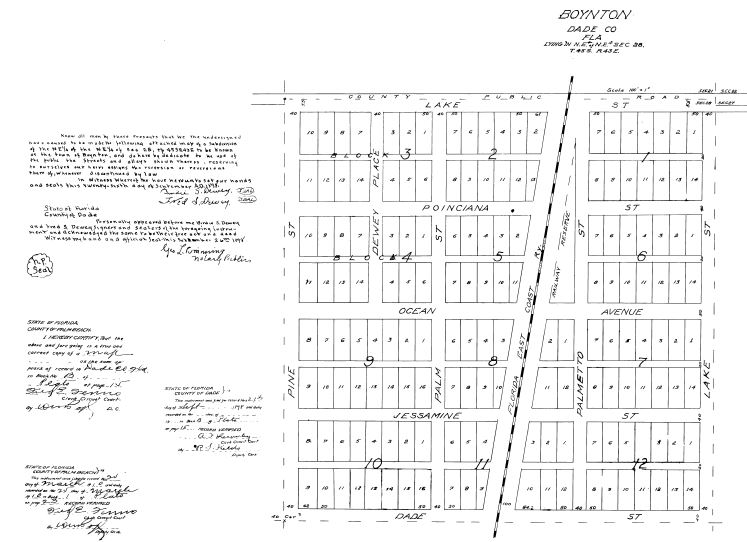
In 1898, Fred Dewey and Byrd Spilman Dewey officially platted the Town of Boynton. However, evidence suggests that Samuel Cade was already living and farming in the vicinity by the mid-1890s, and Alonzo King and his family were also established in the developing settlement.

Plat for the Town of Boynton

The birth of King’s son William in what is now called Boynton in 1884 — prior to the town’s formal platting — underscores the presence of African-American settlers before the arrival of many later residents whose names are more commonly recorded. Their story broadens our understanding of who the true pioneers of Boynton were.

Later Years and Legacy

In the 1910s, Alonzo King relocated to Jacksonville, where he worked as a mason, carpenter, and laborer until his death in 1918. Samuel Cade remained in Palm Beach County, continuing to farm and raise his family until his death in 1924.

Today, as we reflect on Boynton’s origins, it is essential to recognize that African-American pioneers such as Samuel B. Cade and Alonzo L. King were not peripheral figures in the town’s development. They were foundational settlers — farmers, landowners, parents, and citizens — whose labor and resilience shaped the community long before it was formally incorporated.

Their legacy remains an integral part of Boynton’s shared history.

There are no known photographs of Samuel B. Cade or Alonzo L. “L.A.” King. The images included here are modern artistic renderings created with the assistance of ChatGPT. They are based on historical records, census data, and documented details about early Boynton’s landscape and agricultural life.

These illustrations are meant to help readers visualize what Boynton looked like in its earliest days — a sparsely settled frontier of palmetto scrub, waterways, dirt paths, and small homesteads carved out by hardworking families.

If you or your family have photographs of the Cade or King families — or of other early African-American settlers in the Boynton area — we would be honored to scan them. Preserving and sharing these images ensures that the full story of Boynton’s pioneers is remembered and passed on accurately for future generations.

Genealogy Timeline

1852 – Birth of Samuel B. Cade

  • Born in Georgia.
  • Grew up during Reconstruction, learning farming and resilience skills that would guide his family to Florida.

1862 – Birth of Alonzo L. King

  • Born in Prince William County, Virginia.
  • Would later migrate south to Florida, joining other African-American settlers in the developing region.

1883–1888 – Births of Alonzo King’s Children

  • 1883: Anna King born in South Carolina
  • 1884: William King born in Boynton, Florida — before the town was officially mapped
  • 1888: Pembrook King born in Kings Ferry, Nassau, Bahamas — showing the family’s regional mobility

1895 (Approx.) – Samuel Cade in Boynton

  • Evidence suggests Samuel Cade was living and farming in Boynton.
  • He was part of the small African-American farming community that predated the official town plat.

1898 – Boynton Town Plat

  • Fred and Byrd Spilman Dewey officially platted the town of Boynton.
  • Samuel Cade and Alonzo King were already living and farming nearby, showing African-American pioneers were foundational to the community.

1906–1907 – Alonzo King as Landowner

  • Newspaper records list Alonzo King as a landowner in Boynton.
  • Attended county commission meetings, demonstrating civic involvement.
  • Partnered with Cullen Pence, a major fruit shipper, to develop the Pence/King Addition, expanding settlement and agricultural plots.

1910 – Census Snapshot

  • Samuel Cade: Head of household, Black farmer, Boynton resident.
  • Alonzo King: Head of household, Black farmer/landowner, Boynton resident.
  • Both families were neighbors and part of a tight-knit early African-American farming community.

1915–1918 – Later Years

  • Alonzo King moved to Jacksonville, working as a mason/carpenter/laborer, dying in 1918.
  • Samuel Cade remained in Palm Beach County, farming and raising his family until his death in 1924.

Hoffman’s Chocolates: A Sweet Tradition

Hoffman’s Logo

Hoffman’s Chocolates has been a beloved part of Palm Beach County for over 45 years, offering delicious chocolates that have made sweet memories for locals and visitors alike. I first visited the Lake Worth store back in 1987, and I still remember the wonderful smell that filled the air—chocolate, sugar, and and other yummy sweets. It was a scent that stuck with me for years.

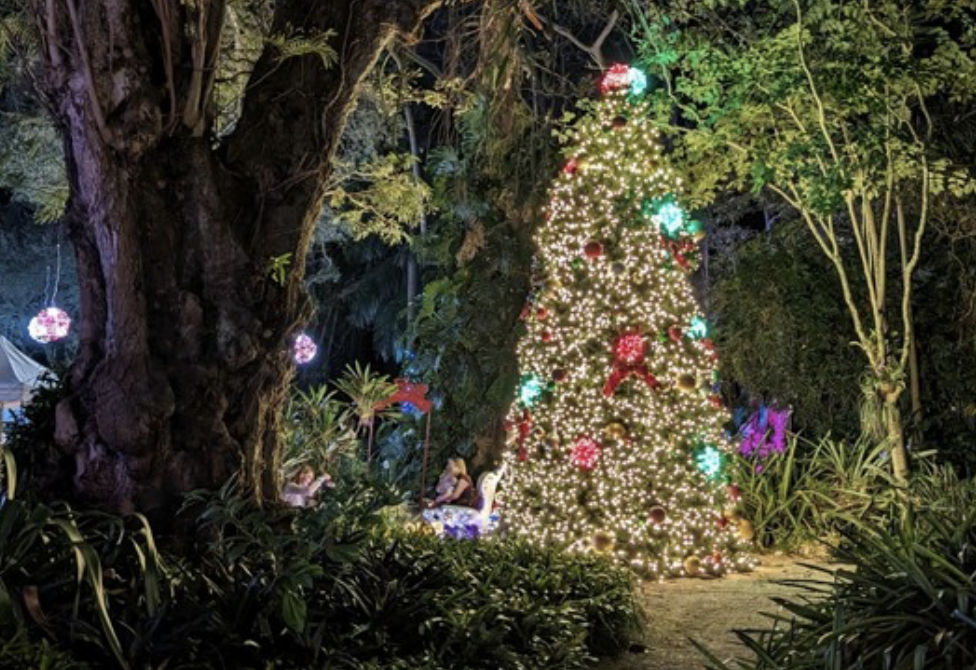
The original store in Lake Worth was small but full of charm. It quickly became a favorite spot in the community, known for its high-quality chocolates and its focus on using the best ingredients. I especially loved the chocolate-covered pretzels, which I often gave as gifts. They were the perfect mix of salty and sweet, and everyone I knew loved receiving them. During the holiday season, Hoffman’s really shined. The Christmas decorations, the Winter Wonderland displays, and the beautiful holiday lights made the store feel magical. It was a tradition for families, tour groups, and individuals to visit, and over 50,000 people would come by during the holiday season to see the massive facility and pick up some gourmet chocolates.

The company grew over the years but kept its personal touch. Founder Paul Hoffman’s handwritten recipes were still used to make each chocolate, keeping the quality and tradition alive. Paul originally bought a small chocolate shop in Lake Worth in 1974, borrowing $1,400 from a friend. His goal wasn’t to make a lot of money but to create a business where he and his family could work together, making delicious chocolate and living a fulfilling life. Over the years, Hoffman’s produced nearly 4 million pieces of chocolate each year, with more than 1,200 products, including over 150 types of truffles. The company used over 100,000 pounds of almonds and pecans each year, and during the busy winter season, production would reach thousands of pounds daily.

Hoffman’s was highly respected in the chocolate world. Bon Appetit called it “one of America’s finest chocolate shops,” and The Wall Street Journal named their Easter basket the best in the nation. Their commitment to quality was clear, and it seemed like Hoffman’s Chocolates would always be a part of Palm Beach County.

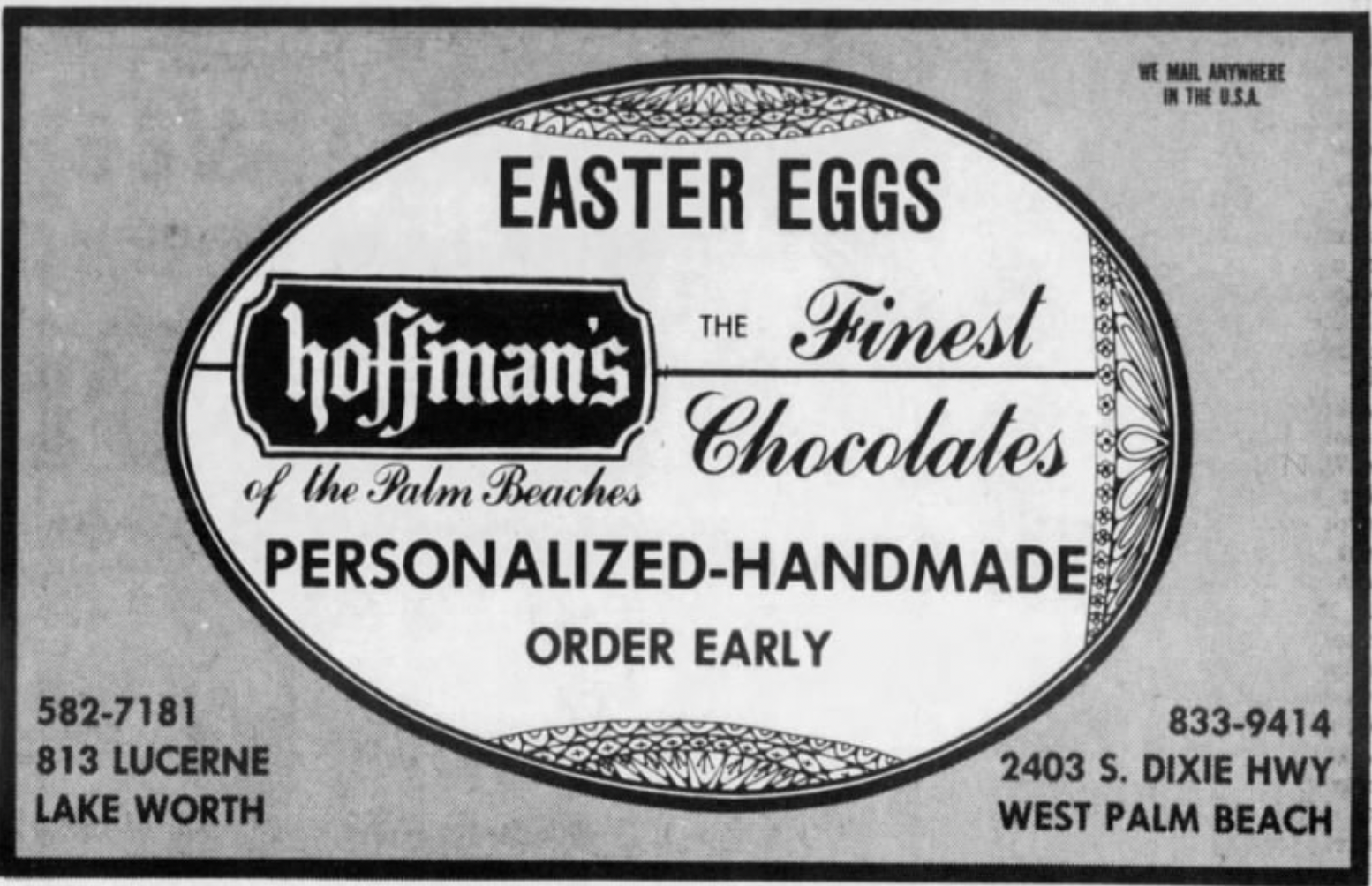
Hoffman’s 1979 Palm Beach Post ad

But in 2013, theHoffman family sold the business to BBX Corp., and things started to feel different. BBX had big plans for the company, focused on expansion, but in doing so, much of the charm and personal touch that made Hoffman’s special seemed to disappear. The small, cozy storefronts were replaced by a more corporate approach, with new locations opening, production moved to Orlando, and the focus shifting away from quality and customer service.

One of the hardest parts for many locals was the loss of the Christmas Holiday Lights. For years, the lights and festive decorations were a major attraction, but after the sale, that tradition faded. The magical experience of visiting Hoffman’s during the holiday season was no longer the same. The business felt less personal, and the community connection seemed to weaken.

With BBX focusing on growth, it’s hard to say what the future holds for the Lake Worth location. It’s possible we could see condos or another type of development in its place soon. The changes to Palm Beach County are clear, and it’s sad to think that the place that once smelled so sweet might soon be gone.

For now, we’ll hold on to the memories of those sweet smells, the festive lights, and the chocolates that were once a part of the community’s heart. Whether or not Hoffman’s Chocolates can return to its roots and bring back the charm that made it special is unclear, but the memories will always remain—a time when chocolate-covered pretzels, holiday decorations, and a local favorite made life a little sweeter.