Rock On America!

🇺🇸 Rock On America! 🇺🇸

As we celebrate Independence Day, the Boynton Beach Historical Society is proud to share one of our favorite America 250 projects—Rock On America!

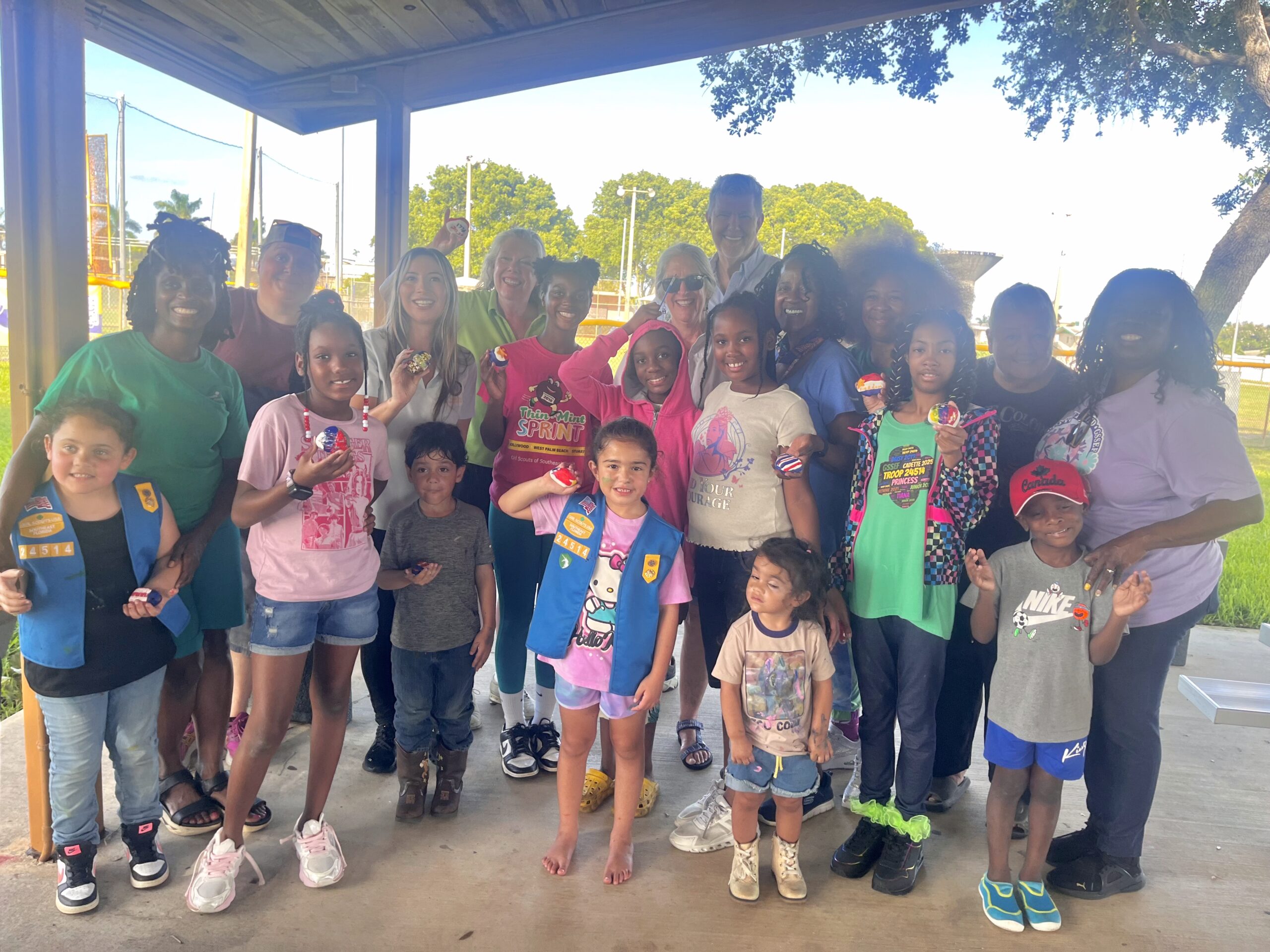
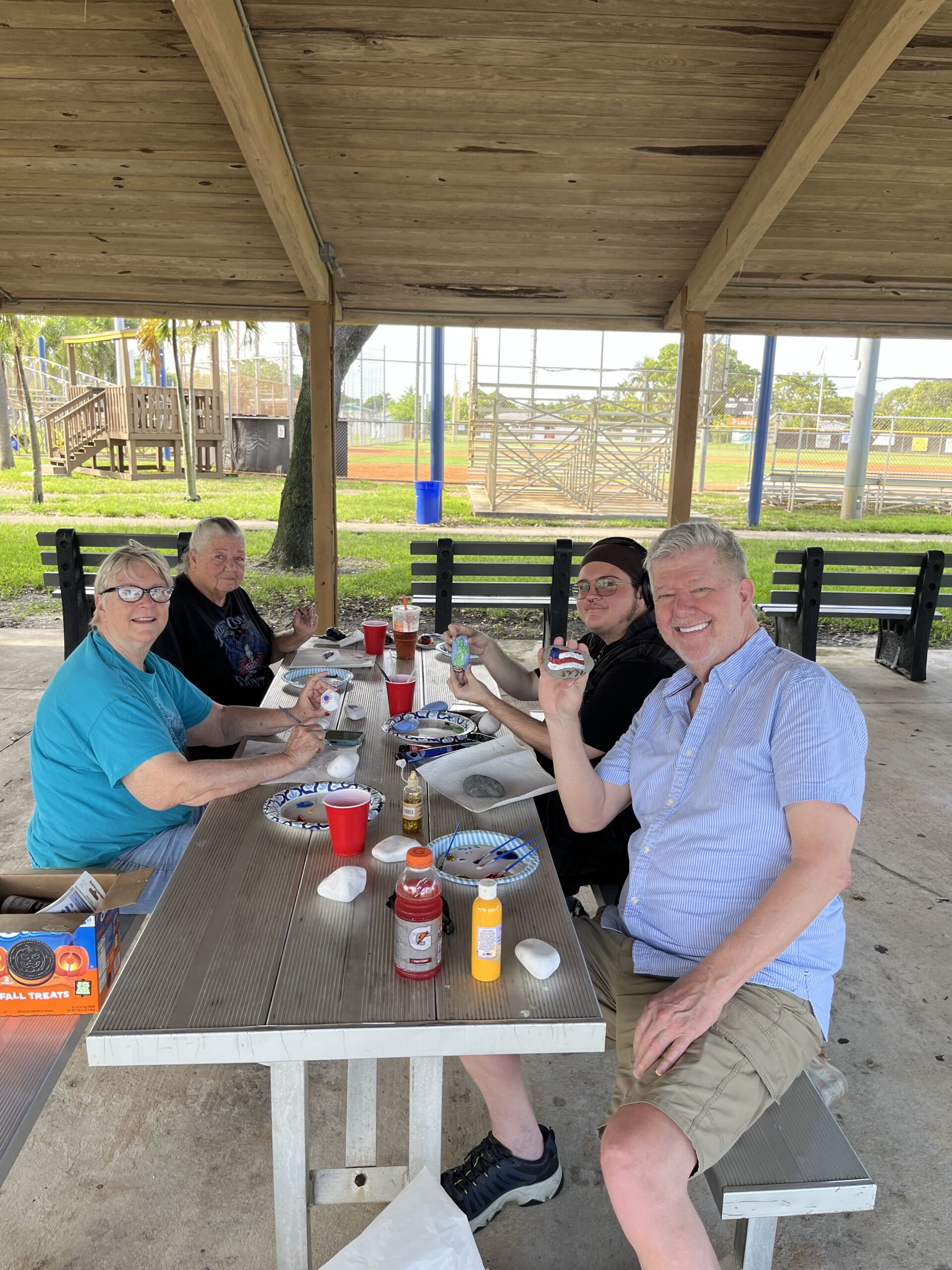
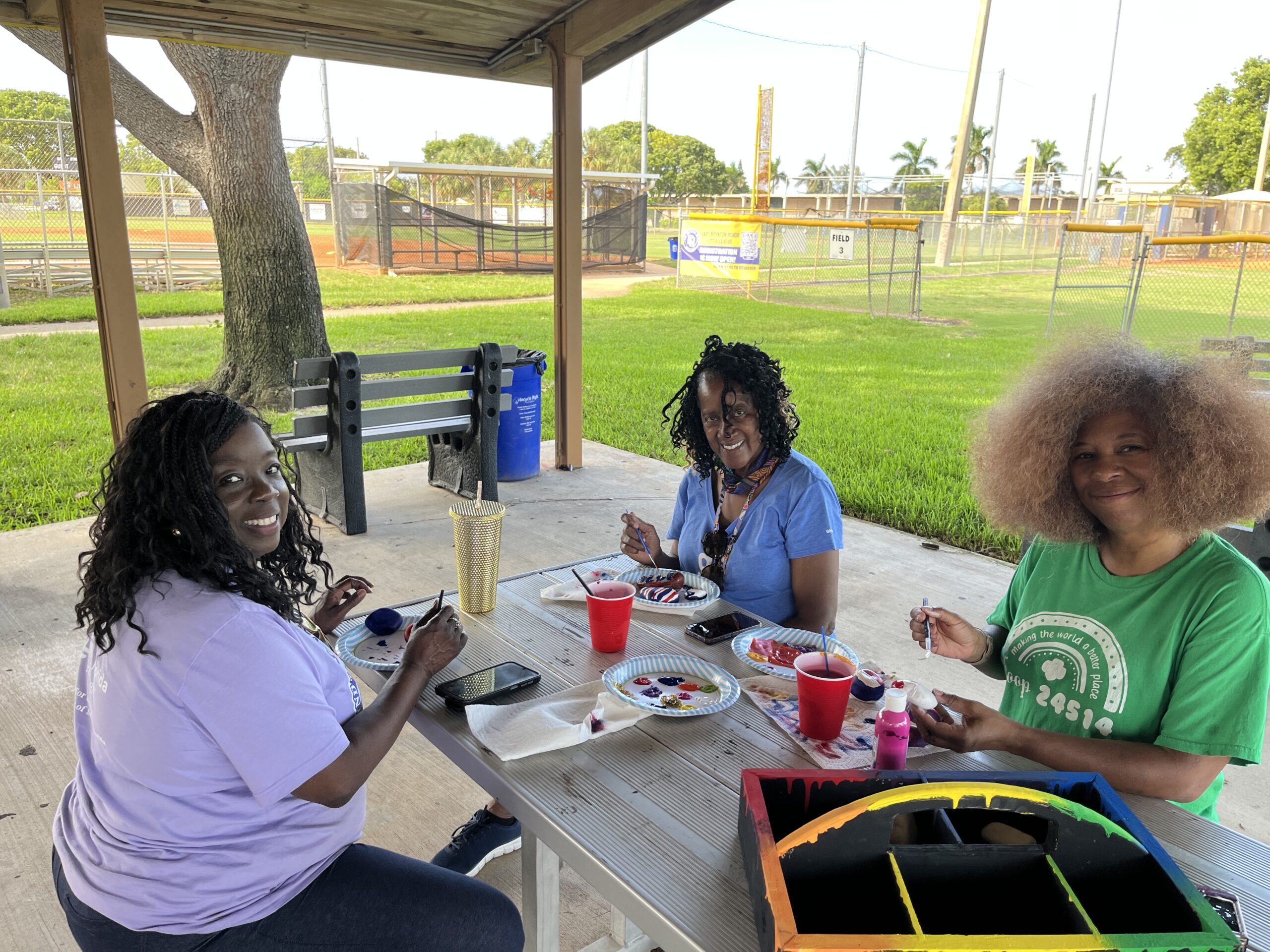
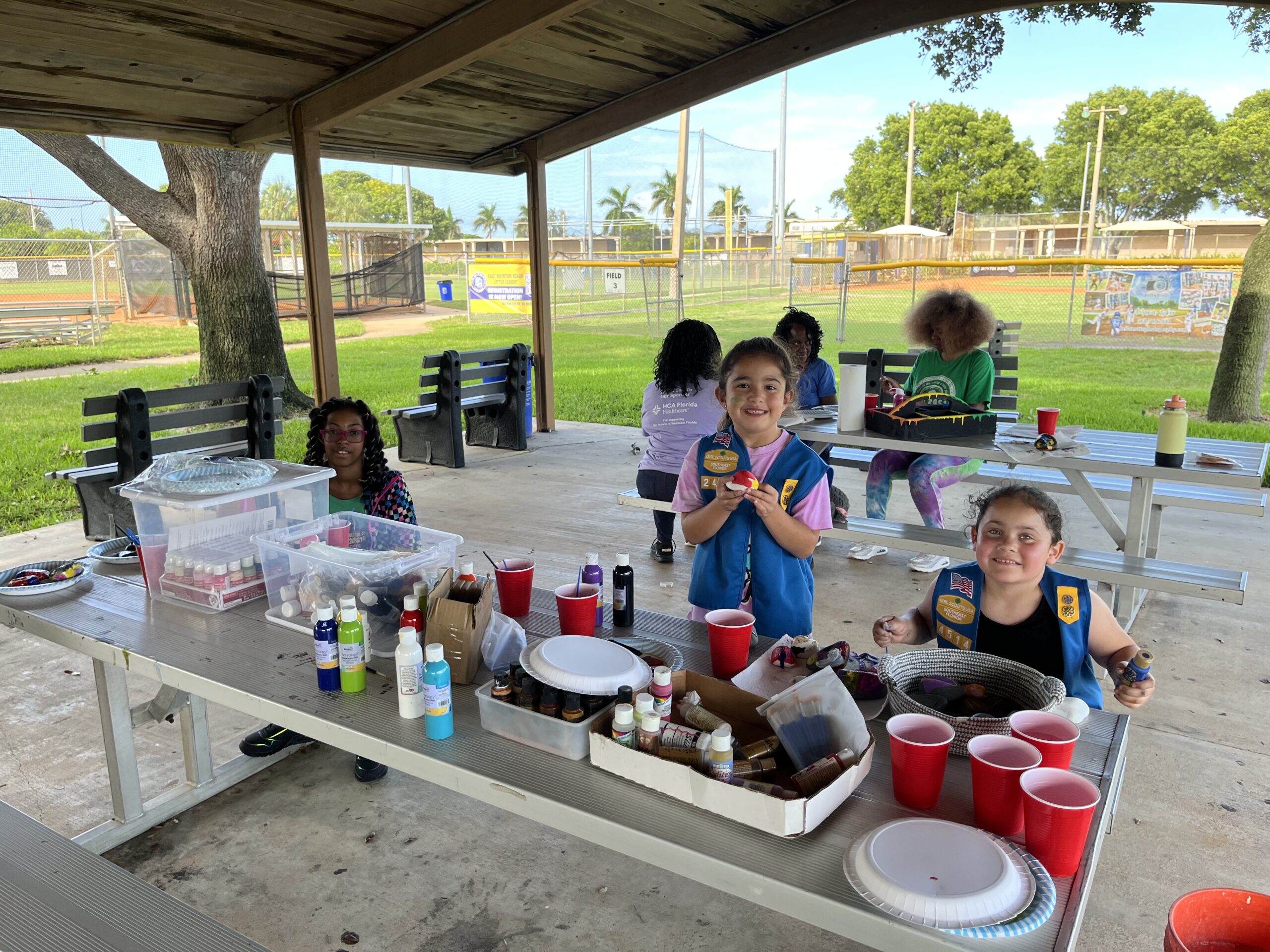
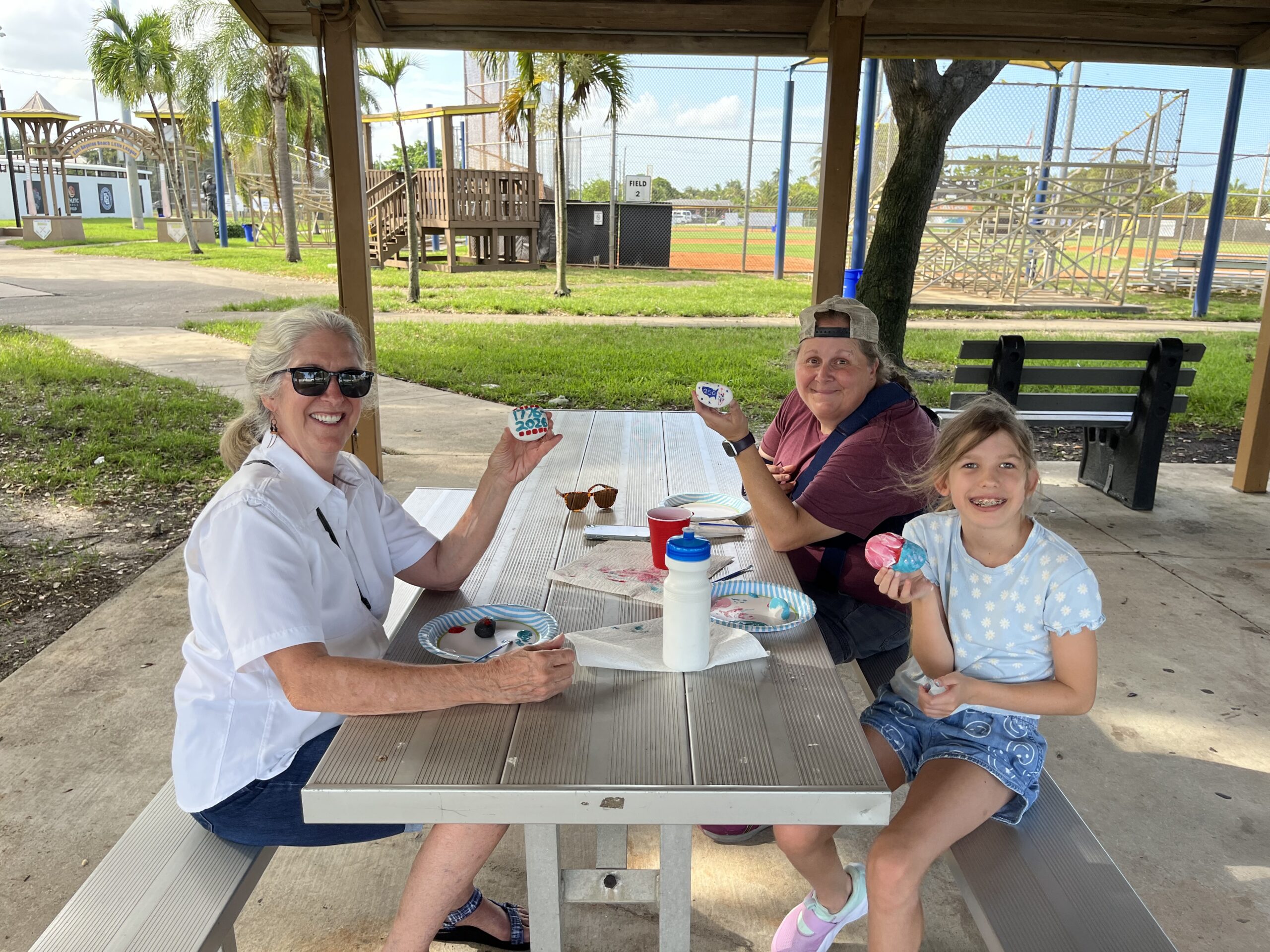
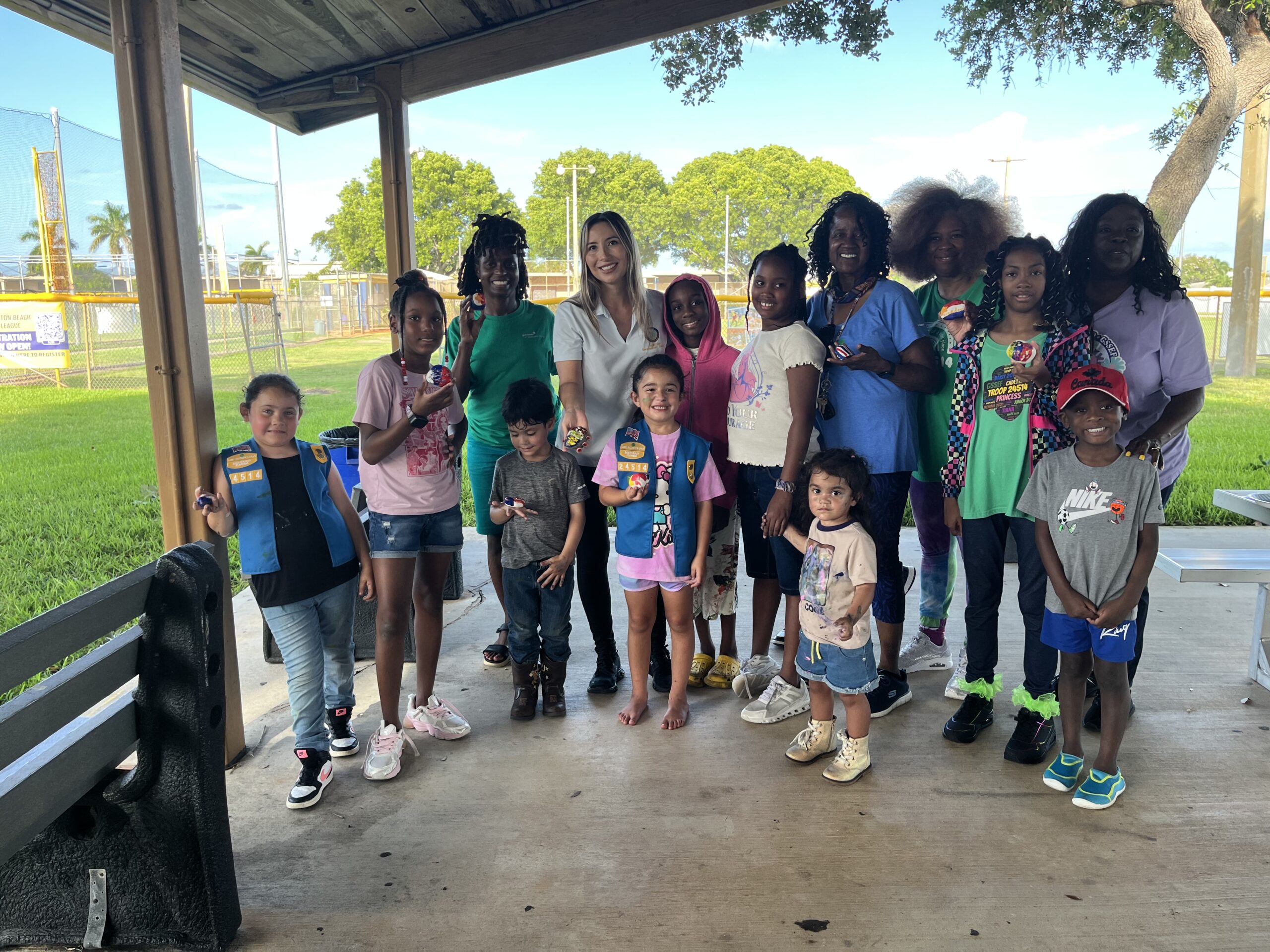
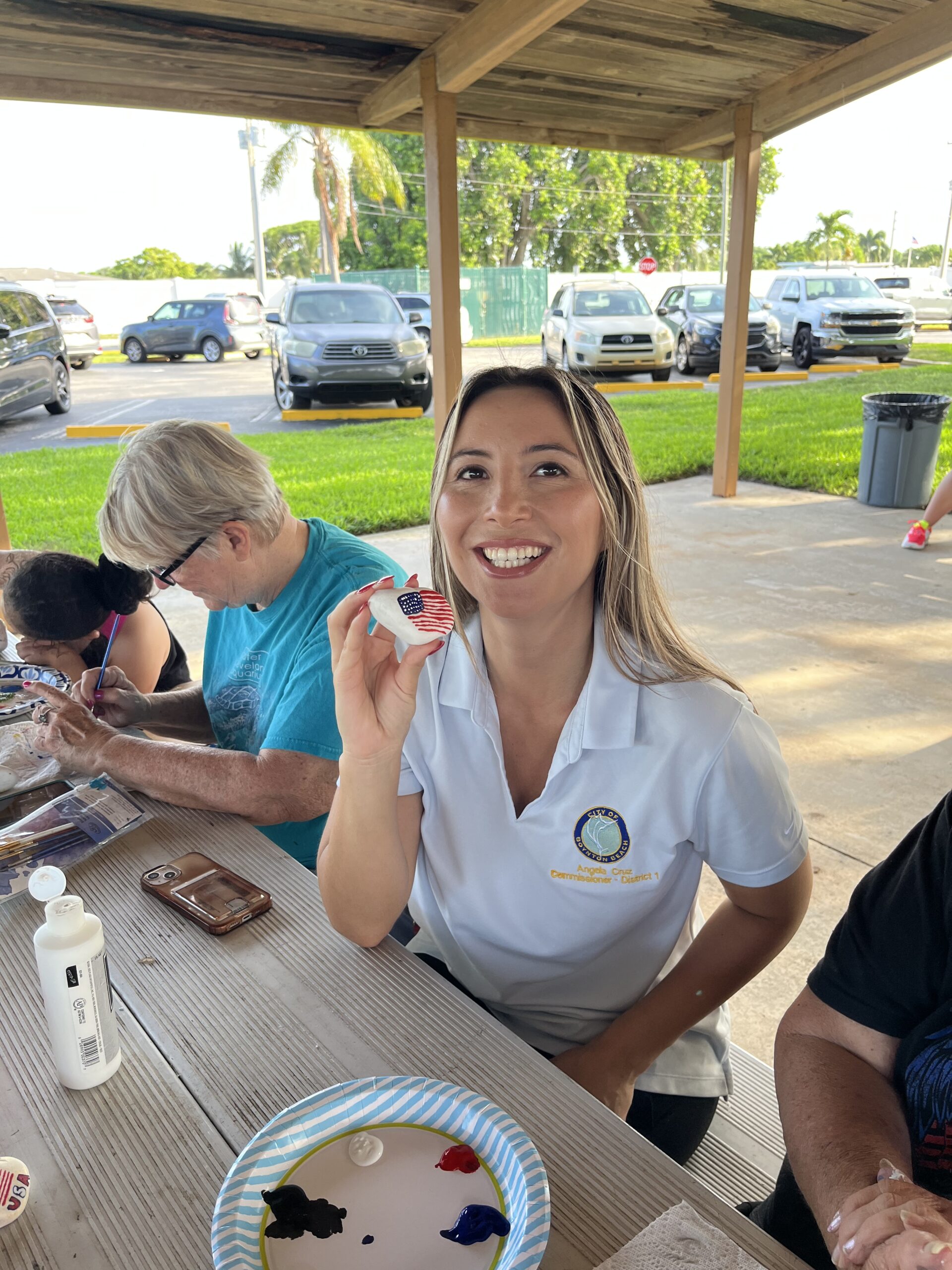
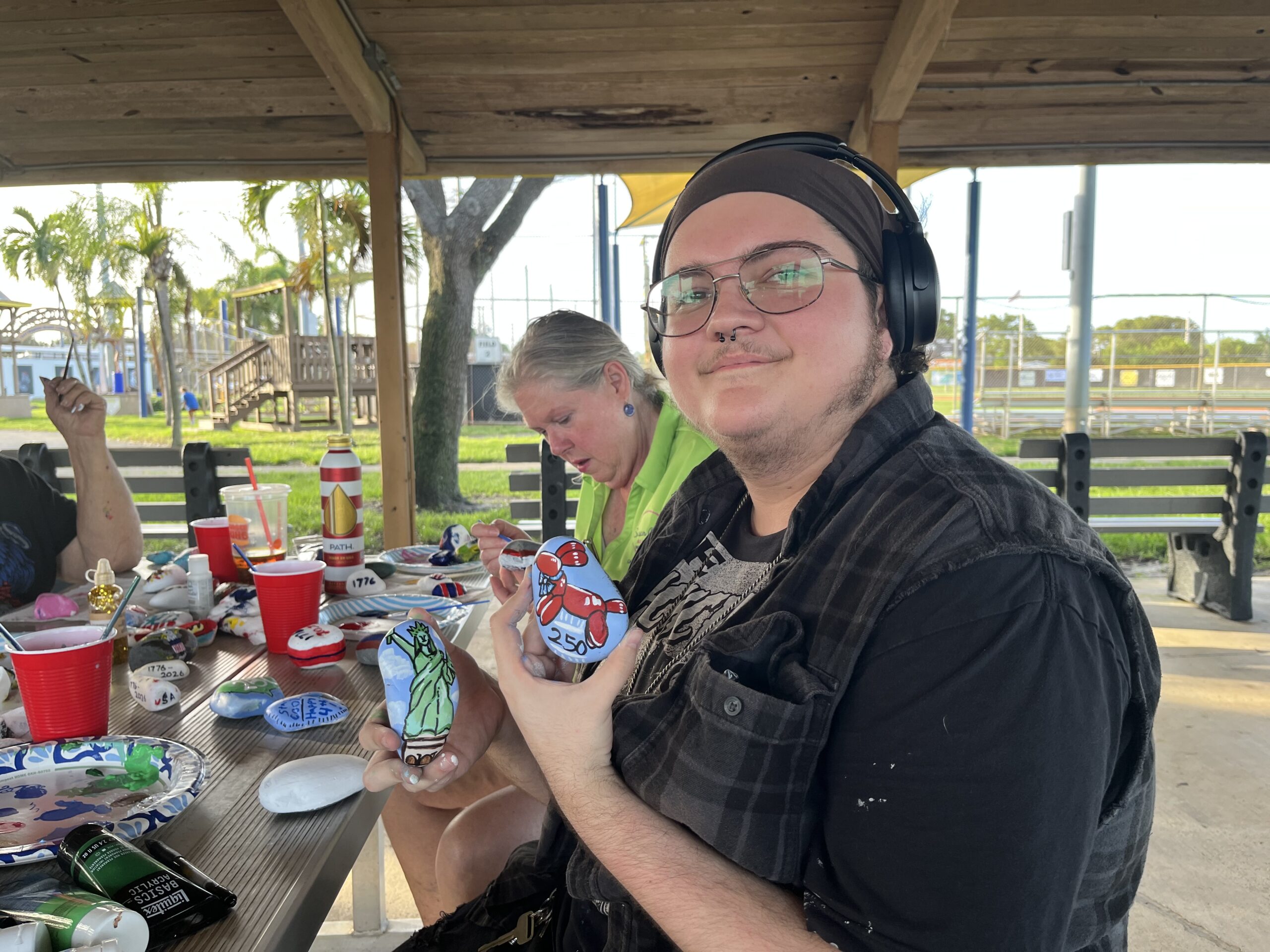
On June 25, we were honored to welcome Boynton Beach City Commissioner Angela Cruz and Girl Scout Troop 24514 as we gathered to paint patriotic rocks filled with messages of encouragement, hope, and love of country.

These special rocks are now being placed throughout our community for neighbors to discover. If you find one, we hope it brings a smile to your face and serves as a reminder that our freedom, our history, and our democracy are precious gifts that deserve to be appreciated and protected.

As you celebrate this Fourth of July, keep an eye out—you just might find a little piece of patriotism waiting for you!

❤️🤍💙 Happy Independence Day from the Boynton Beach Historical Society! 🇺🇸

#RockOnAmerica #America250 #BoyntonBeachHistoricalSociety #IndependenceDay #FourthOfJuly #Patriotism #Community #BoyntonBeach

America’s 250th: How did Boynton Beach Celebrate the Nation’s Bicentennial?

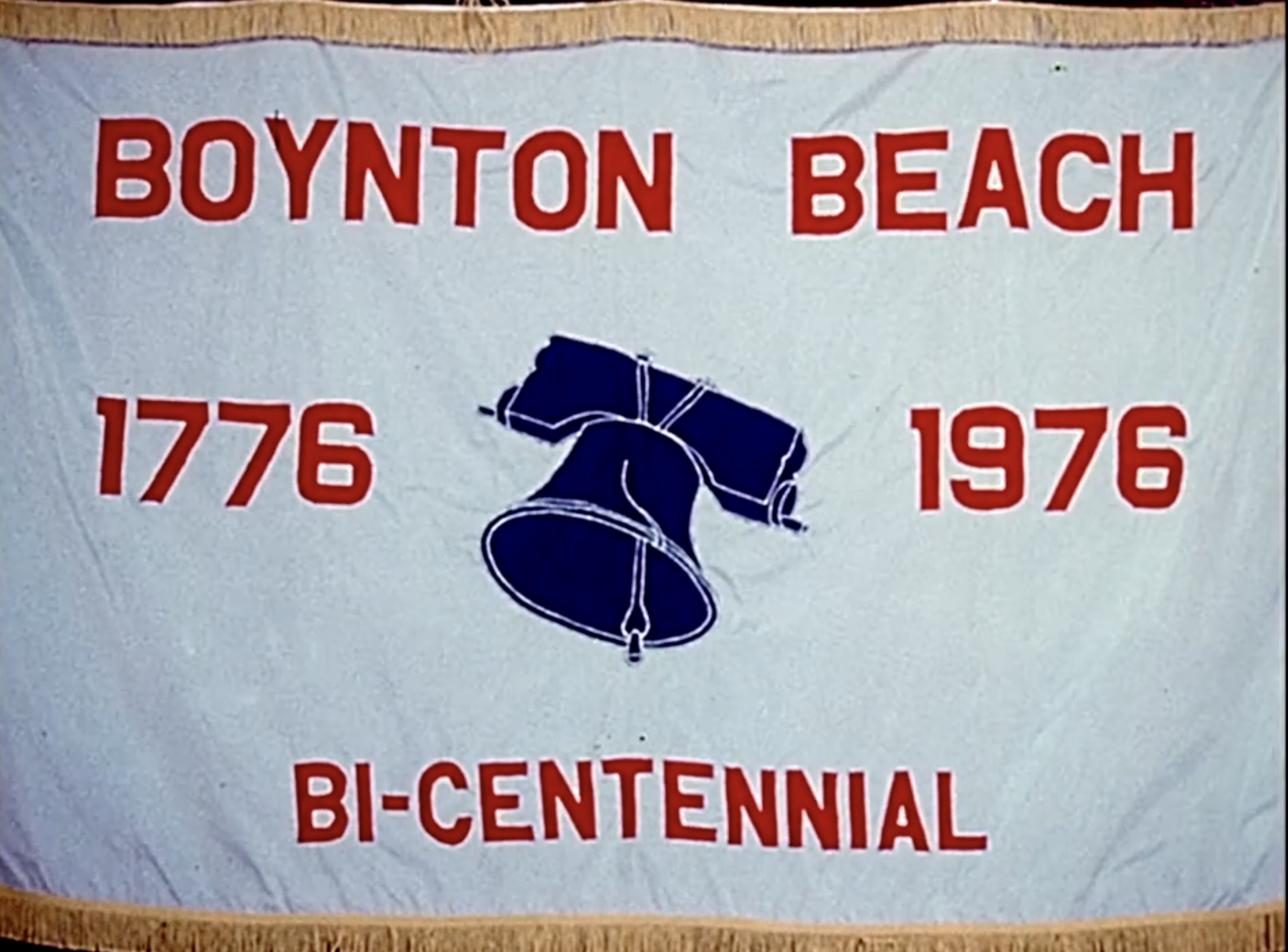
Bicentennial banner

As America celebrates its 250th birthday in 2026, it’s hard to believe that nearly fifty years have passed since the nation’s Bicentennial in 1976. For many who lived through it, it seems like just yesterday—or almost yesterday.

In 1976, Boynton Beach was a city of less than 25,000 residents. Today, more than 80,000 people call Boynton Beach home. The city was smaller, quieter, and still closely tied to the farming and fishing traditions that had shaped the community for generations.

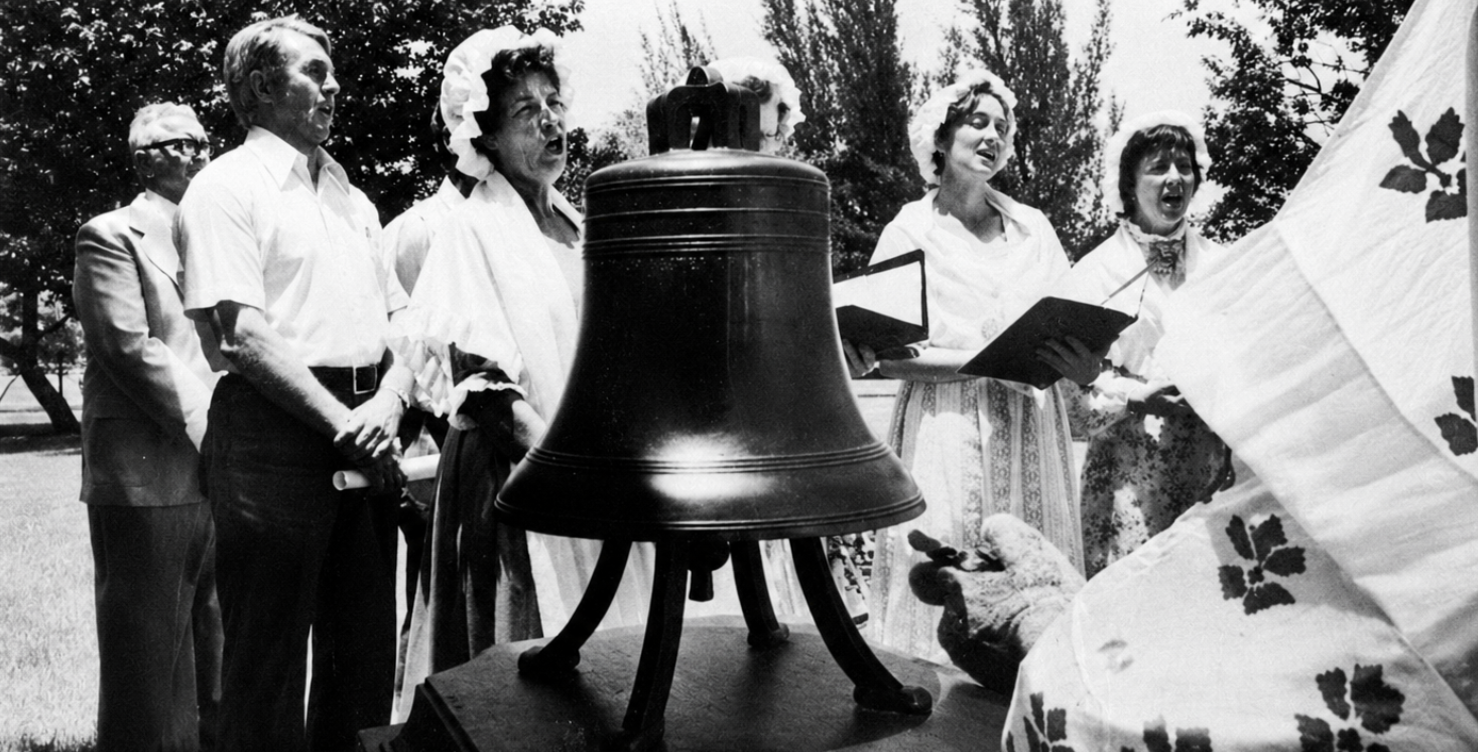
Boynton Bicentennial Liberty Bell dedication

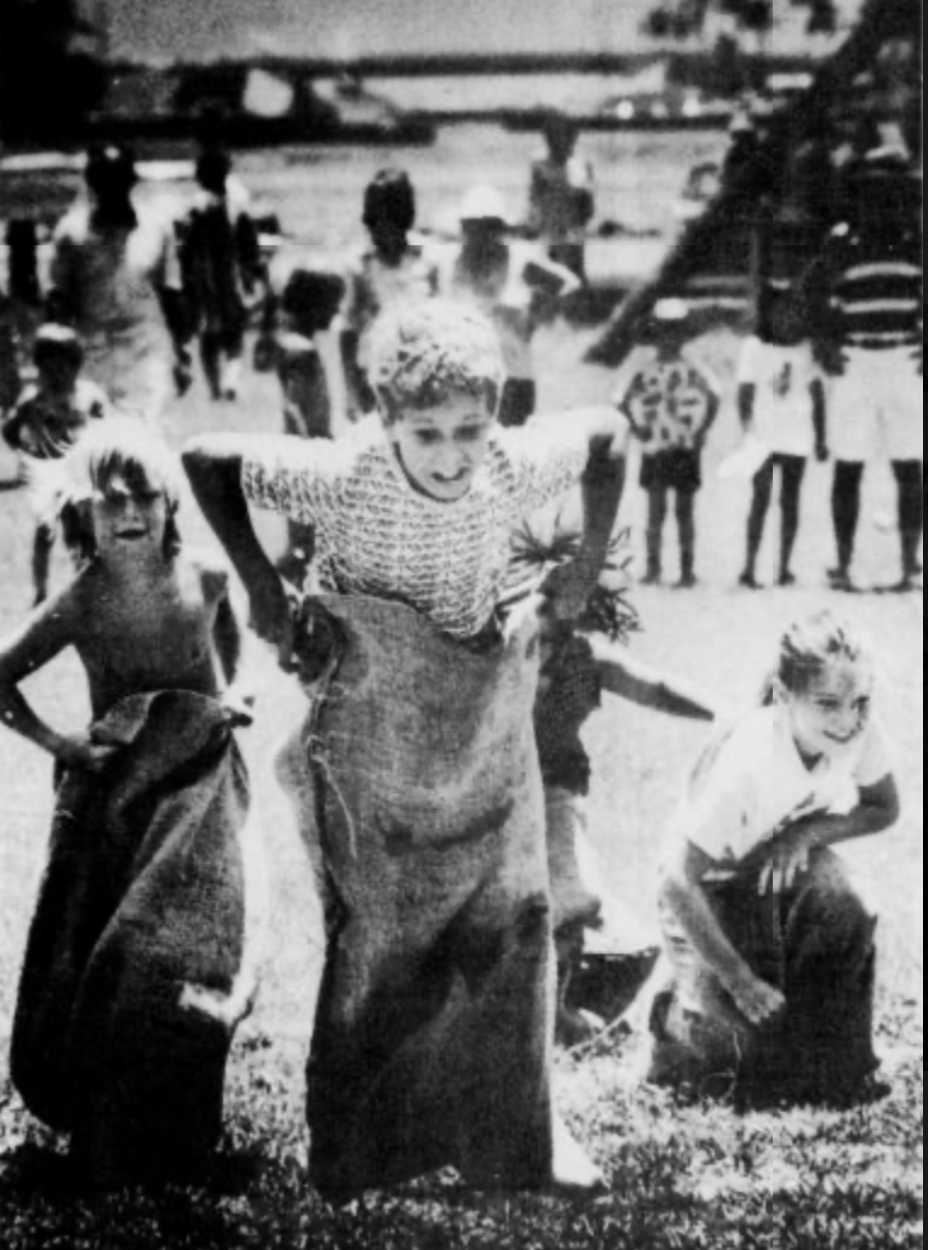
Like communities across the country, Boynton Beach embraced the Bicentennial with a year of patriotic activities. The main July 4 celebration was held at Boat Ramp Park on the Intracoastal Waterway. Residents enjoyed games, contests, square dancing, entertainment, barbecue, and a family picnic atmosphere. At 2 p.m., city officials rang Boynton Beach’s replica Liberty Bell as part of a nationwide Bicentennial bell-ringing ceremony.


Fun and games at the 1976 Independence Day celebration


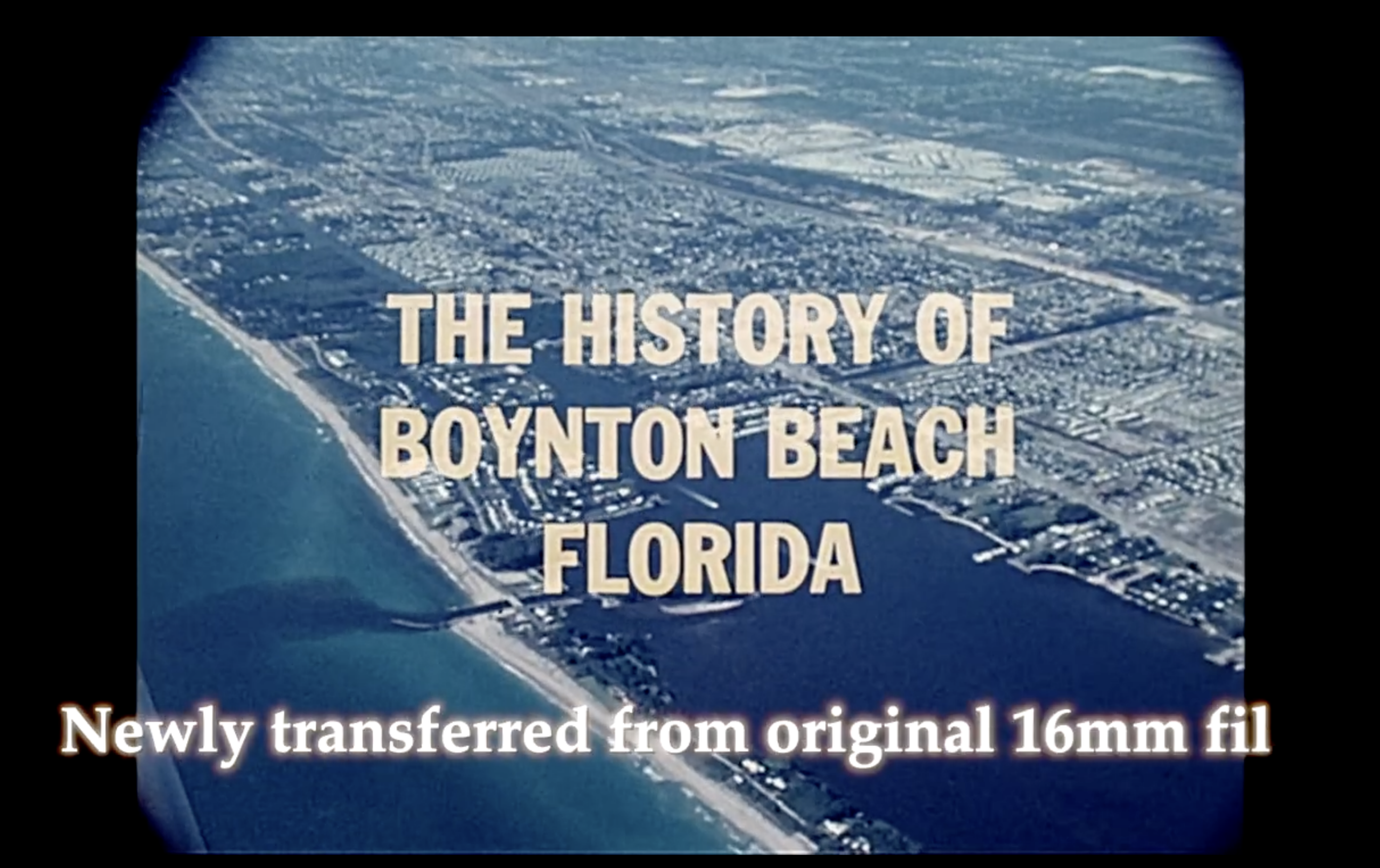
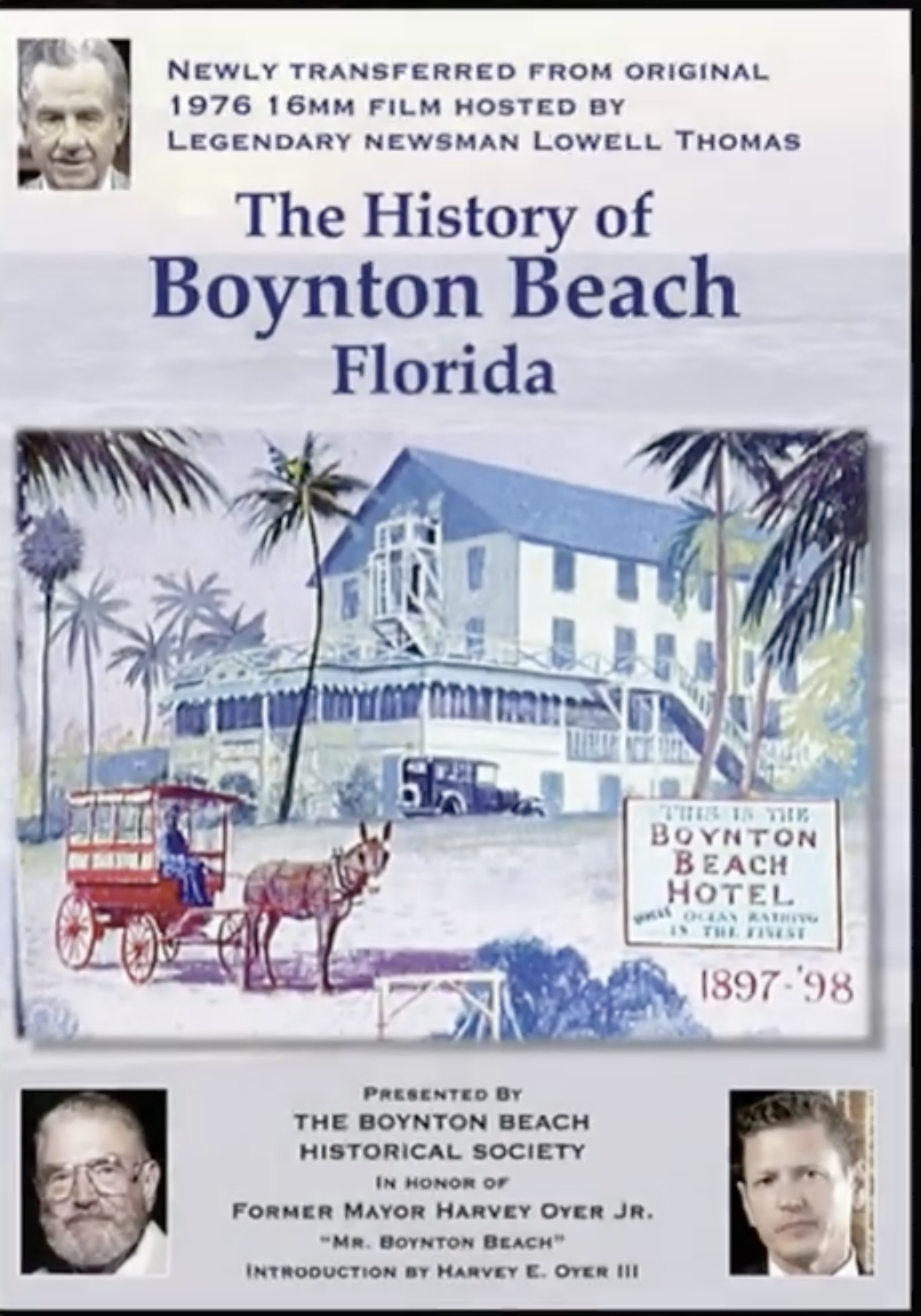
One of the highlights of the day was the television premiere of The History of Boynton Beach, a documentary narrated by legendary broadcaster Lowell Thomas. The film told the story of Boynton Beach from its earliest days to the present and was broadcast on Channel 12 during the celebration.

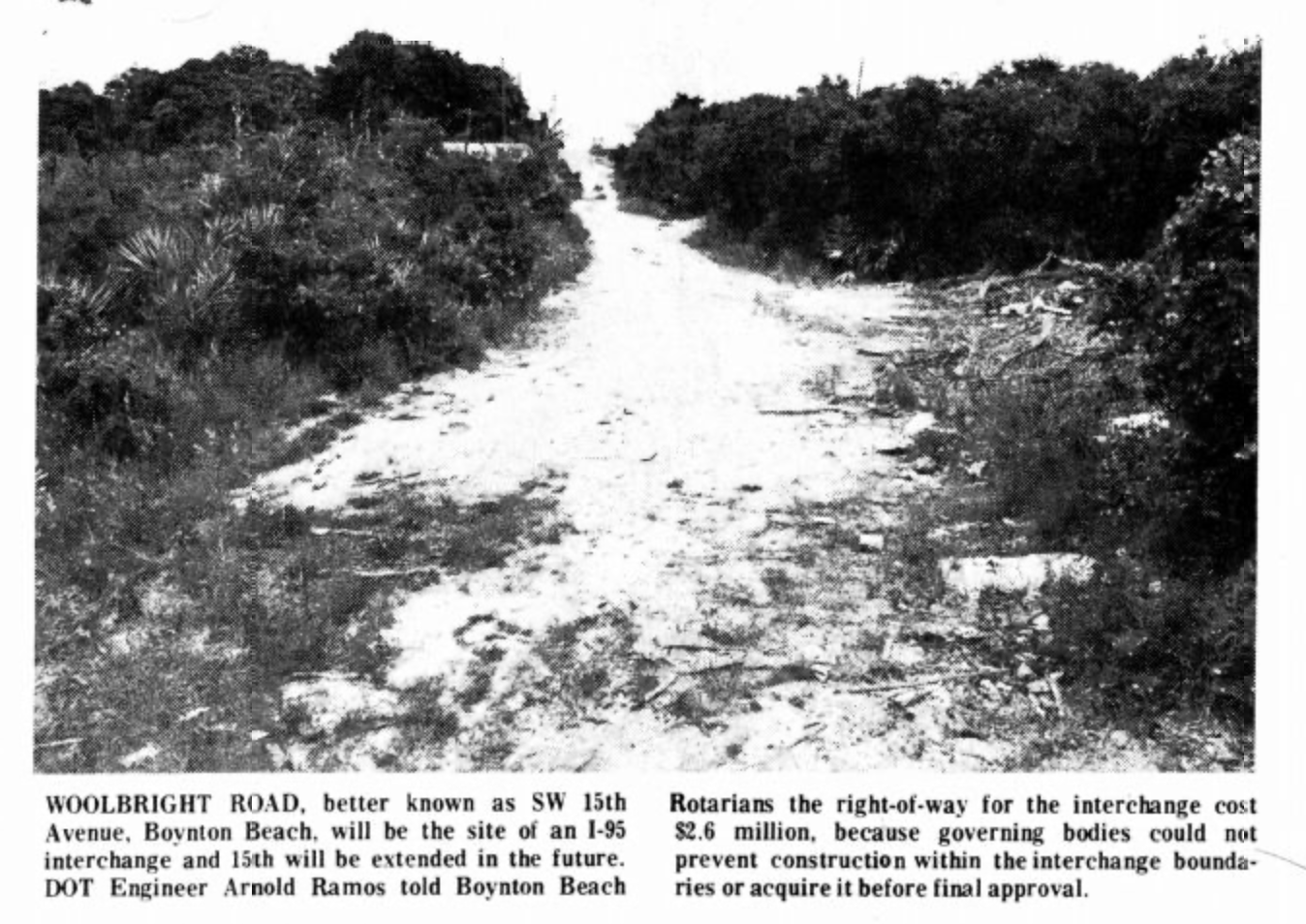
The Bicentennial year was also a time of tremendous change. Interstate 95 was opening through the area, connecting Boynton Beach more directly to the rest of South Florida and helping fuel future growth. While the new highway brought many benefits, it also marked the beginning of a shift away from the traditional downtown district that had long served as the center of community life.


Another milestone came with the opening of Congress Middle School. Appropriately for the Bicentennial year, the school’s colors were red, white, and blue. Students attending the brand-new school that fall were part of a community that was beginning a new chapter in its history.

The city also created a Bicentennial time capsule, preserving memories and artifacts from 1976 for future generations. Like many communities across America, Boynton Beach wanted to leave a record of that special year for those who would come after.

Remastered “History of Boynton Beach” film with a new introduction by Harvey E. Oyer III.

Watch the film here.

Looking back, 1976 was a turning point. Boynton Beach was still a small coastal community rooted in agriculture, fishing, and its historic downtown. Yet the growth that would transform the city was already underway.

Do you remember Boynton Beach’s Bicentennial celebration? Were you at the Boat Ramp Park festivities, the Liberty Bell ceremony, or the fireworks? Do you remember the opening of I-95, the first year of Congress Middle School, or the Bicentennial time capsule?

We’d love to hear your memories.

How I-95 Changed Downtown Boynton Beach

Ever wonder why Boynton Beach never developed a downtown like Delray’s Atlantic Avenue? The answer may lie in two highways built decades ago.

When Interstate 95 cut through Palm Beach County in the late 1960s and early 1970s, it promised faster travel and modern transportation. But for towns along its route, the new highway also came with tradeoffs. Boynton Beach was one of them.

A March 1969 Boynton Beach News Journal article described the planned route of I-95 through the city. The interstate would pass through Boynton with just two exits: NE 2nd Avenue (today’s Boynton Beach Boulevard) and SW 15th Avenue (now Woolbright Road). Between those two points, the highway would cut directly through neighborhoods and businesses.


The project required taking land along the route. The article noted that three houses on SW 8th Street just south of SW 2nd Avenue would be removed to make way for the interstate. Businesses were affected as well. Rinker Materials would have to relocate because the new highway would pass directly through its property.

Residents and businesses along Ocean Avenue raised concerns during planning, asking how the interstate would affect access across town. Their concerns were justified.

State Road Department officials explained that Ocean Avenue would not cross the interstate. Because the highway would be elevated at the nearby interchange, building a crossing over both I-95 and the railroad tracks was considered too expensive. The plan simply eliminated it.

That decision had long-lasting consequences.


Ocean Avenue had long been the main route into downtown Boynton Beach, the historic business district near the Intracoastal Waterway.

Before the interstate era, motorists traveling north and south along U.S. 1 and Dixie Highwaynaturally passed through downtown, providing steady traffic for local shops and restaurants.

The shift in travel patterns had actually begun earlier. When the Florida Turnpike—then called the Sunshine State Parkway—opened in 1957, long-distance drivers were already being funneled onto a faster route west of the coastal towns instead of traveling through them.

The arrival of I-95 completed the bypass.


With exits only at Boynton Beach Boulevard and Woolbright Road, drivers on the interstate had no direct route into downtown via Ocean Avenue. Thousands of cars passed the city every day, but most never entered the historic business district.

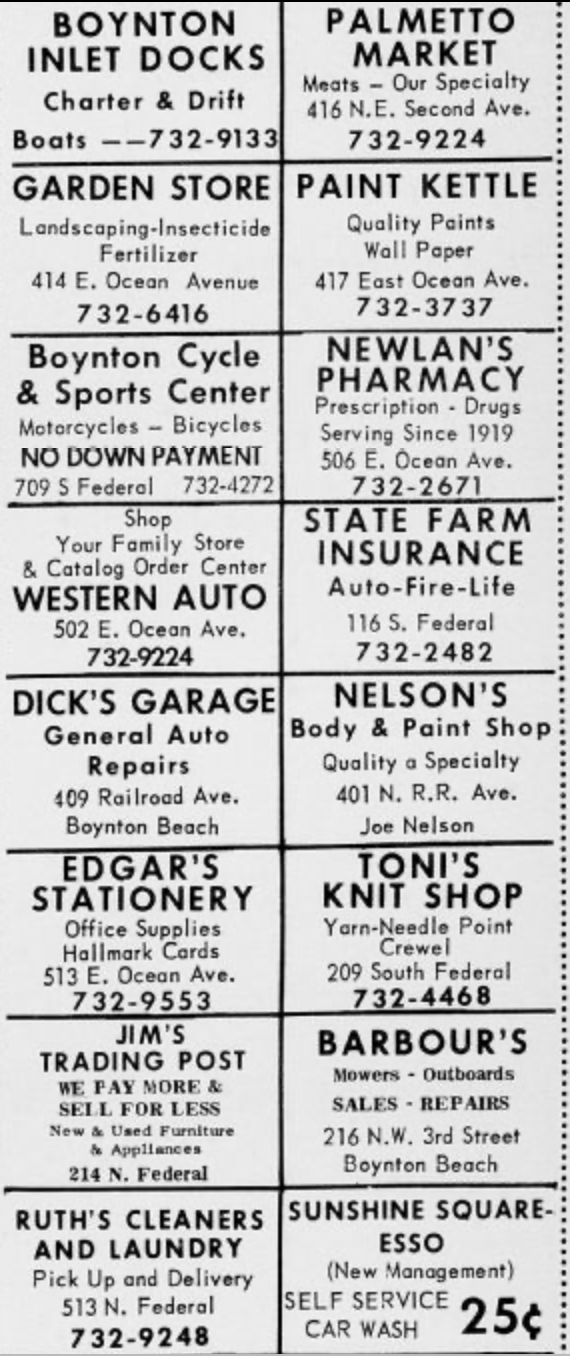
Over time, traffic that once flowed naturally toward the waterfront disappeared, and businesses that depended on pass-through customers struggled. As development followed the interstate westward, downtown Boynton Beach was gradually left off the main travel route.

By the time the Boynton Beach Mall opened in 1985, much of Boynton’s retail and restaurants had closed, or moved west.

Looking back, the story helps explain why the once-busy downtown district faded. The highway that connected South Florida also redirected the traffic that had once kept Boynton’s historic center alive.


Park Shores Manor: Boynton’s first Townhouse/Condominium Project

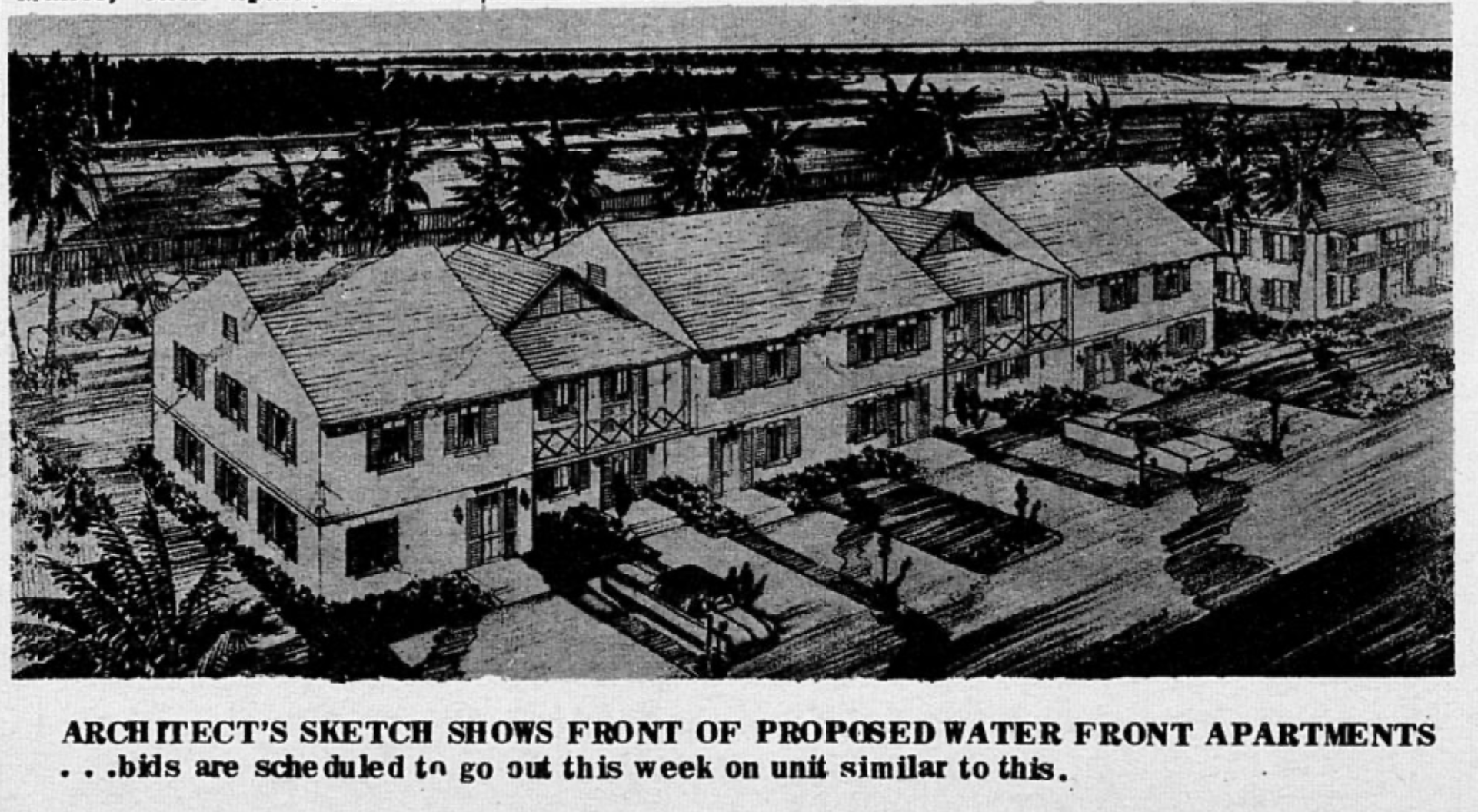
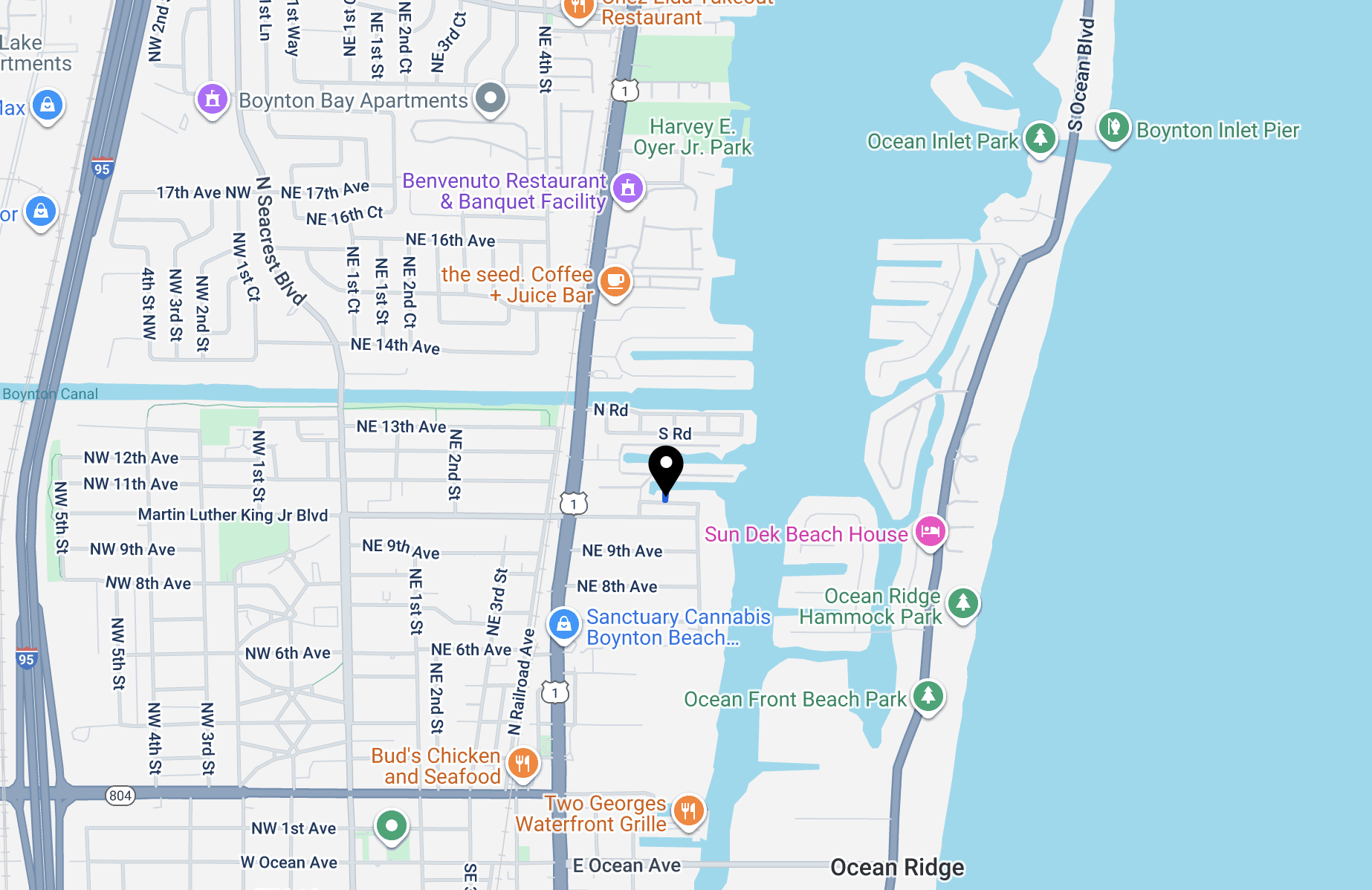
In 1963, Boynton Beach entered a new era of residential growth when former mayor J. Willard “Bill” Pipes announced plans for a $3.5 million condominium complex to be built along the west side of the Lake Worth Lagoon between Northeast 10th and 12th Avenues. The project, called Park Shores Manor, was planned as a 23-building community of two-story residences, totaling 117 living units. It represented one of Boynton Beach’s first ventures into the townhouse and condominium style of living, a concept still new to most of Florida at the time. Pipes, who had been a Pepsi-Cola executive before returning to local business, saw in Boynton Beach the ideal setting for a modern, self-contained residential community that combined independence with shared amenities.

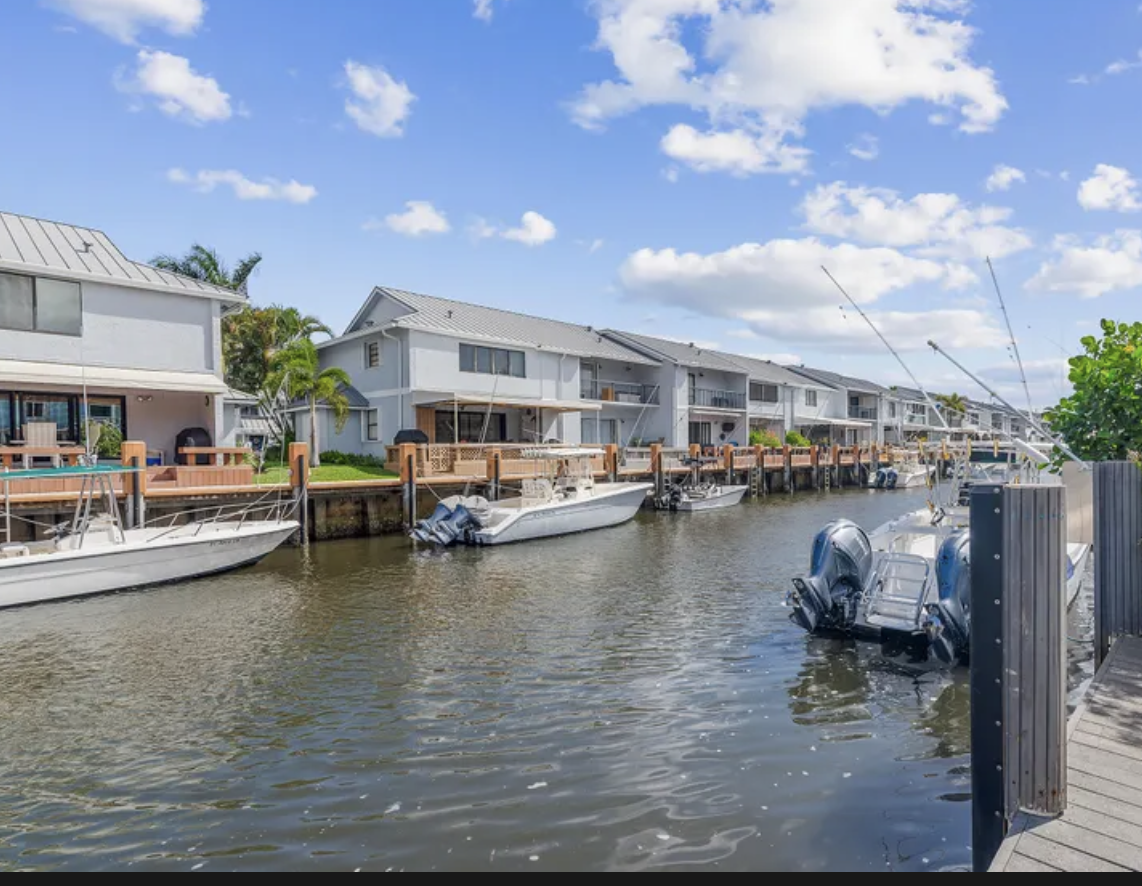
Palm Beach architect John Stetson designed the project in a “tropical, island-type” style with a Mediterranean influence. The homes were organized as townhouses with living rooms and kitchens on the first floor and bedrooms on the second. Each building faced either Lake Worth (today’s Intracoastal Waterway) or a man-made canal and included a private dock and patio. Walls and hedges separated the units, creating privacy while maintaining a sense of community. The four-acre property was located almost opposite the Boynton Inlet, offering quick access to the Intracoastal Waterway and the Atlantic Ocean.


Pipes emphasized that Park Shores Manor would be built as a true condominium, a legal arrangement that allowed each owner to hold title to their individual unit and the land beneath it. This differed from the cooperative housing model, where residents owned shares in a corporation rather than their own property. He explained that this structure gave owners the freedom to obtain mortgages, buy and sell their homes independently, and build personal equity. It was a new form of home ownership that fit the optimism of postwar Florida and the growing desire for maintenance-free living near the water.

The plans included a shared clubhouse, putting green, swimming pool, and shuffleboard area. Units were offered in one-, two-, and three-bedroom models priced from $14,000 to $24,000. Each home featured individual air conditioning and heating, built-in television aerials, and access to 75-foot-wide canals. The first building, containing six units, was projected to cost about $90,000, excluding land costs. Construction was expected to begin in mid-1963, and future phases would proceed according to sales. The Jay Willard Corporation, headed by Pipes, managed both construction and sales.

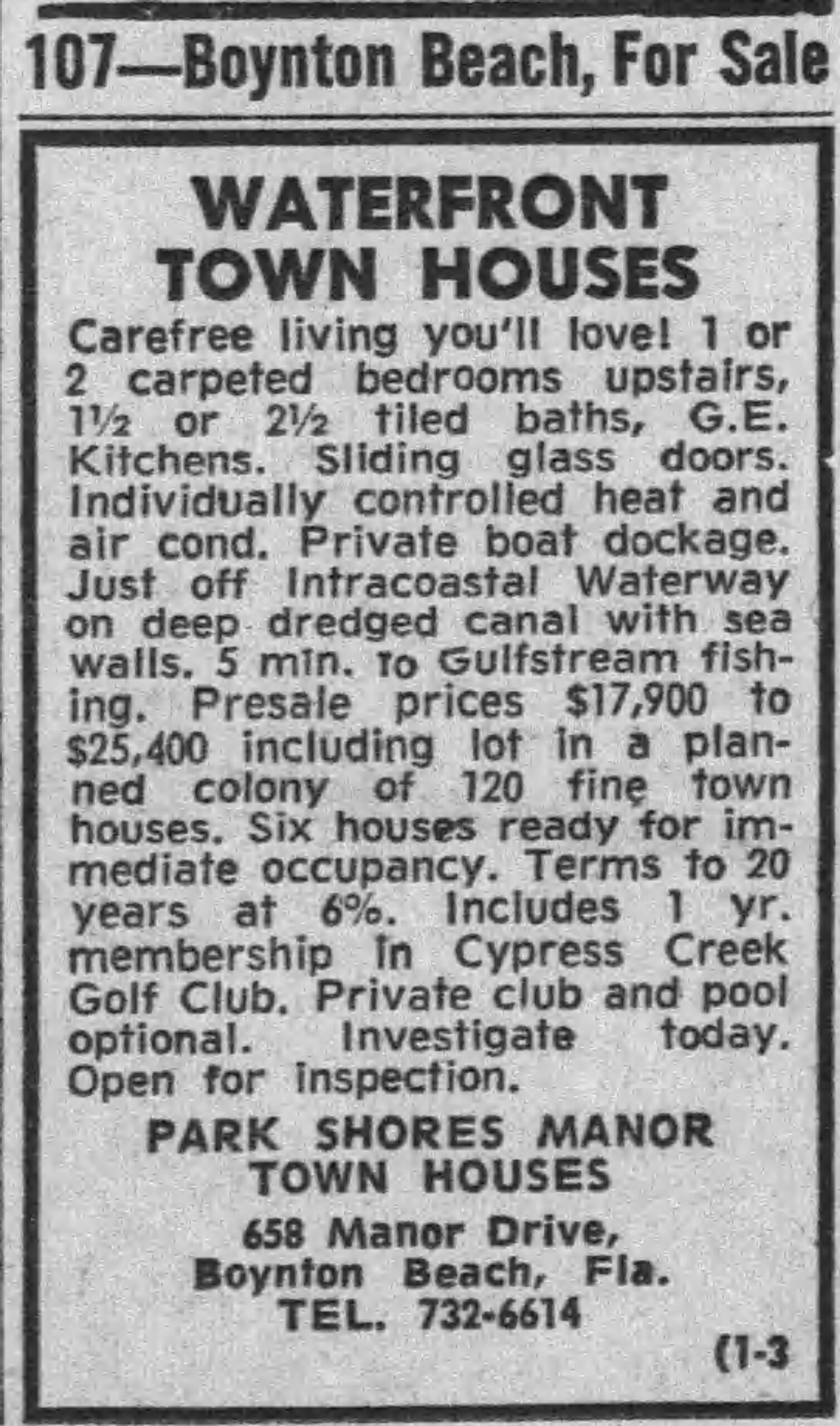
By early 1965, Park Shores Manor Town Houses had become a reality. A newspaper advertisement that January invited buyers to enjoy “carefree living” in a waterfront community. The ad described one- and two-bedroom townhouses with carpeted bedrooms, tiled baths, G.E. kitchens, and sliding glass doors. Each home had individually controlled heat and air conditioning, private boat dockage, and access to deep, dredged canals just off the Intracoastal Waterway. The community was only five minutes from Gulf Stream fishing grounds.

Presale prices ranged from $17,900 to $25,400, including the lot. Six homes were ready for immediate occupancy, with financing available for up to twenty years at six percent interest. Ownership included a one-year membership to the Cypress Creek Golf Club, and residents could join a private club and pool if they wished. The ad described a planned colony of 120 townhouses at 658 Manor Drive in Boynton Beach, offering an organized yet independent lifestyle along the water.


Park Shores Manor combined modern construction with coastal living. It offered residents the privacy of individual ownership with the comfort of shared amenities. The architecture, setting, and ownership model reflected Florida’s changing identity in the 1960s, when towns like Boynton Beach began transforming from quiet coastal communities into planned residential centers. Pipes and his team built more than a set of homes. They established one of Boynton Beach’s earliest examples of condominium-style living, setting a pattern for future developments that would define the region’s growth for decades.

Fun fact: Rider Road is named for Willard Pipes’ wife Jean Rider Pipes. Today the townhouses sell for $275-$400,000.

It’s a little piece of paradise; one that makes Boynton Beach so special.

The Coquimbo Shipwreck: A Tale of Adventure, Rescue, and Legacy

THE COQUIMBO SHIPWRECK: A TALE OF ADVENTURE, RESCUE, AND LEGACY

by Janet DeVries Naughton
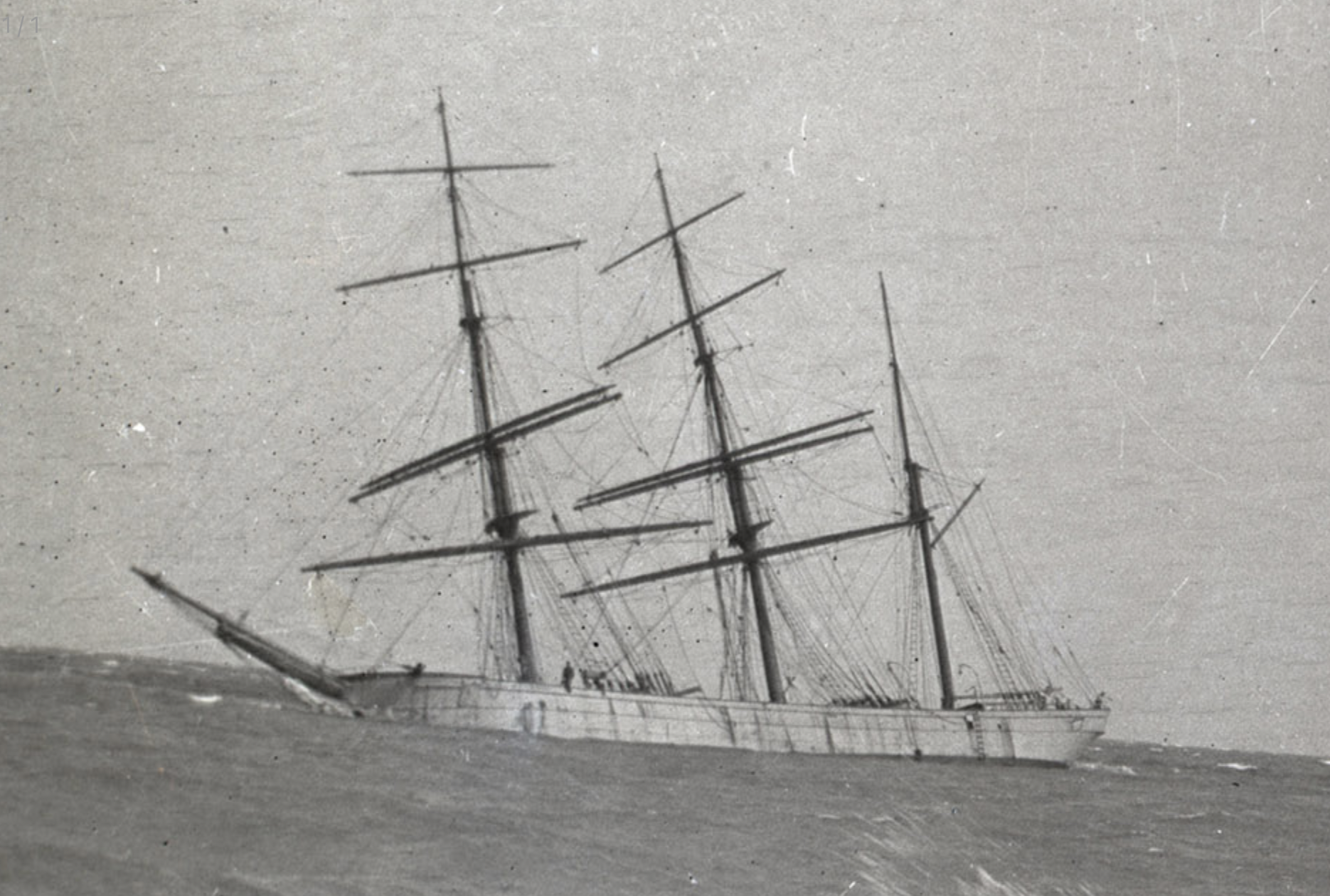
The Coquimbo loaded with lumber, ashore 1/2 mile below the Boynton Hotel (Photo credit: Martin County Digital)

THE SHIP

In the early morning hours of a brisk January morning in 1909, the residents of Boynton awoke to a surprising sight. Just beyond the breakers, a large sailing ship loomed in the shadows, its masts towering above the water. The ship, a Norwegian barkentine named Coquimbo, had run aground on the offshore reef.
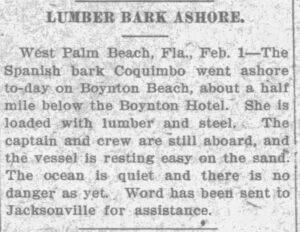
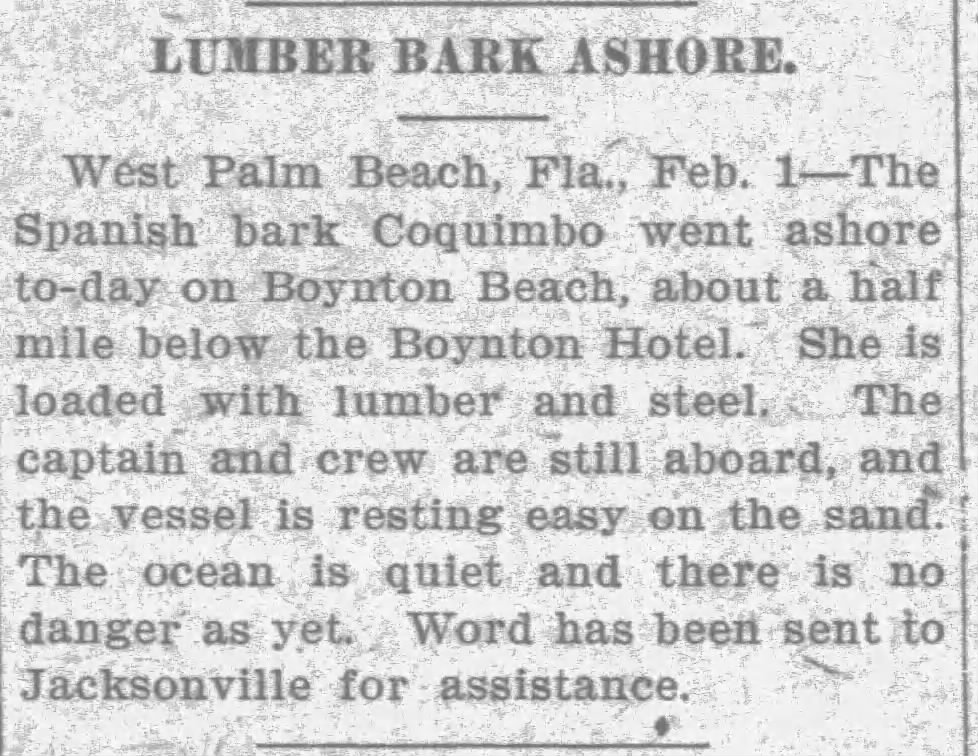
Lumber Bark Ashore (2 Feb 1909 Gulfport Record)


Built in Glasgow in 1876, the Coquimbo was a classic example of a lumber ship, designed to carry vast quantities of timber across the oceans. With two square-rigged masts forward and a schooner-rigged mast aft, the Coquimbo was a formidable vessel, one that had seen its share of rough seas and long voyages.
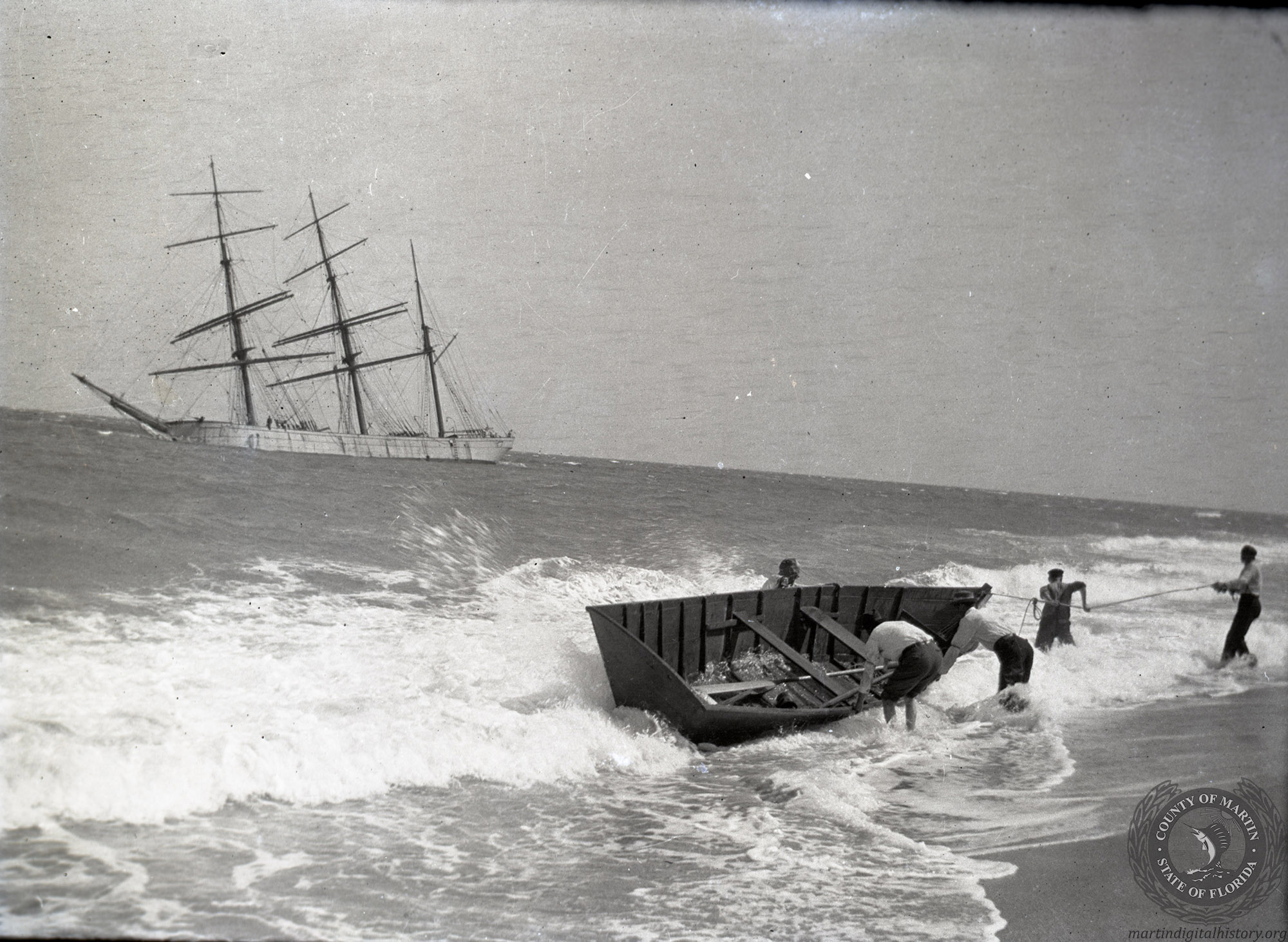
A small boat and several men readying to go out to the stranded Coquimbo (Photo credit: Martin County Digital)

The Coquimbo, destined for Buenos Aires, carried longleaf pine lumber grown in Gulfport, Mississippi. But as she sailed down the coast of Florida, disaster struck. Whether due to navigational error or the treacherous nature of the reef, the ship found herself hopelessly stranded. Aboard were fifteen men: three Swedes, one Dane, one Finn, and ten Norwegians, led by their captain, I. Clausen. They were now at the mercy of the sea and the elements, their ship a helpless giant stuck fast on the coral.

THE RESCUE

Word of the stranded ship spread quickly among Boynton residents. By midmorning, settlers rushed to the scene, eager to assist in the rescue. They crossed the canal, now known as the Intracoastal Waterway, on a hand-pulled skiff, determined to help the crew. According to oral history accounts, a breeches buoy transported the fifteen men to the beach.
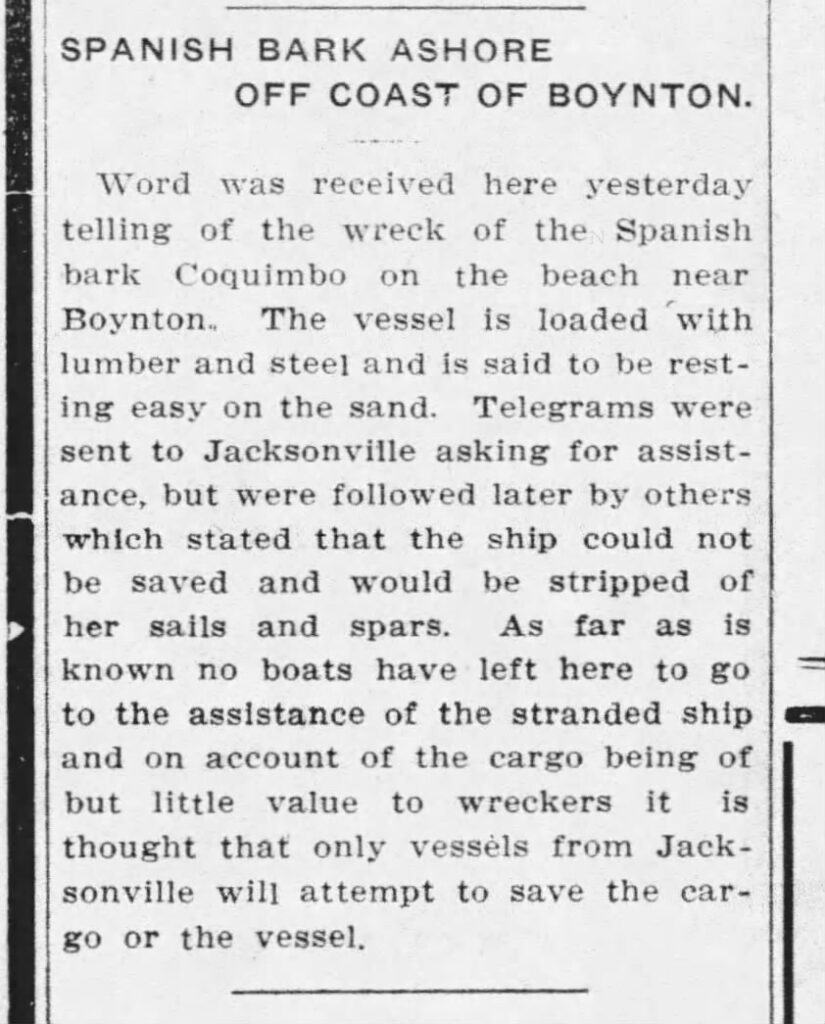
Cargo little value to wreckers (4 Feb 1909, Miami Morning News-Record)

For the next two months, the crew of the Coquimbo made their home on the beach, camping under makeshift tents fashioned from the ship’s sails. The weather was often chilly, and blustery, but the men endured, waiting for a steam tug to arrive from Key West to free their ship. The tug finally arrived, but despite days of effort, the Coquimbo remained stubbornly grounded. By May, the relentless pounding of the waves began to break up her hull, sealing her fate as a permanent fixture on the reef.

THE LUMBER

With the ship beyond saving, attention turned to her cargo: the precious lumber. According to pioneer Bertha Williams Chadwell, within days, a bonanza of long-leaf pine began washing ashore, scattered along a one-mile stretch of Boynton Beach. The settlers wasted no time in salvaging the timber. Families scrambled to pull the logs from the surf, stacking them in huge piles.
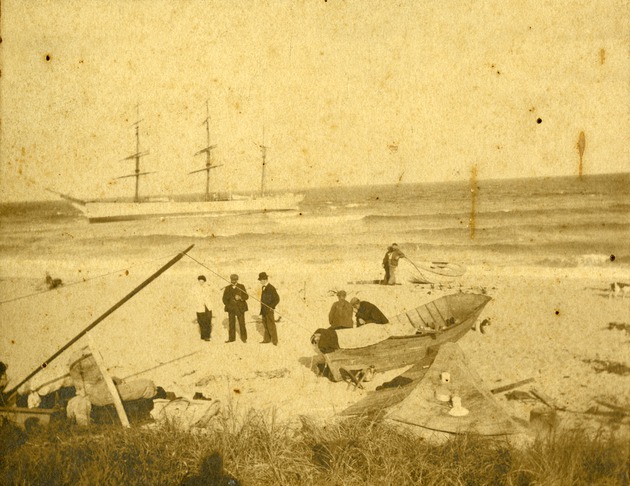
Men standing on the beach with dories laden with goods from the Coquimbo (shown in background) Photo courtesy of the Boynton Beach Historical Society
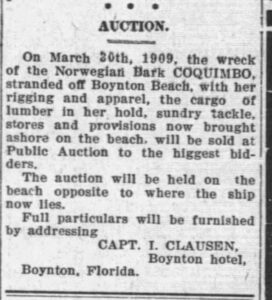
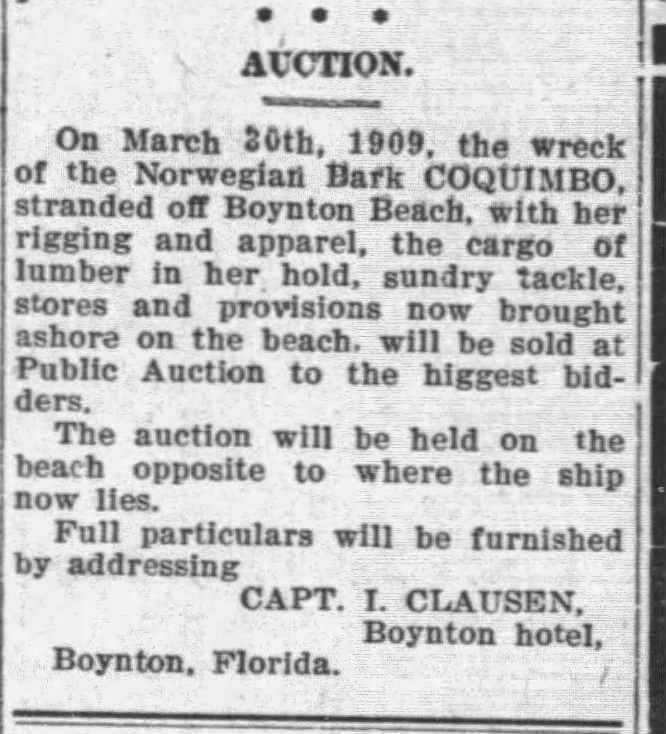
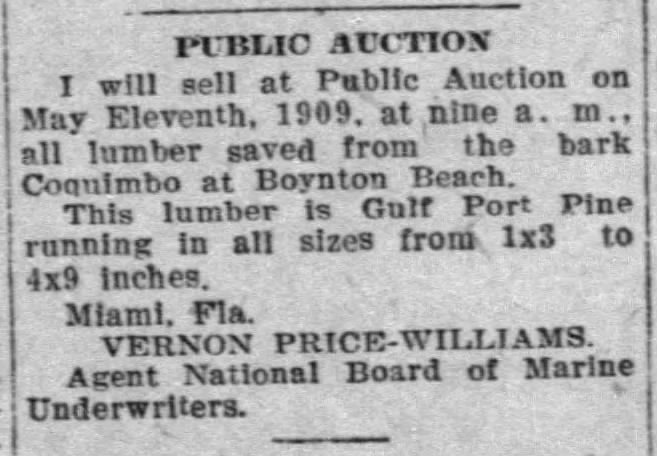
Capt. Clausen stayed at the Boynton Hotel and places ads in newspapers advising that the Coquimbo rigging, tackle, lumber and provisions were to be sold at Public Auction (24 Mar 1909)


A U.S. Marshall eventually arrived and declared that all the wood would have to be auctioned. However, he permitted the Boynton men to mark their piles, allowing them to purchase the lumber at low bids.
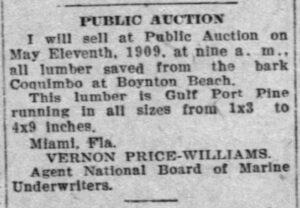


Marine underwriters Vernon Price-Williams selling Coquimbo lumber at auction (7 May 1909)


The remaining lumber was bought by a salvager from Key West, who had been informed of the wreck by the unsuccessful tugboat captain. This salvager constructed a miniature railroad that ran from the beach to the Intracoastal Waterway, using six oxen to pull a small car loaded with timber to a waiting barge. The lumber was then transported to Key West, where it was used to construct homes in what was, at the time, the wealthiest city in Florida.


THE LEGACY

The Coquimbo’s lumber played a significant role in the development of Boynton Beach and the surrounding area. Many of the early homes and businesses in Boynton were built with the salvaged wood, including the original Boynton Beach Woman’s Club, which once stood on Ocean Avenue.
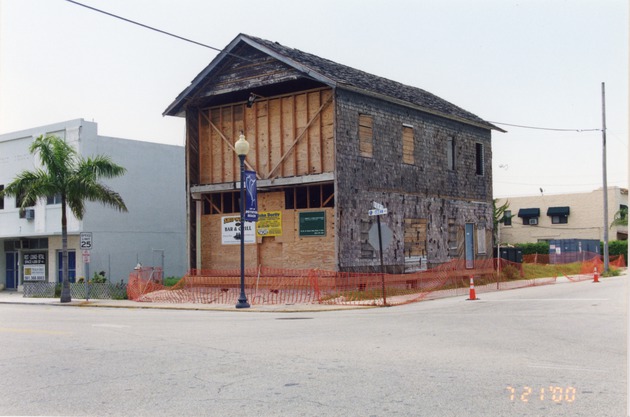
The Boynton Woman’s Club building on Ocean Avenue was built from lumber salvaged from the Coquimbo. The building lasted nearly a century and was demolished for the 500 Ocean apartment complex (Photograph: Richard Katz)

The ship’s salvaged bell continued to ring at First United Methodist Church for a couple decades, and today hangs outside St. Cuthbert’s Episcopal Church. The wood, auctioned to the settlers, became an integral part of the town’s architectural history.
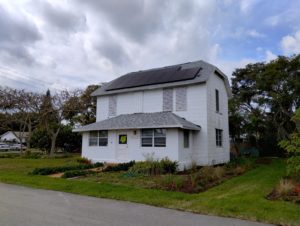
Horace B. Murray house, constructed with longleaf pine from the Coquimbo cargo

SKELETAL REMAINS

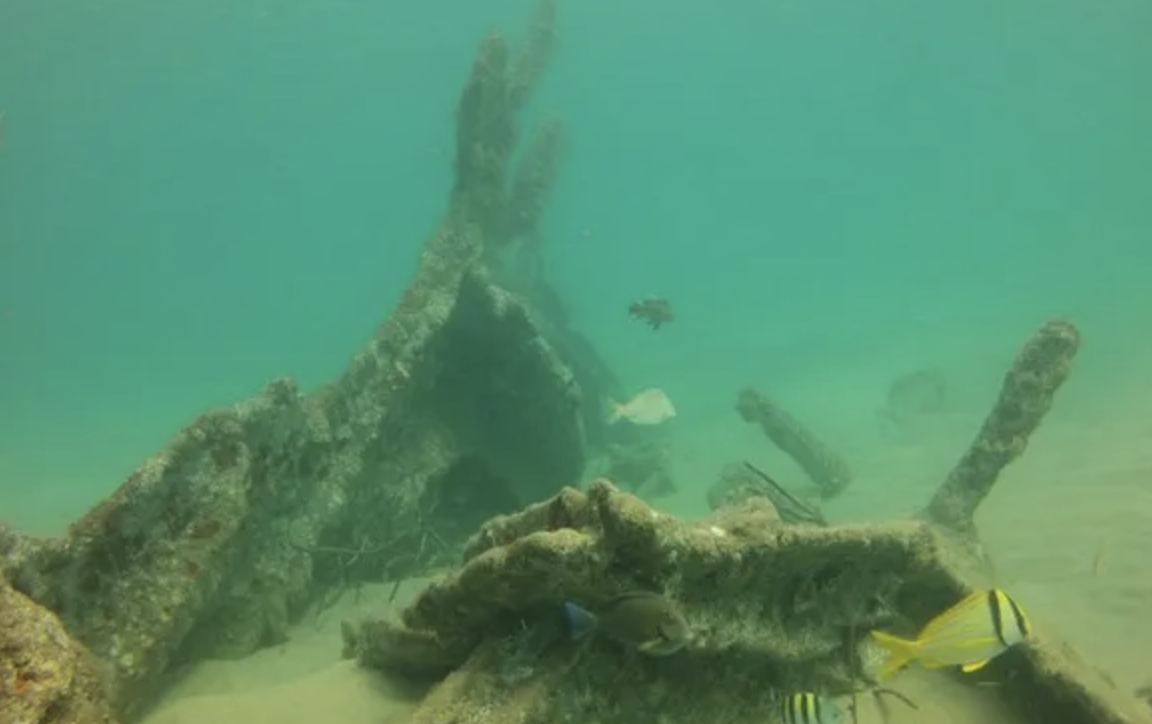
The Coquimbo herself, though, did not disappear entirely. In 1997, a magnetometer survey off the coast of Briny Breezes revealed remnants of a sailing ship. The survey team, led by local historian Steve Singer, concluded that the wreckage belonged to the Coquimbo. The ship’s bow, two masts, and other wreckage were now exposed, lying about 350 yards offshore in 15 to 17 feet of water.
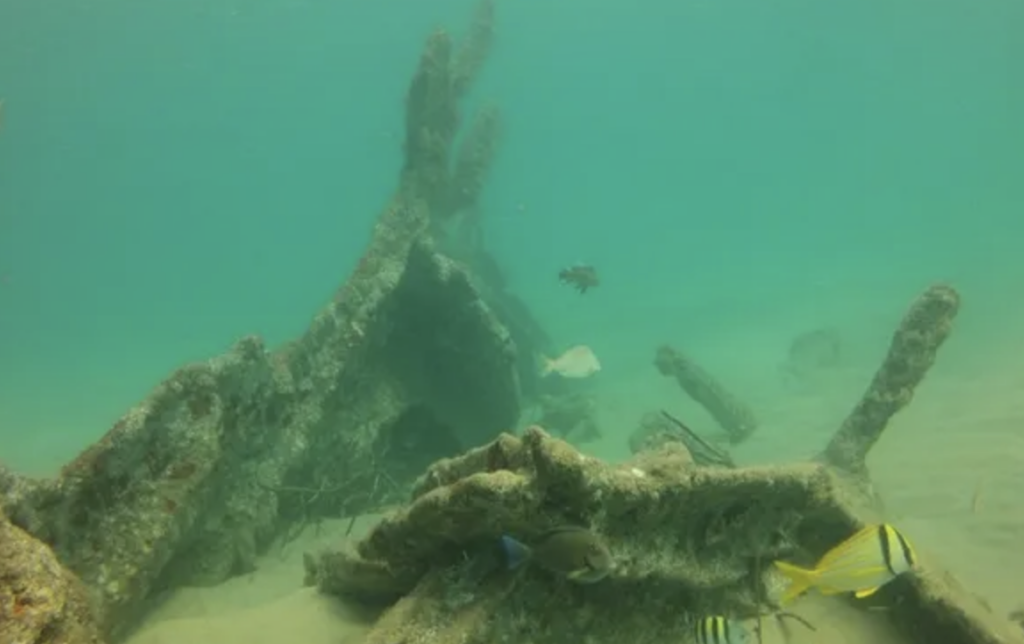
An underwater photo of what Steven Dennison says is the 1909 wreck of the Coquimbo (2013, Steven Dennison photographer)

The wreckage was soon reburied under the shifting sands, only to be uncovered again in 2013 by Hurricane Sandy. It was during this time that Steven Dennison, a local resident, stumbled upon the shipwreck while snorkeling. Dennison had been exploring the waters off Ocean Ridge when he noticed something unusual on the ocean floor. As he swam closer, he realized he had discovered the long-lost Coquimbo. He found that the ship’s structure was remarkably well-preserved, with the bow, masts, and steering mechanism still intact. He shared his discovery with Joe Masterson, founder of the Marine Archaeological Research and Conservation group, who confirmed that the wreck was indeed the Coquimbo. By April 2013, the shifting sands had once again buried the ship, leaving no trace of her on the ocean floor.

LOCAL HERITAGE

The story of the Coquimbo is more than just a tale of a shipwreck; it is a story of resilience, community, and the enduring legacy of the past. The ship’s lumber helped build a town, and her wreckage continues to intrigue and inspire those who learn of her fate. The Coquimbo may be hidden beneath the sand, but her story lives on in the memories of those who cherish the history of Boynton Beach.

SOURCES

Blackerby, Cheryl. 2013. History Revealed: Sandy Uncovers Final Resting Spot of Norwegian Freighter The Coquimbo. The Coastal Star https://thecoastalstar.com/profiles/blogs/history-revealed-sandy-uncovers-final-resting-spot-of-norwegian-f

Castello, David. Wreck of the Coquimbo. https://www.boyntonbeach.com/history-of-boynton-beach/coquimbo/

Naughton, Janet DeVries. 2015. Discovery of Unusual Postcard of the 1909 Shipwreck Coquimbo and the Tale of Two Clydes. Boynton Beach Historical Society

Nichols, James H. 1980. The Wreck of the Coquimbo, Palm Beach Daily News

Singer, Steve. Norwegian Bark Coquimbo. https://www.anchorexplorations.com/bark-coquimbo-shipwreck?fbclid=IwY2xjawEyEA1leHRuA2FlbQIxMAABHVV-FT-WwwaH1fJmkGniYXtICj7sd6NnxfKUu6rnm-DNRrBCvIawlP8AHQ_aem_-qb8i1c6iBzglJoER1HWQQ

Willoughby, Hugh de Laussat II, 1885-1956, “Launching a boat, Winter 1912,” Martin Digital History, accessed August 20, 2024, http://www.martindigitalhistory.org/items/show/5992.

ORAL HISTORIES

Chadwell, Bertha Daugharty Williams, 1979, Boynton Beach City Library

Murray, Glenn L. 1978, Boynton Beach City Library

NEWSPAPERS

Daily Press, Newport News, VA

The Evening Mail, Halifax, Nova Scotia

Gulfport Record, Gulfport. Mississipi

The Macon Telegraph, Macon, Georgia

Miami Morning News-Record, Miami

The Miami News, Miami

The Ocala Evening Star, Ocala

The Palm Beach Post, West Palm Beach

South Florida Sun Sentinel, Fort Lauderdale

The Philadelphia Inquirer, Philadelphia

The Roanoke Times, Roanoke Virginia

South Florida Sun Sentinel, Fort Lauderdale

Virginian-Pilot, Norfolk, Virginia