
For a generation of Boynton Beach children, the Soap Box Derby was a familiar summer event. Boys built gravity-powered cars, local businesses sponsored them, families followed the preparations, and crowds gathered to watch the races. Although the contestants were boys under the national rules of the time, the Derby involved parents and siblings, merchants, civic organizations, volunteers and spectators from communities throughout South Palm Beach County.
Boynton Beach joined the national Soap Box Derby program in 1963, thirty years after the first informal races that led to the competition. The Derby began in Dayton, Ohio, in 1933, Chevrolet soon became involved, and the first All-American Soap Box Derby was held in Dayton in 1934. The national championship moved to Akron the following year, and Derby Downs opened there in 1936. By the postwar years, sanctioned local races across the country gave young builders and drivers the opportunity to compete for a trip to the championship in Akron.
The program combined a child’s building project and competition with family participation, local business sponsorship and the work of civic organizations. Boynton Beach’s Soap Box Derby soon reflected all of those elements.
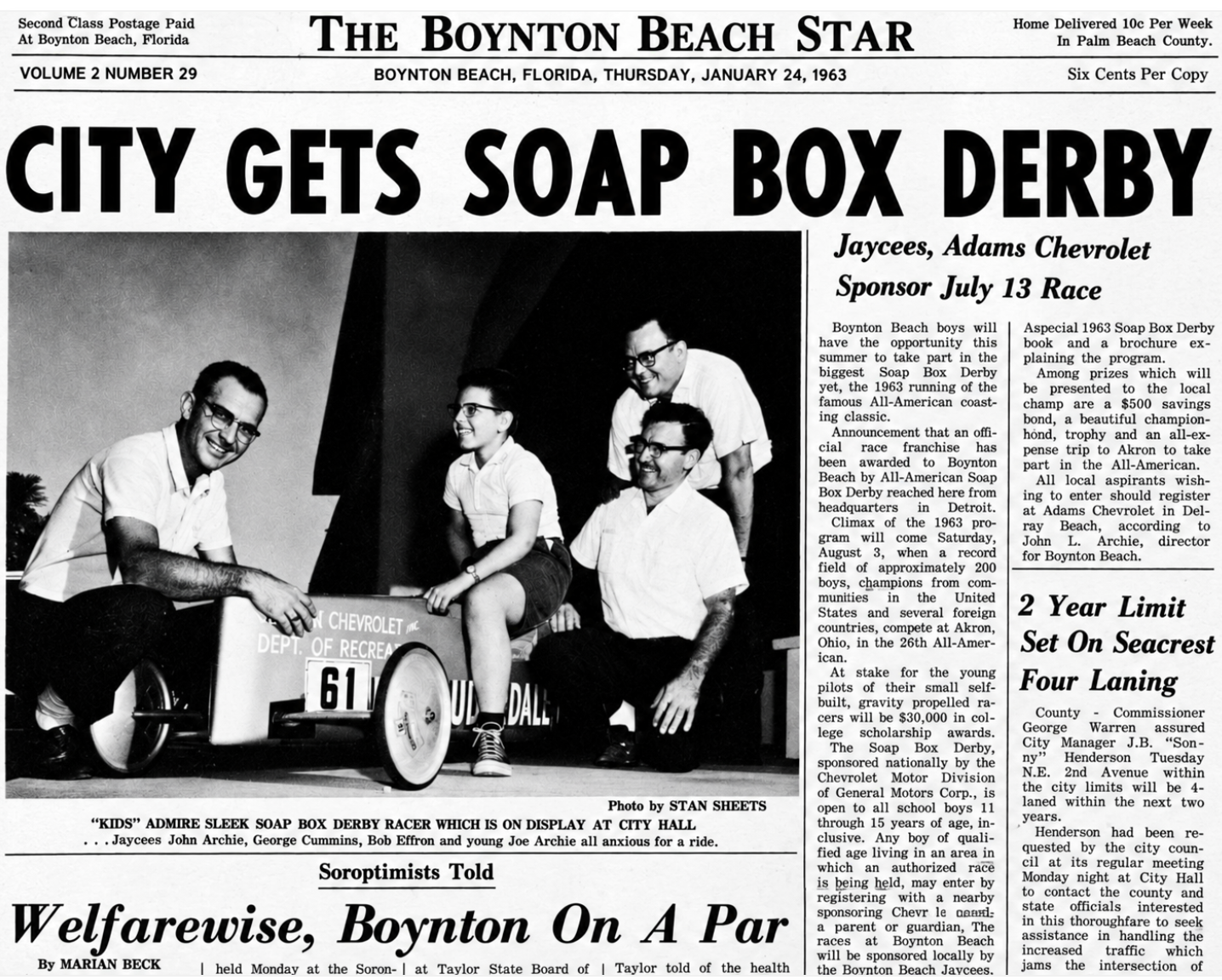
The January 24, 1963, Boynton Beach Star announced the new event across its front page with the headline “CITY GETS SOAP BOX DERBY.” Boynton Beach had been awarded an official race franchise, and the Boynton Beach Jaycees and Adams Chevrolet would sponsor the first local race on July 13.
The competition was open to schoolboys ages 11 through 15. The newspaper described their entries as small, self-built, gravity-propelled racers and directed boys wishing to compete to register at Adams Chevrolet in Delray Beach with a parent or guardian. John L. Archie was named Derby director for Boynton Beach.
A photograph by Stan Sheets accompanying the announcement shows a Derby car on display at City Hall with Jaycees John Archie, George Cummins and Bob Effron and young Joe Archie. The display, nearly six months before the race, shows how early the community began promoting the event.
There was also a big prize for the winner. The local champion would receive a $500 savings bond, a championship award and an all-expense trip to Akron to compete in the All-American Soap Box Derby.
 The First Boynton Beach Derby
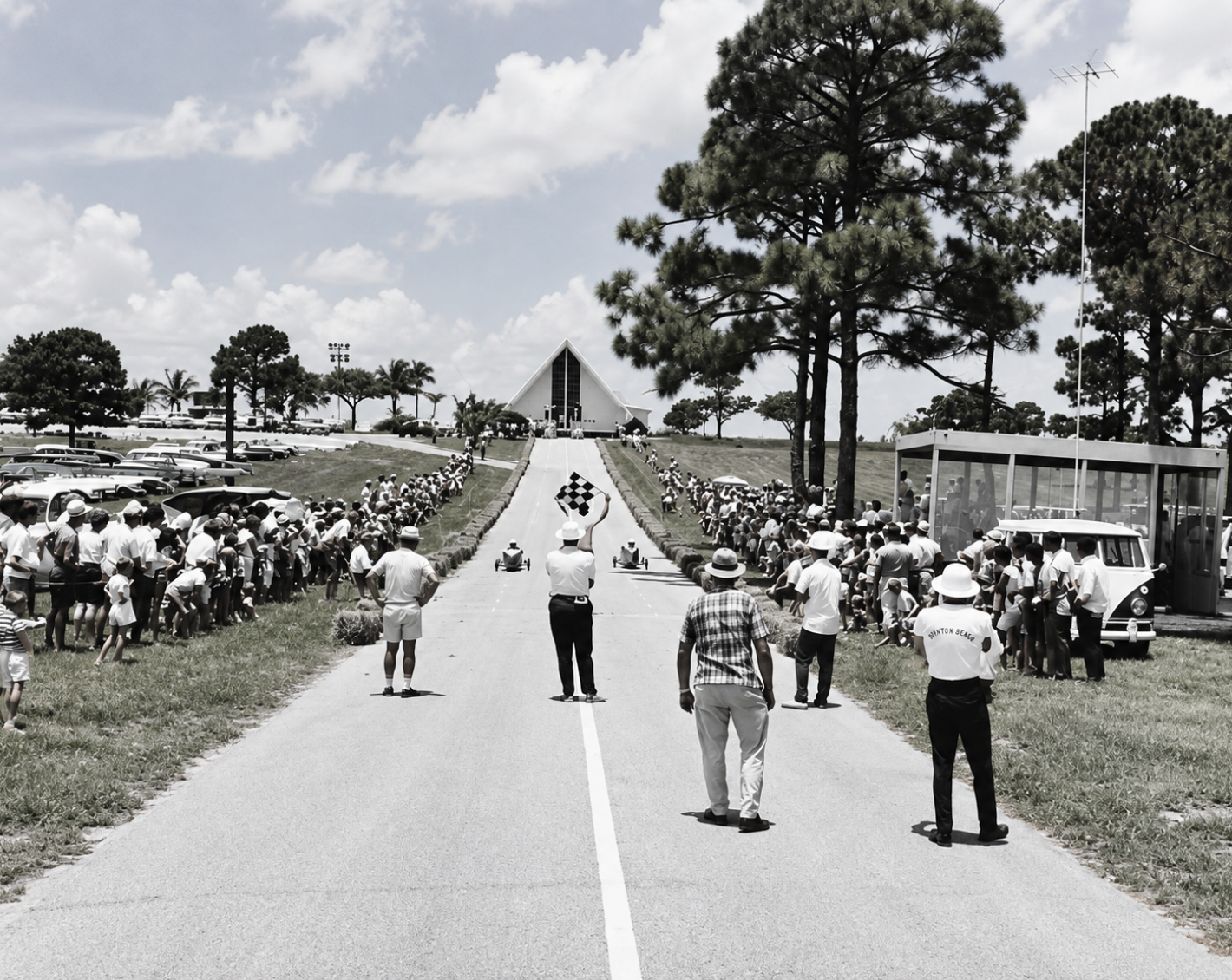
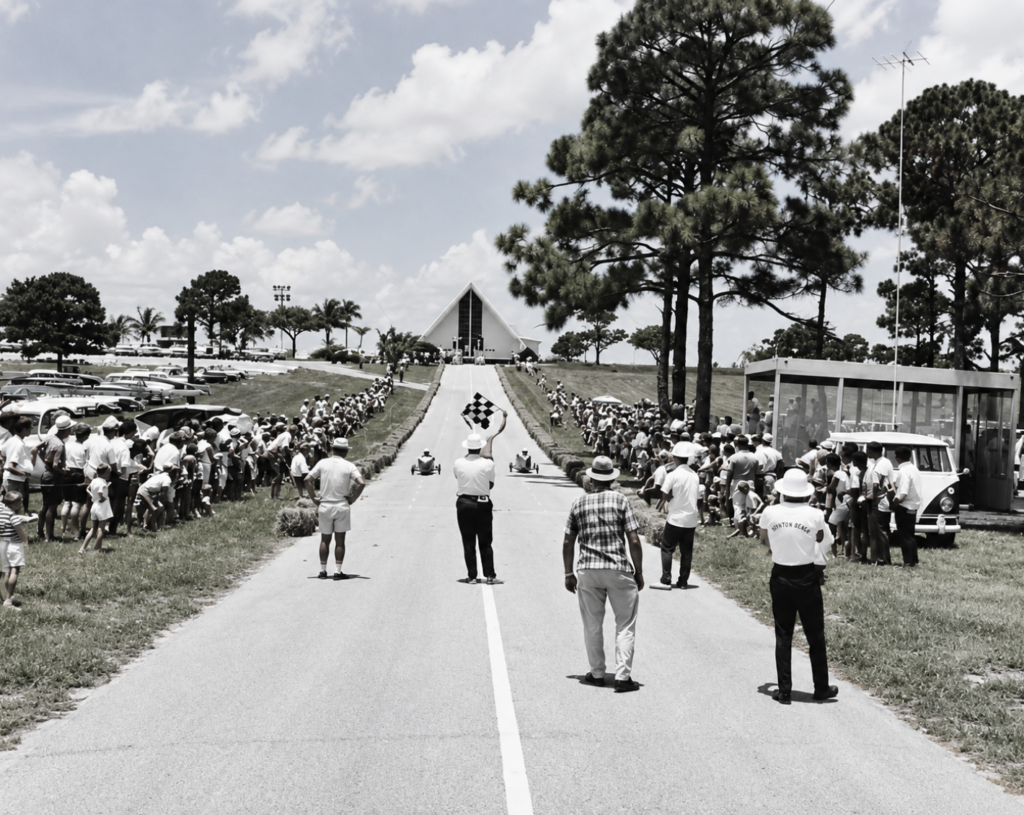
The first Boynton Beach Soap Box Derby was held on July 13, 1963, at St. Joseph’s Episcopal School and church off Seacrest Boulevard. Forty-two boys competed, and 14-year-old Wally Bryant, sponsored by Pierce Tire Company, became Boynton Beach’s first champion.
A photograph published in the Boynton Beach Star five days later shows two racers approaching the finish while spectators line both sides of the course. St. Joseph’s stands in the distance, with parked automobiles and spectators extending along the hill.
Race day was part of a larger weekend of activities. A sock hop was held at the Boynton Civic Center on Friday night, followed by a parade and motorcade Saturday morning. From its first year, the Derby was organized as a community event rather than simply a race.
A Family Sport
The boys were expected to build their own cars according to Soap Box Derby rules, with adults serving as advisers. Even so, getting a car to race day required considerable family involvement. Parents and siblings followed the construction, helped contestants obtain materials and sponsors, transported cars, attended inspections and participated in Derby activities.
The surviving photographs show this broader involvement. Adults and children gather around the cars, volunteers organize displays and events, and families crowd the race course. At the Civic Center, completed racers were assembled before competition.
By 1965, the local Derby had grown to 83 contestants from Lantana, Boynton Beach, Delray Beach and Boca Raton. The boys received Derby shirts and helmets on Friday, followed by a parade that evening ending at the Civic Center. The cars were then impounded there until Saturday’s race, and parents and other interested residents could view them.
The parade included the Junior Woman’s Club, Kiwanians, the VFW, a Dixieland band and the young racers. The Boynton Beach Jaycees remained at the center of the organization. What had begun with 42 contestants in 1963 had become a regional family and community event.
 The Names on the Cars
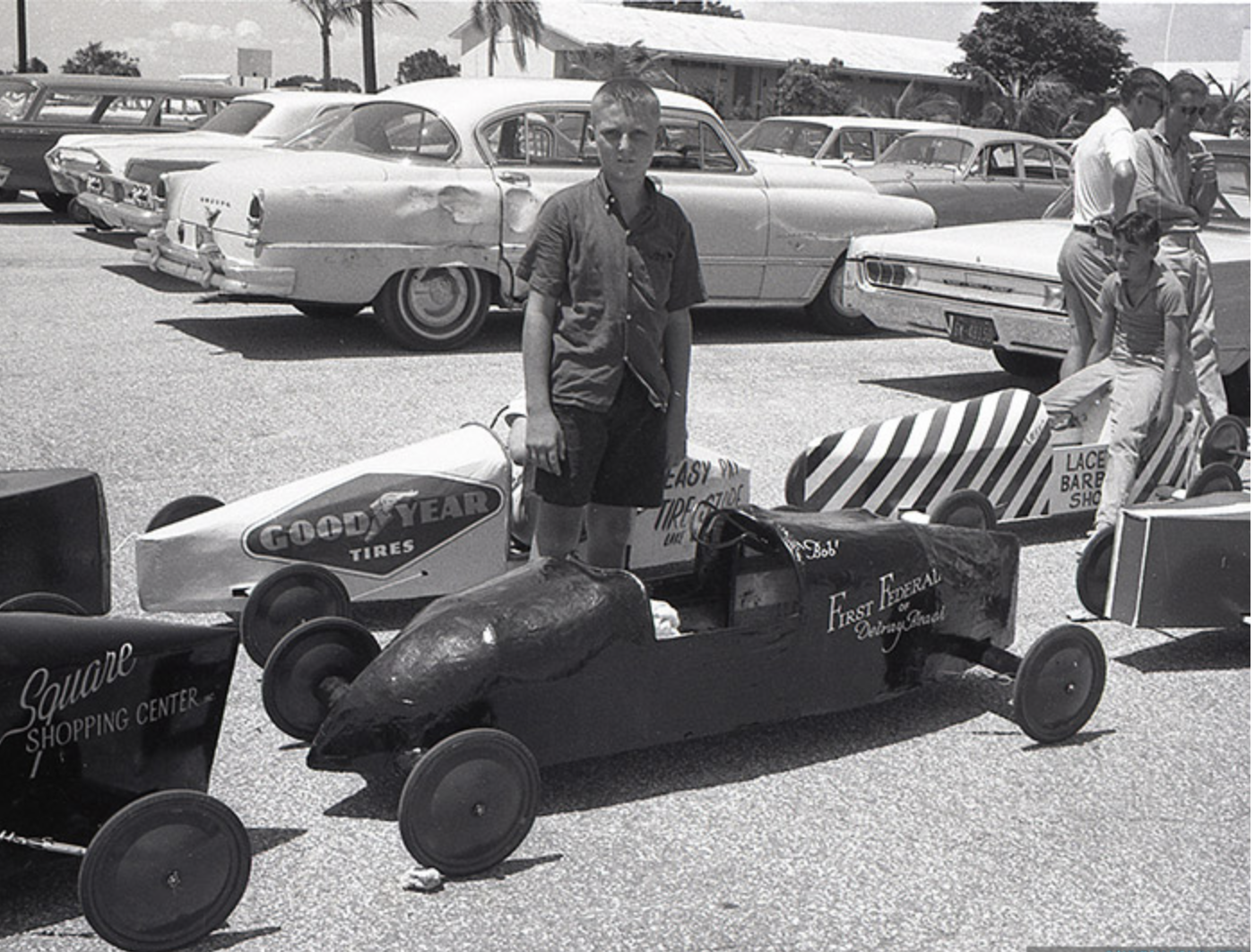
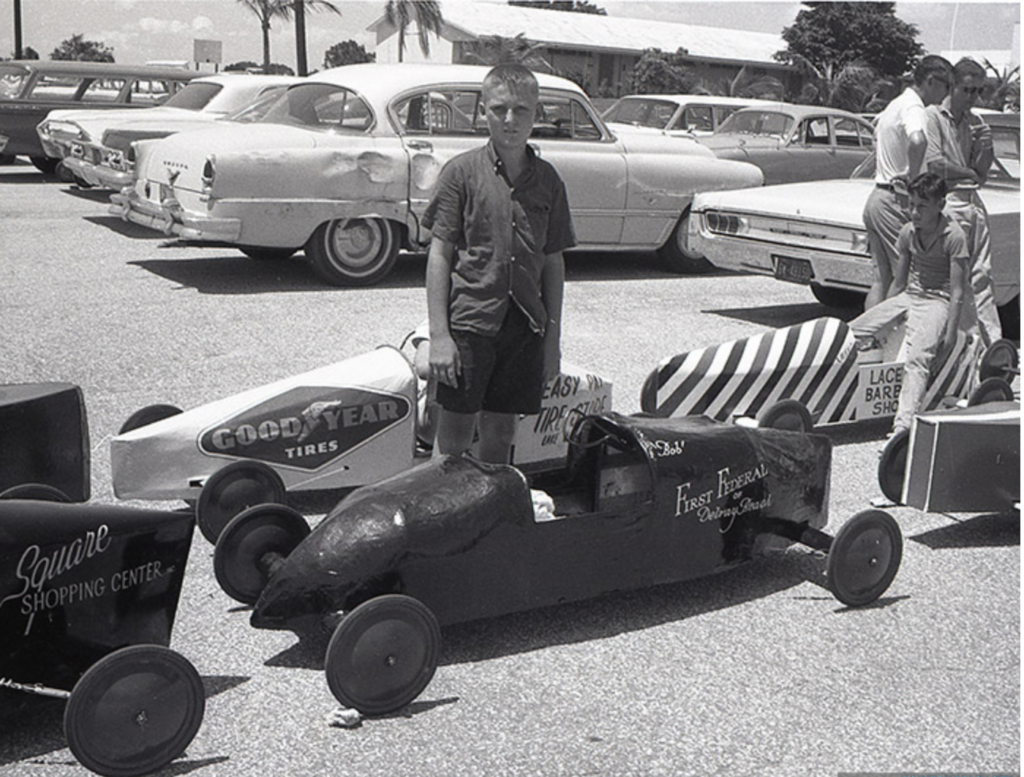
Local sponsorship gave Boynton’s Derby a character of its own. The names painted on the cars provide a record of the businesses and organizations that supported the racers.
Among the documented sponsors were Pierce Tire Company, First Federal of Delray Beach, Easy Pay Tire Store of Lantana, Sunshine Square, Boynton Builders Supply, Lantana Boatyard, the Boynton Beach Chamber of Commerce, the Lions, Boynton Beach Police, the Boynton Beach Jaycees and Lacey’s Barber Shop.
A photograph from about 1964 shows several sponsored cars lined up together, including entries for First Federal, Easy Pay Tire Store, Sunshine Square and Lacey’s Barber Shop. Many years later, Joel Lacey recalled that his brother Jeff raced around 1964 or 1965 with sponsorship from their uncle’s barber shop. He remembered the car as being painted like a barber pole.
Such recollections help explain the Derby’s lasting place in family memory. The national organization supplied the rules and the opportunity to compete in Akron, but local families, businesses and civic groups made the Boynton races their own.
 Derby Weekend
The Boynton Civic Center became an important part of Derby activities. A 1965 photograph shows cars gathered inside the building before the race. Contemporary newspaper coverage explains that the Friday parade ended there and that the racers were impounded at the Civic Center until the following day’s competition.
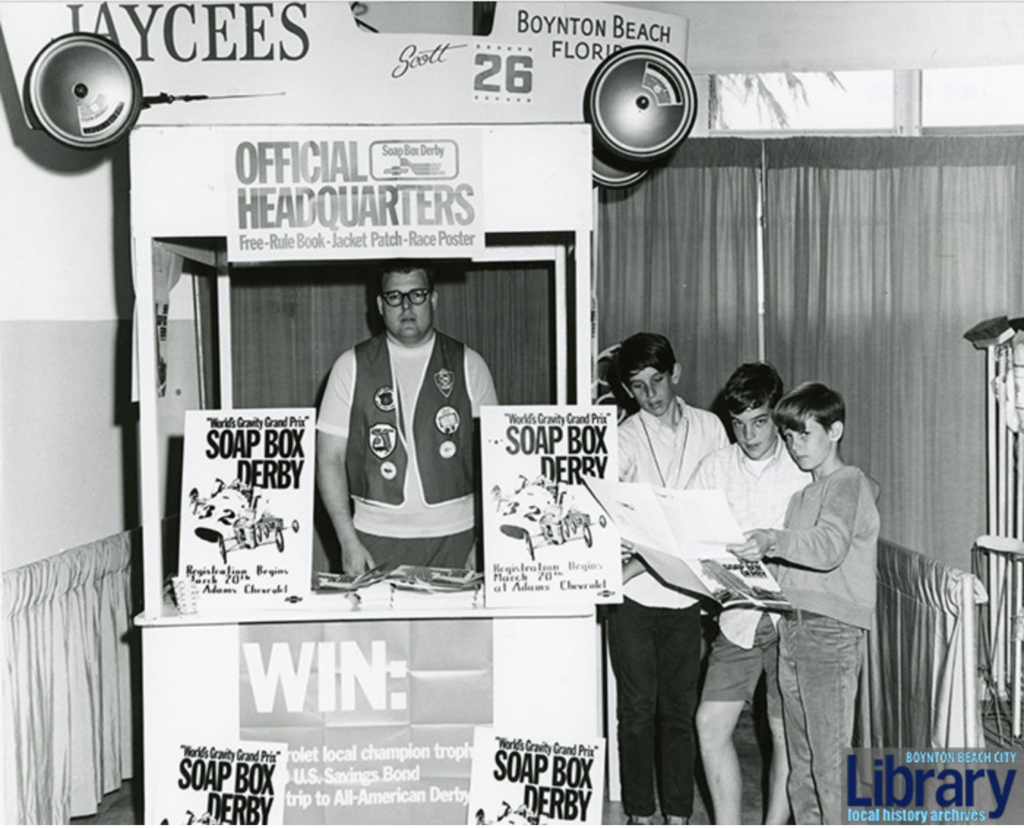
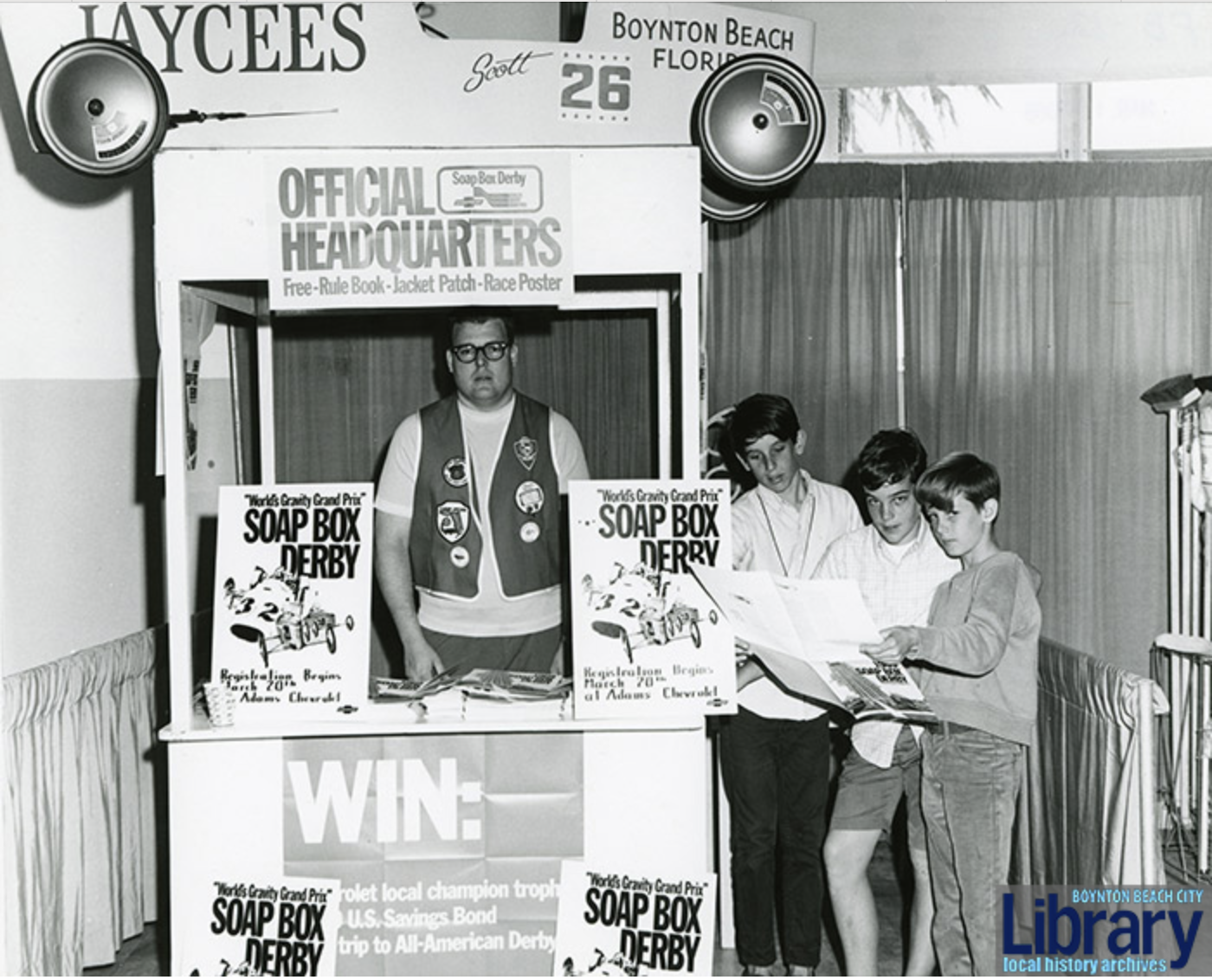
Other photographs show how much activity preceded race day. Derby headquarters distributed rule books, jacket patches and race posters, while Adams Chevrolet served as a registration point. Contestants had to register, build their cars according to the rules and prepare for inspection before they could compete.
From St. Joseph’s Hill to the 15th Avenue Bridge
\The inaugural 1963 race was held at St. Joseph’s Episcopal School and church off Seacrest, and the location remained in use several years later. In July 1967, volunteers Diane Albright and Linda Levreault posed at First Bank of Boynton Beach with the Derby trophies and a sign announcing, “Be there for the action, St. Joseph’s Church Hill.”
Newspaper accounts also referred to the course simply as “Derby Hill.”
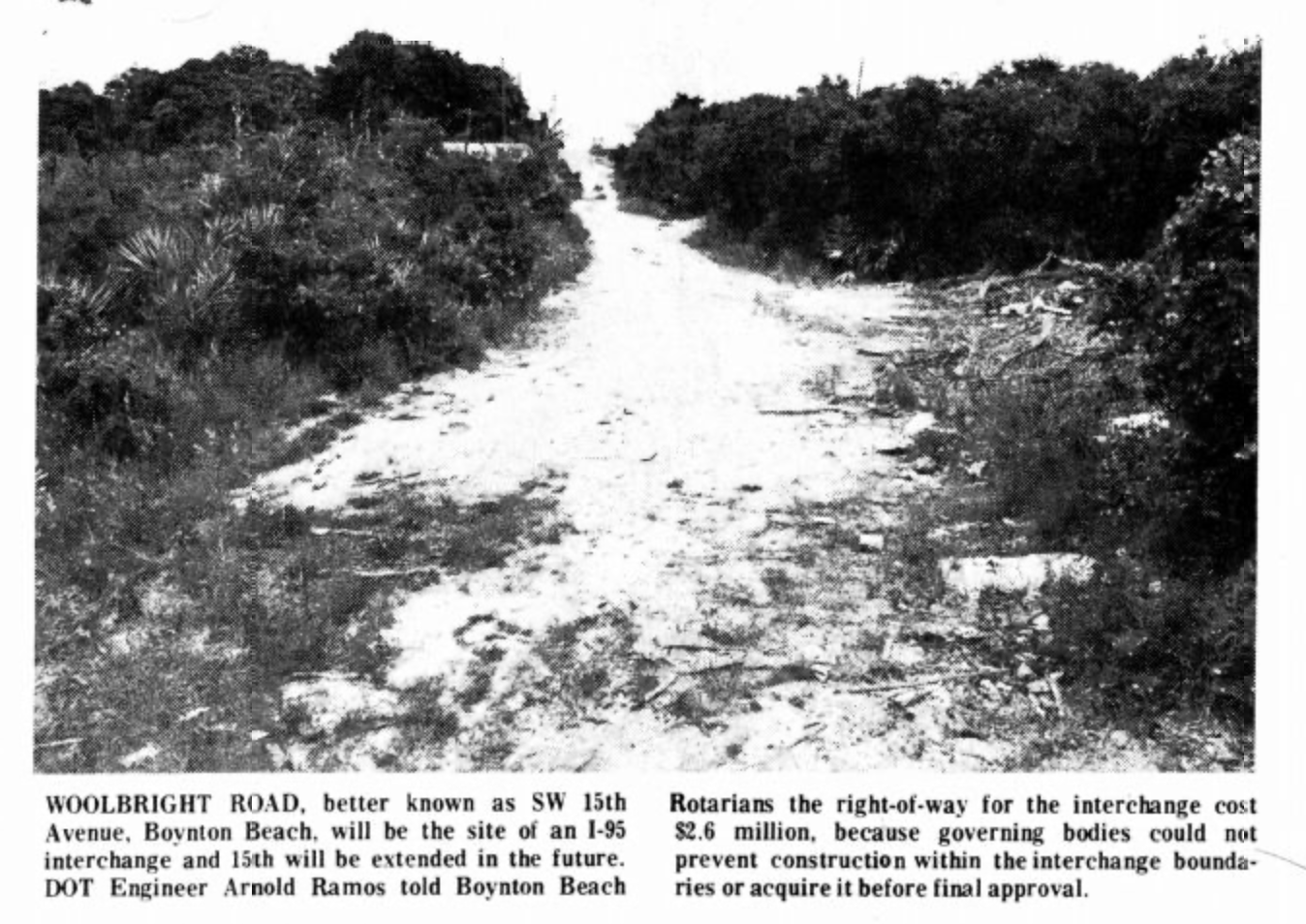
Sometime between 1967 and 1971, the race moved. A June 1971 newspaper account places the Soap Box Derby on the 15th Avenue bridge in Boynton Beach. Longtime residents remember the same location as the Woolbright Road bridge, and family 8mm film from the early 1970s preserves racing there.
The 1971 newspaper also records a close contest between Dale Brisson and Don Whitaker. After a dead heat, Brisson won the final race with a time of 21 seconds. The newspaper reported that the local winner would go to Akron and that Brisson planned to save the $50 bond he had won for college.
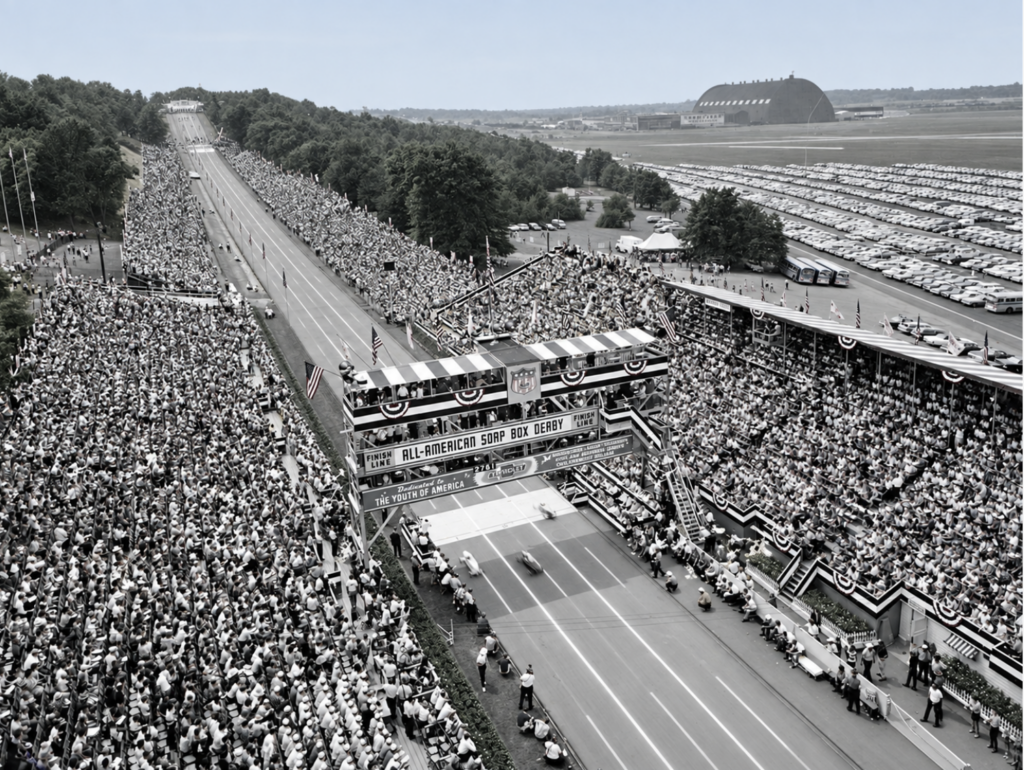 The Road to Akron
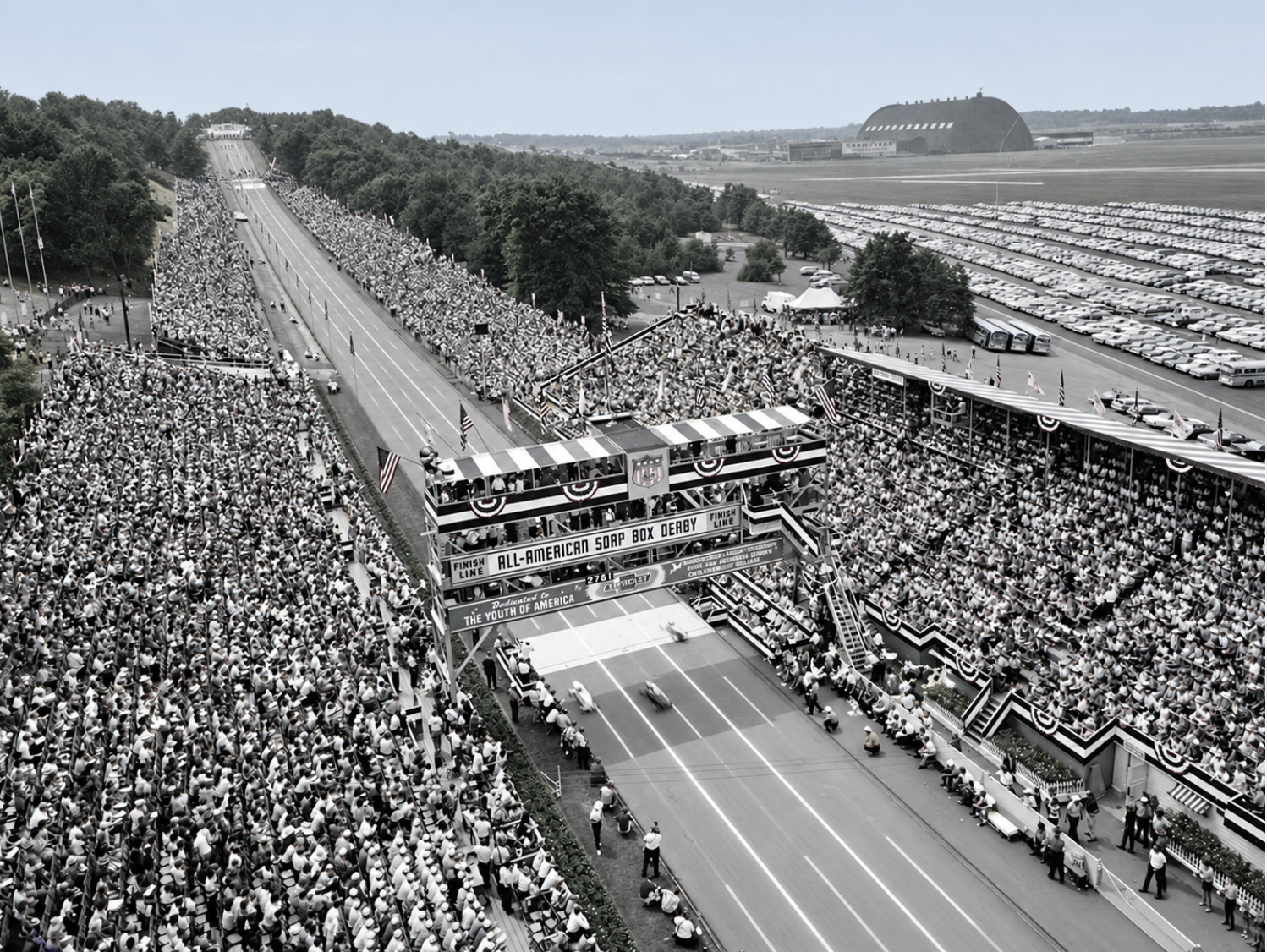
The opportunity to represent Boynton Beach at the All-American Soap Box Derby gave the local competition a connection to the national event.
Several Boynton champions are preserved in newspaper and archival records. Wally Bryant won the first race in 1963, followed by Bobby Banting in 1964. Greg Shepack became another local champion and represented Boynton at Akron. Andrew “Andy” Podray was Boynton’s 1966 champion, and Robert Greenaway won in 1967, edging Don Yeoman for the trip to Akron.
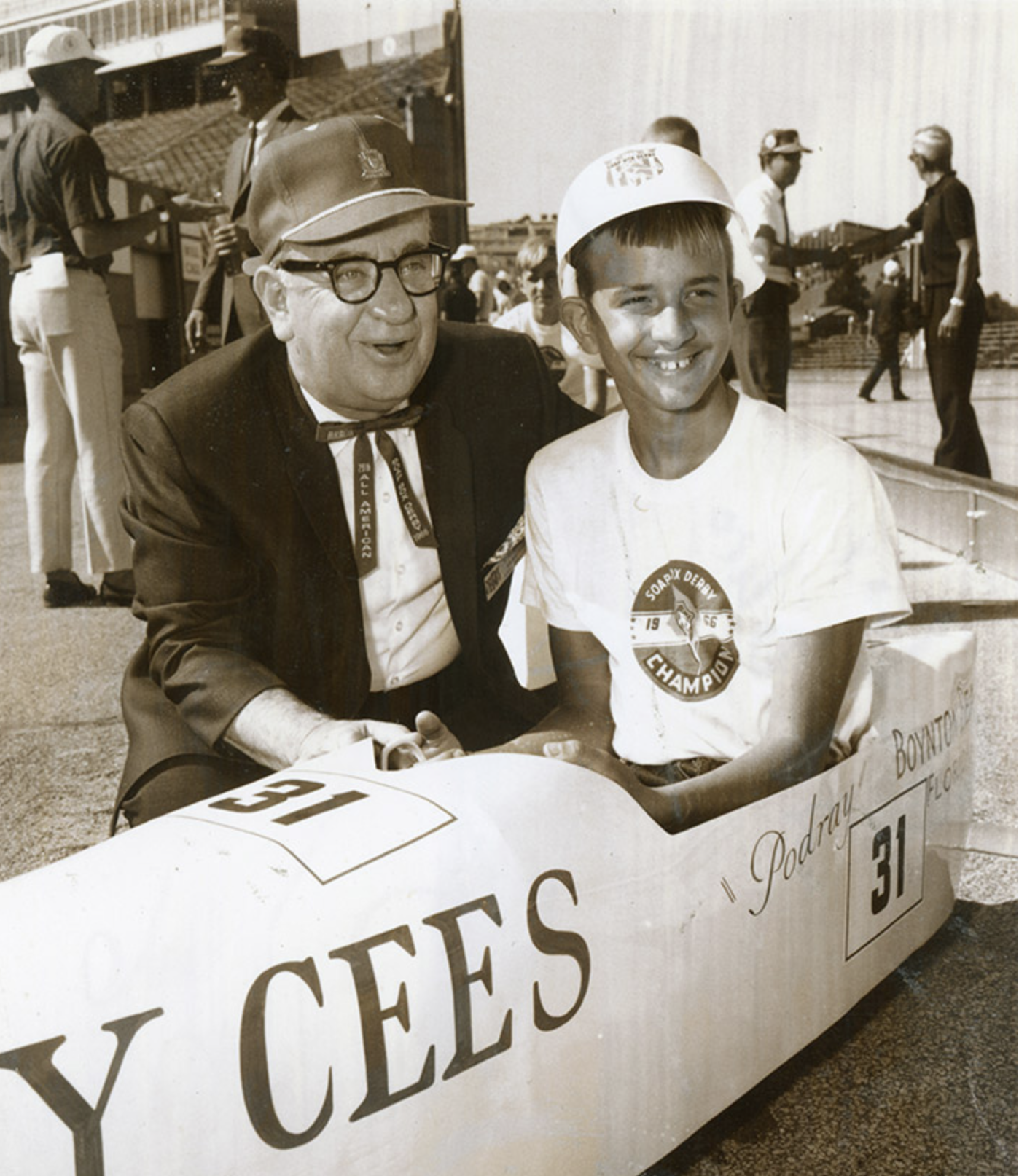
The Derby also reflected the conventions of its time. Girls participated locally as Derby queens and volunteers but were excluded from sanctioned competition under the national rules. Girls were not officially admitted as Soap Box Derby drivers until 1971. Whether any girls competed in the Boynton Beach race has not yet been determined.
A Baby-Boom Community Tradition
The records document Boynton Beach Soap Box Derby racing from 1963 through at least 1971. A 1975 city directory still listed the Soap Box Derby among Boynton Beach’s amusements, along with the Boynton Beach Beauty Pageant Parade and annual Christmas Parade. No newspaper account of a Boynton race in 1975 has yet been located, however, and the directory listing may have been carried forward from an earlier edition. For now, 1971 remains the last local race documented in contemporary newspaper coverage.
The Derby belonged to a special time in Boynton Beach history, when the children of the baby boom were growing up along with the rapidly expanding community around them. Its success depended on local institutions: families, neighborhood businesses, civic clubs, churches, newspapers, automobile dealers and local government.
The surviving photographs and home movies show boys with their cars, families and spectators lining the course, trophies displayed in local businesses, volunteers preparing for race day and rows of sponsored racers waiting at the Civic Center. Decades later, residents still remember where they stood, who raced and which local business sponsored a brother’s car.
The cars were small, homemade and powered only by gravity, but getting them to the starting line involved the community. For Boynton Beach families of the 1960s and early 1970s, that was an important part of the Soap Box Derby’s appeal.
Do you remember the Boynton Beach Soap Box Derby? If you raced, helped a family member, sponsored a car, volunteered or watched from the roadside—or if you still have photographs, programs, trophies or home movies—we would like to hear from you.
Sources
- Boynton Beach City Library Local History Archives. Soap Box Derby photographs, newspaper clippings, and materials from the Boynton Beach Jaycees Collection, 1963–1970s. Boynton Beach Local History Archives
- Historic Boynton Beach. Facebook posts, photographs, and community recollections concerning the Boynton Beach Soap Box Derby. Historic Boynton Beach on Facebook
- Miller, John Jr. “Boynton Beach, FL Soap Box Derby racing on the Woolbright Rd. bridge, early 1970’s.” Family 8mm home movie. Watch John Miller’s Soap Box Derby film
- International Soap Box Derby. History of the All-American Soap Box Derby and national competition in Akron, Ohio. International Soap Box Derby History
- Boynton Beach Star and Boynton Beach News Journal. Contemporary race announcements, results, photographs, contestant information, and local coverage, consulted through the Boynton Beach City Library Local History Archives.