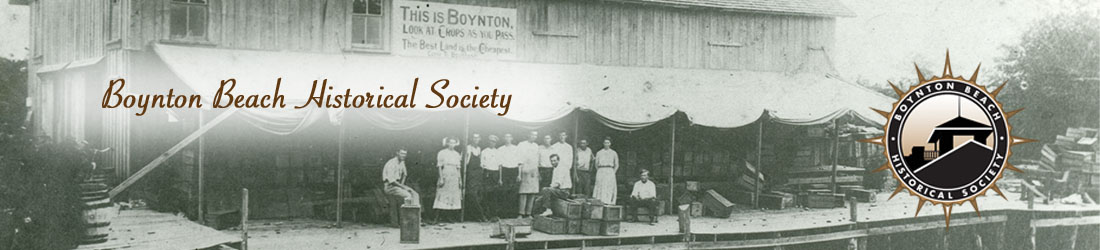
Did your ancestors farm in early Boynton? If you have old photos of early families like Cade, King, or others, please contact us. These stories should be documented, and shared with future generations.
Long before the formal establishment of the Town of Boynton, the area that would become Boynton Beach was a frontier landscape of palmetto scrub, tall grasses, and untamed farmland. Among its earliest settlers were two African-American families whose contributions helped lay the foundation for the community: the families of Samuel B. Cade and Alonzo L. “L.A.” King.
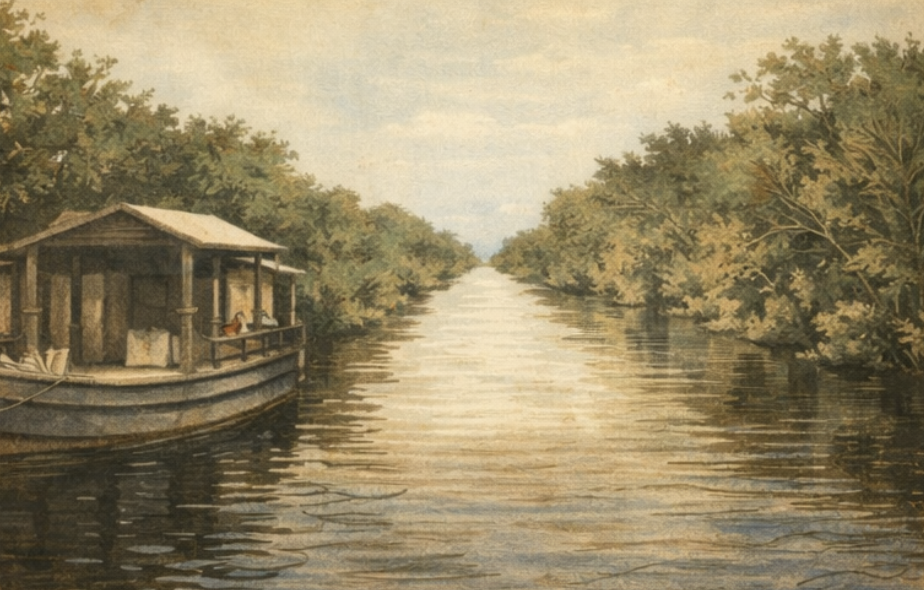
Boynton Canal, 1890s (AI Reimagined)
Farmers, Landowners, and Community Builders
Samuel B. Cade and Alonzo L. King were working farmers who transformed raw land into family farms. Through determination and labor, they established homesteads, raised families, and contributed to the region’s early economy. When new white settlers from Michigan arrived, Mr. Cade and Mr. King taught the newcomers best practices for farming in the unfamiliar sandy soil.
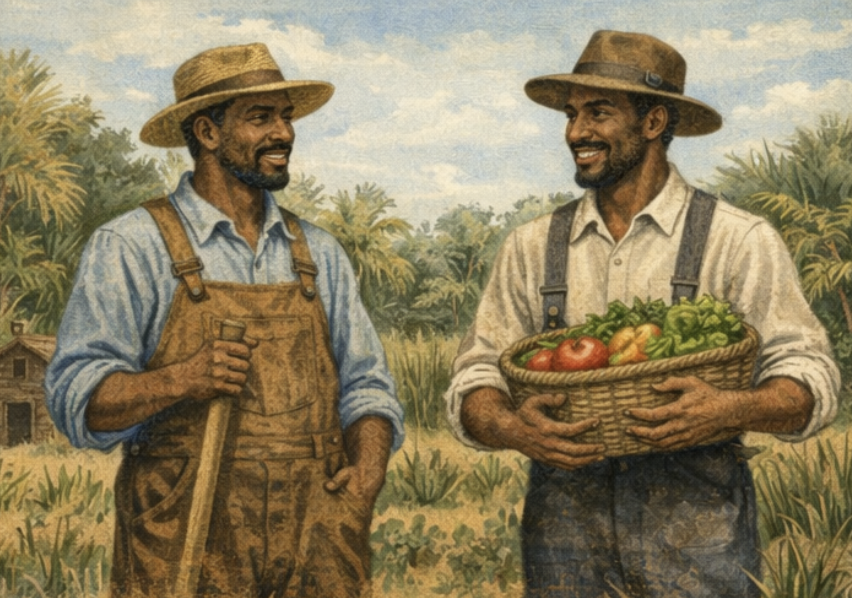
Early African American settlers (AI Reimagined)
Both men brought with them experiences shaped by the post–Civil War South. Samuel B. Cade, born in Georgia in 1852, came of age during Reconstruction. Alonzo L. King, born in 1862 in Virginia, later migrated southward to Florida as part of broader patterns of African-American movement in search of land and opportunity.
Alonzo drove the surrey for the Boynton Hotel owned by Nathan Boynton and Albert & Annie Parker. Samuel Cade lived and farmed nearby, building his household alongside other early settlers. Alonzo King’s son Willie worked as a bell boy in the hotel, and later became a cook.
Census records from 1910 list both men as heads of household in Boynton, identified as farmers and neighbors. Their families were part of a tight-knit agricultural community that contributed materially and socially to the area’s growth.
Alonzo King became a landowner of particular note. Historical records indicate his involvement in the development of the Pence/King Addition, a tract created for farming and settlement in partnership with local fruit shipper Cullen Pence. King’s name appears in county commission proceedings during the early twentieth century, reflecting a level of civic participation not always recognized in accounts of early Boynton history.
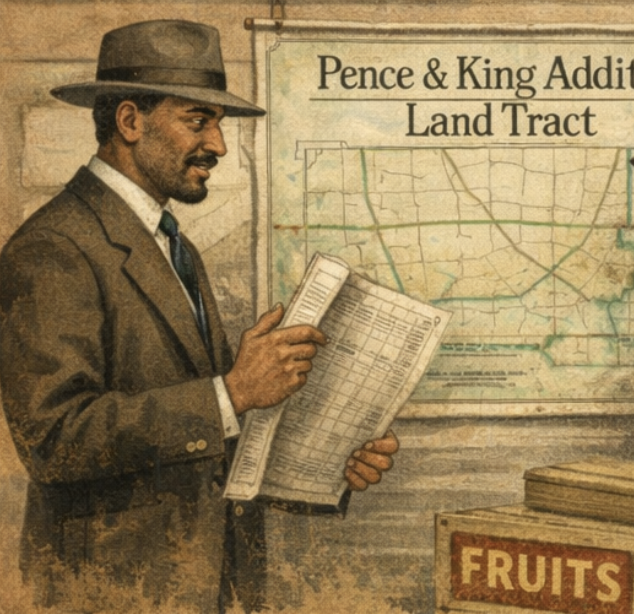
Pence & King addition (AI Reimagined)
Together, the Cade and King families formed part of a small but significant African-American farming community in the area.
Before the Town Was Platted
In 1898, Fred Dewey and Byrd Spilman Dewey officially platted the Town of Boynton. However, evidence suggests that Samuel Cade was already living and farming in the vicinity by the mid-1890s, and Alonzo King and his family were also established in the developing settlement.
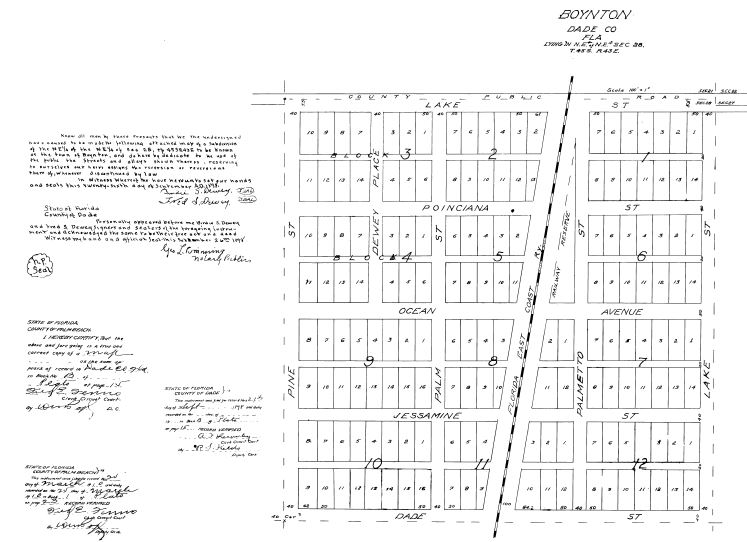
Plat for the Town of Boynton
The birth of King’s son William in what is now called Boynton in 1884 — prior to the town’s formal platting — underscores the presence of African-American settlers before the arrival of many later residents whose names are more commonly recorded. Their story broadens our understanding of who the true pioneers of Boynton were.
Later Years and Legacy
In the 1910s, Alonzo King relocated to Jacksonville, where he worked as a mason, carpenter, and laborer until his death in 1918. Samuel Cade remained in Palm Beach County, continuing to farm and raise his family until his death in 1924.
Today, as we reflect on Boynton’s origins, it is essential to recognize that African-American pioneers such as Samuel B. Cade and Alonzo L. King were not peripheral figures in the town’s development. They were foundational settlers — farmers, landowners, parents, and citizens — whose labor and resilience shaped the community long before it was formally incorporated.
Their legacy remains an integral part of Boynton’s shared history.
There are no known photographs of Samuel B. Cade or Alonzo L. “L.A.” King. The images included here are modern artistic renderings created with the assistance of ChatGPT. They are based on historical records, census data, and documented details about early Boynton’s landscape and agricultural life.
These illustrations are meant to help readers visualize what Boynton looked like in its earliest days — a sparsely settled frontier of palmetto scrub, waterways, dirt paths, and small homesteads carved out by hardworking families.
If you or your family have photographs of the Cade or King families — or of other early African-American settlers in the Boynton area — we would be honored to scan them. Preserving and sharing these images ensures that the full story of Boynton’s pioneers is remembered and passed on accurately for future generations.
Genealogy Timeline
1852 – Birth of Samuel B. Cade
- Born in Georgia.
- Grew up during Reconstruction, learning farming and resilience skills that would guide his family to Florida.
1862 – Birth of Alonzo L. King
- Born in Prince William County, Virginia.
- Would later migrate south to Florida, joining other African-American settlers in the developing region.
1883–1888 – Births of Alonzo King’s Children
- 1883: Anna King born in South Carolina
- 1884: William King born in Boynton, Florida — before the town was officially mapped
- 1888: Pembrook King born in Kings Ferry, Nassau, Bahamas — showing the family’s regional mobility
1895 (Approx.) – Samuel Cade in Boynton
- Evidence suggests Samuel Cade was living and farming in Boynton.
- He was part of the small African-American farming community that predated the official town plat.
1898 – Boynton Town Plat
- Fred and Byrd Spilman Dewey officially platted the town of Boynton.
- Samuel Cade and Alonzo King were already living and farming nearby, showing African-American pioneers were foundational to the community.
1906–1907 – Alonzo King as Landowner
- Newspaper records list Alonzo King as a landowner in Boynton.
- Attended county commission meetings, demonstrating civic involvement.
- Partnered with Cullen Pence, a major fruit shipper, to develop the Pence/King Addition, expanding settlement and agricultural plots.
1910 – Census Snapshot
- Samuel Cade: Head of household, Black farmer, Boynton resident.
- Alonzo King: Head of household, Black farmer/landowner, Boynton resident.
- Both families were neighbors and part of a tight-knit early African-American farming community.
1915–1918 – Later Years
- Alonzo King moved to Jacksonville, working as a mason/carpenter/laborer, dying in 1918.
- Samuel Cade remained in Palm Beach County, farming and raising his family until his death in 1924.
