
Ever wonder why Boynton Beach never developed a downtown like Delray’s Atlantic Avenue? The answer may lie in two highways built decades ago.
When Interstate 95 cut through Palm Beach County in the late 1960s and early 1970s, it promised faster travel and modern transportation. But for towns along its route, the new highway also came with tradeoffs. Boynton Beach was one of them.
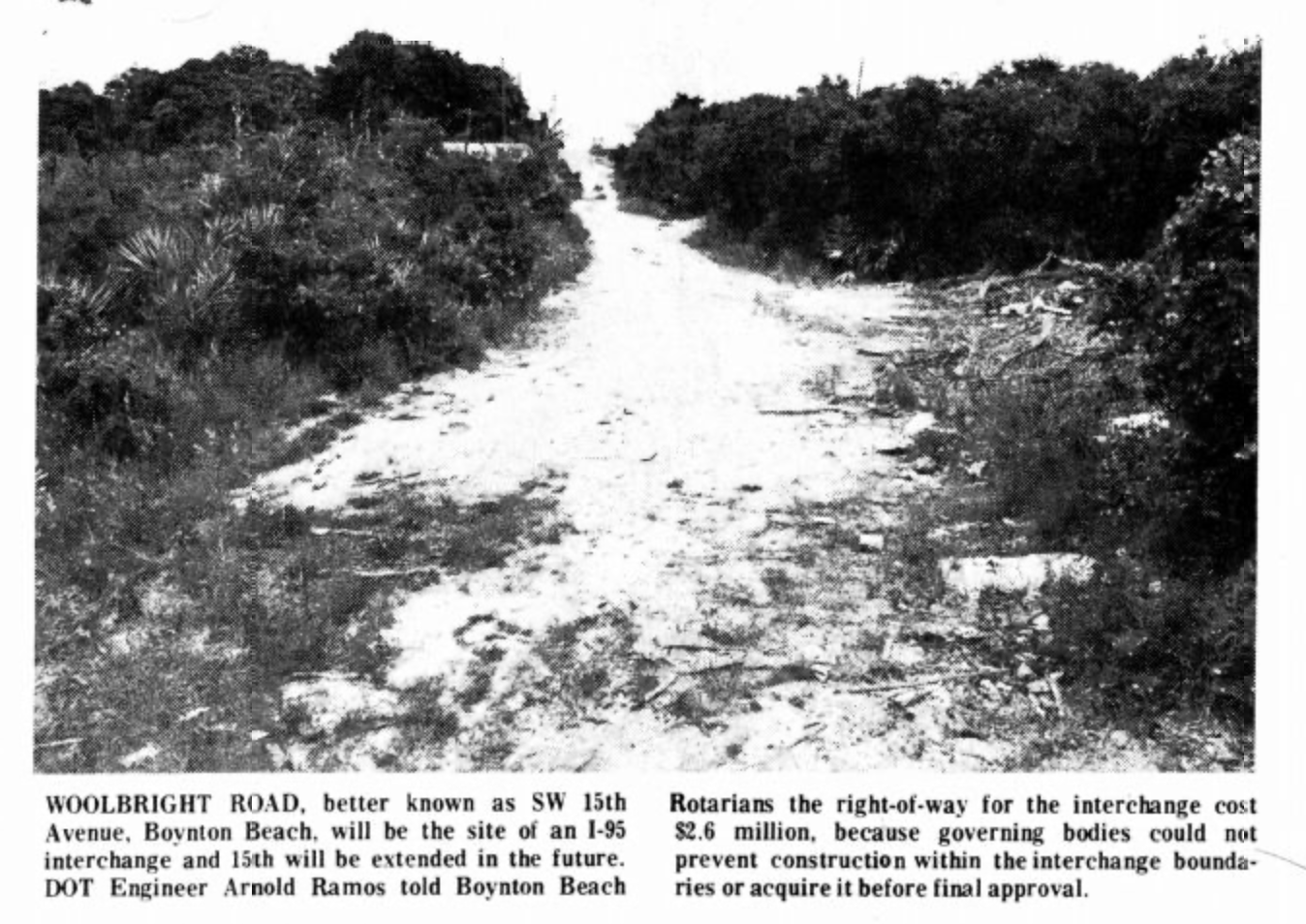
A March 1969 Boynton Beach News Journal article described the planned route of I-95 through the city. The interstate would pass through Boynton with just two exits: NE 2nd Avenue (today’s Boynton Beach Boulevard) and SW 15th Avenue (now Woolbright Road). Between those two points, the highway would cut directly through neighborhoods and businesses.
 The project required taking land along the route. The article noted that three houses on SW 8th Street just south of SW 2nd Avenue would be removed to make way for the interstate. Businesses were affected as well. Rinker Materials would have to relocate because the new highway would pass directly through its property.
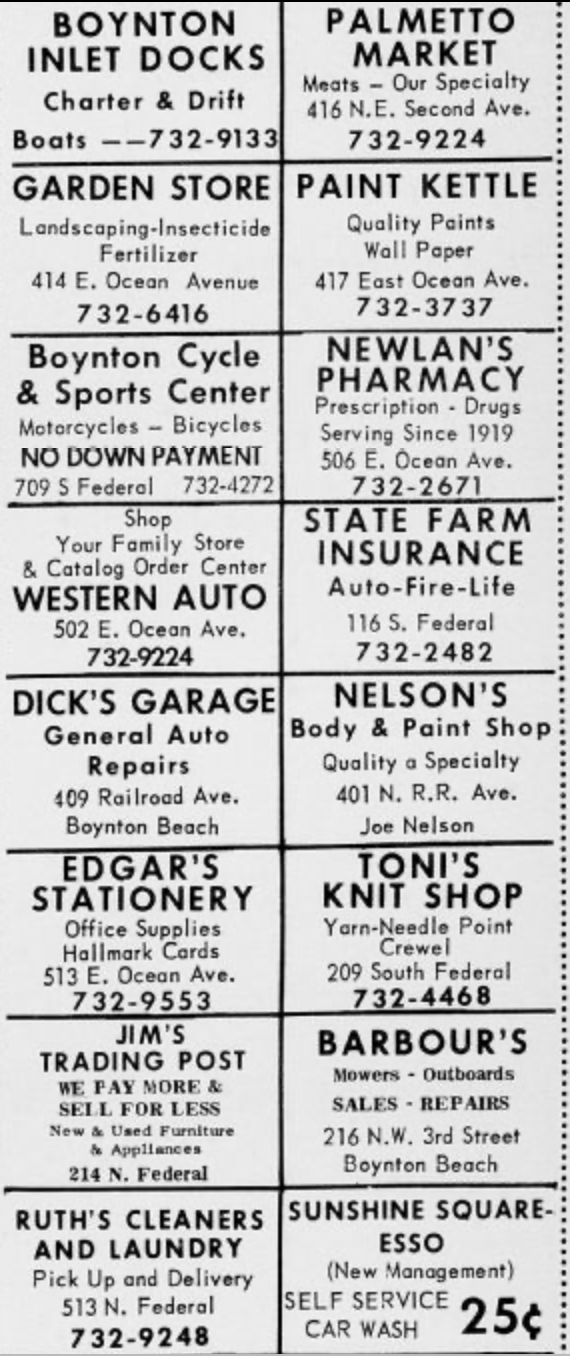
Residents and businesses along Ocean Avenue raised concerns during planning, asking how the interstate would affect access across town. Their concerns were justified.
State Road Department officials explained that Ocean Avenue would not cross the interstate. Because the highway would be elevated at the nearby interchange, building a crossing over both I-95 and the railroad tracks was considered too expensive. The plan simply eliminated it.
That decision had long-lasting consequences.
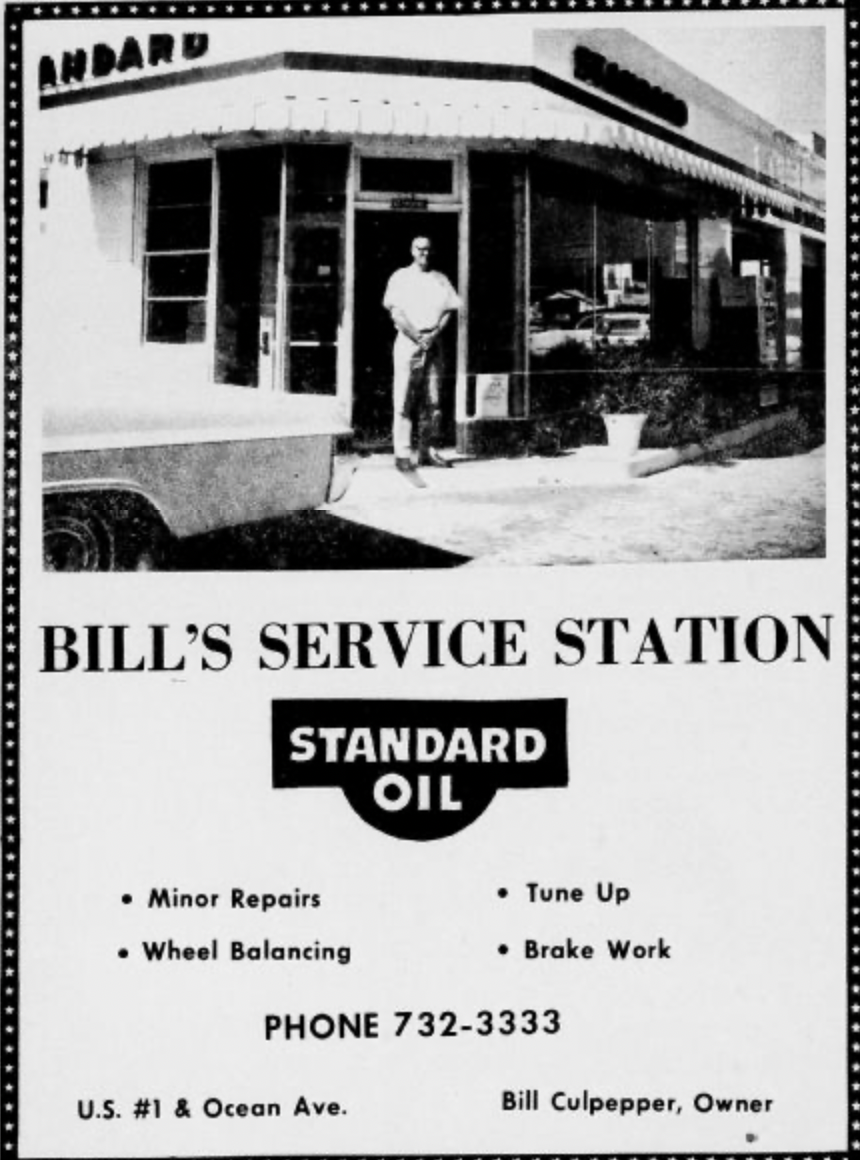
Ocean Avenue had long been the main route into downtown Boynton Beach, the historic business district near the Intracoastal Waterway.
Before the interstate era, motorists traveling north and south along U.S. 1 and Dixie Highwaynaturally passed through downtown, providing steady traffic for local shops and restaurants.
The shift in travel patterns had actually begun earlier. When the Florida Turnpike—then called the Sunshine State Parkway—opened in 1957, long-distance drivers were already being funneled onto a faster route west of the coastal towns instead of traveling through them.
The arrival of I-95 completed the bypass.
With exits only at Boynton Beach Boulevard and Woolbright Road, drivers on the interstate had no direct route into downtown via Ocean Avenue. Thousands of cars passed the city every day, but most never entered the historic business district.

Over time, traffic that once flowed naturally toward the waterfront disappeared, and businesses that depended on pass-through customers struggled. As development followed the interstate westward, downtown Boynton Beach was gradually left off the main travel route.
By the time the Boynton Beach Mall opened in 1985, much of Boynton’s retail and restaurants had closed, or moved west.
Looking back, the story helps explain why the once-busy downtown district faded. The highway that connected South Florida also redirected the traffic that had once kept Boynton’s historic center alive.
