How I-95 Changed Downtown Boynton Beach

Ever wonder why Boynton Beach never developed a downtown like Delray’s Atlantic Avenue? The answer may lie in two highways built decades ago.

When Interstate 95 cut through Palm Beach County in the late 1960s and early 1970s, it promised faster travel and modern transportation. But for towns along its route, the new highway also came with tradeoffs. Boynton Beach was one of them.

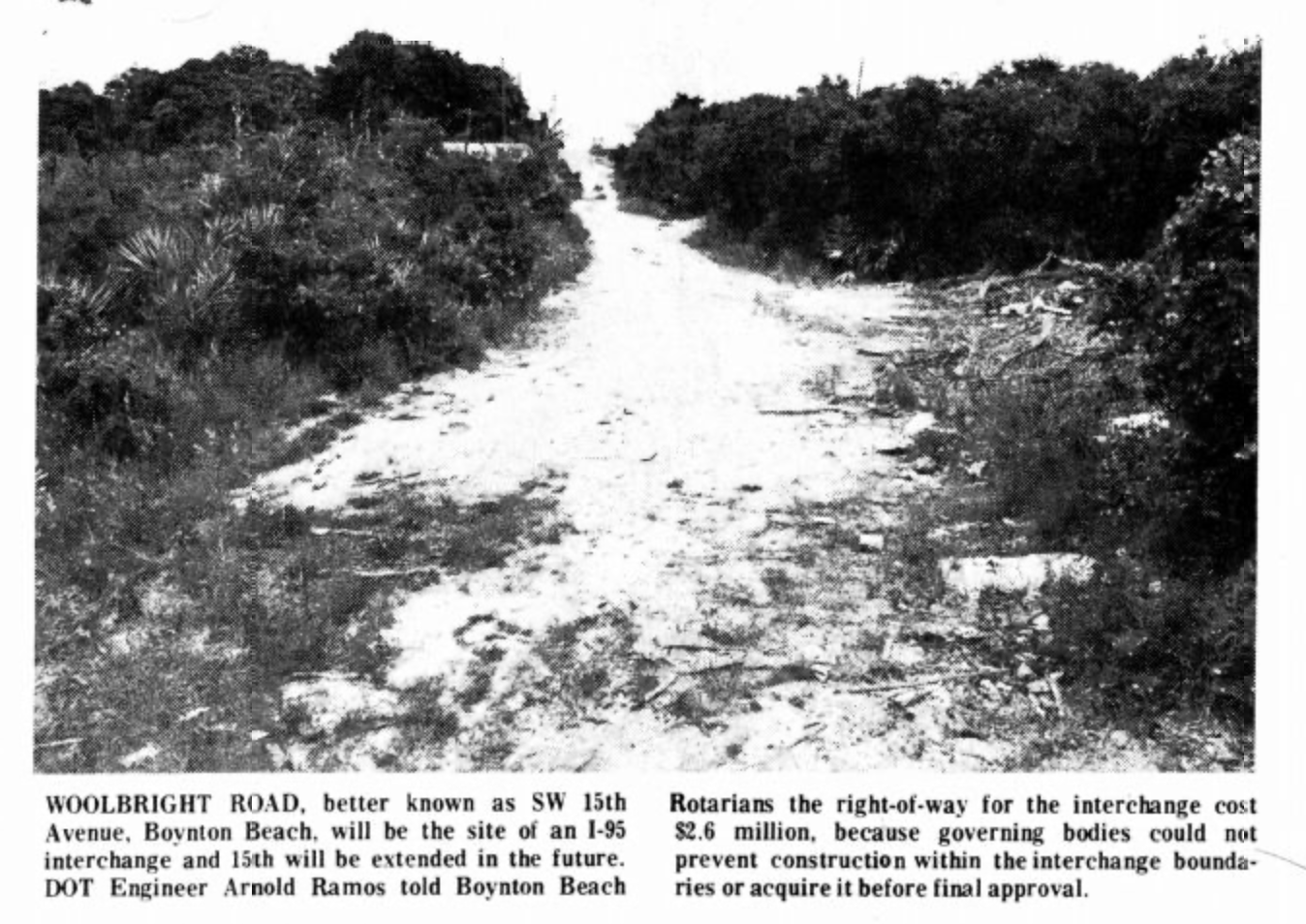
A March 1969 Boynton Beach News Journal article described the planned route of I-95 through the city. The interstate would pass through Boynton with just two exits: NE 2nd Avenue (today’s Boynton Beach Boulevard) and SW 15th Avenue (now Woolbright Road). Between those two points, the highway would cut directly through neighborhoods and businesses.


The project required taking land along the route. The article noted that three houses on SW 8th Street just south of SW 2nd Avenue would be removed to make way for the interstate. Businesses were affected as well. Rinker Materials would have to relocate because the new highway would pass directly through its property.

Residents and businesses along Ocean Avenue raised concerns during planning, asking how the interstate would affect access across town. Their concerns were justified.

State Road Department officials explained that Ocean Avenue would not cross the interstate. Because the highway would be elevated at the nearby interchange, building a crossing over both I-95 and the railroad tracks was considered too expensive. The plan simply eliminated it.

That decision had long-lasting consequences.


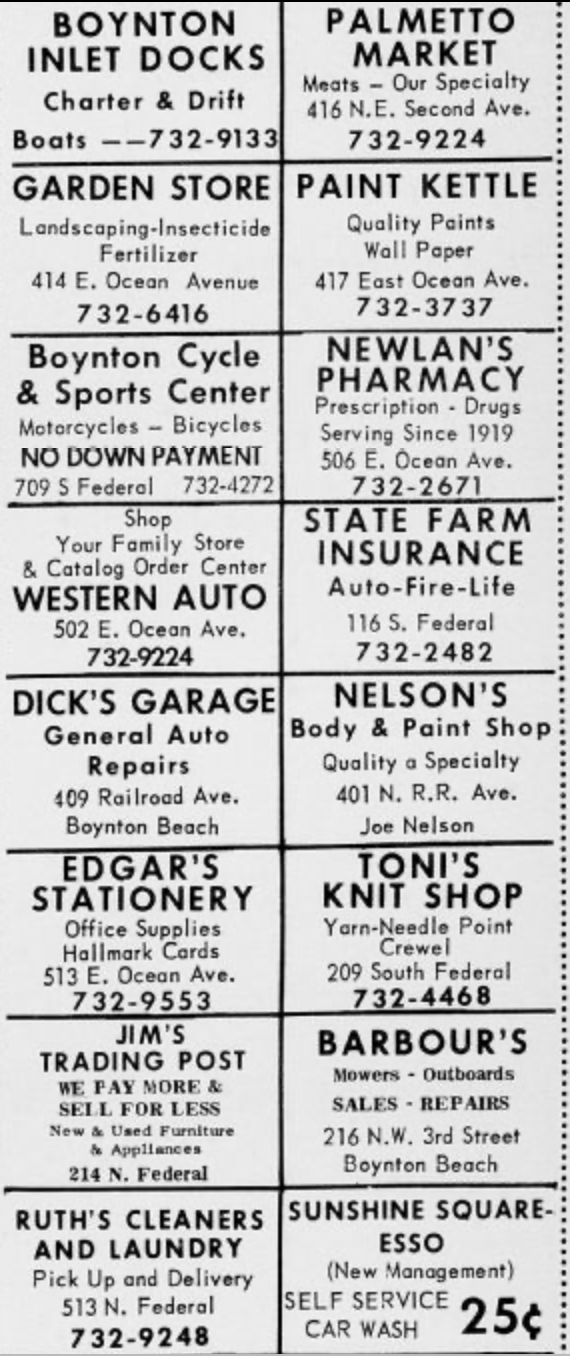
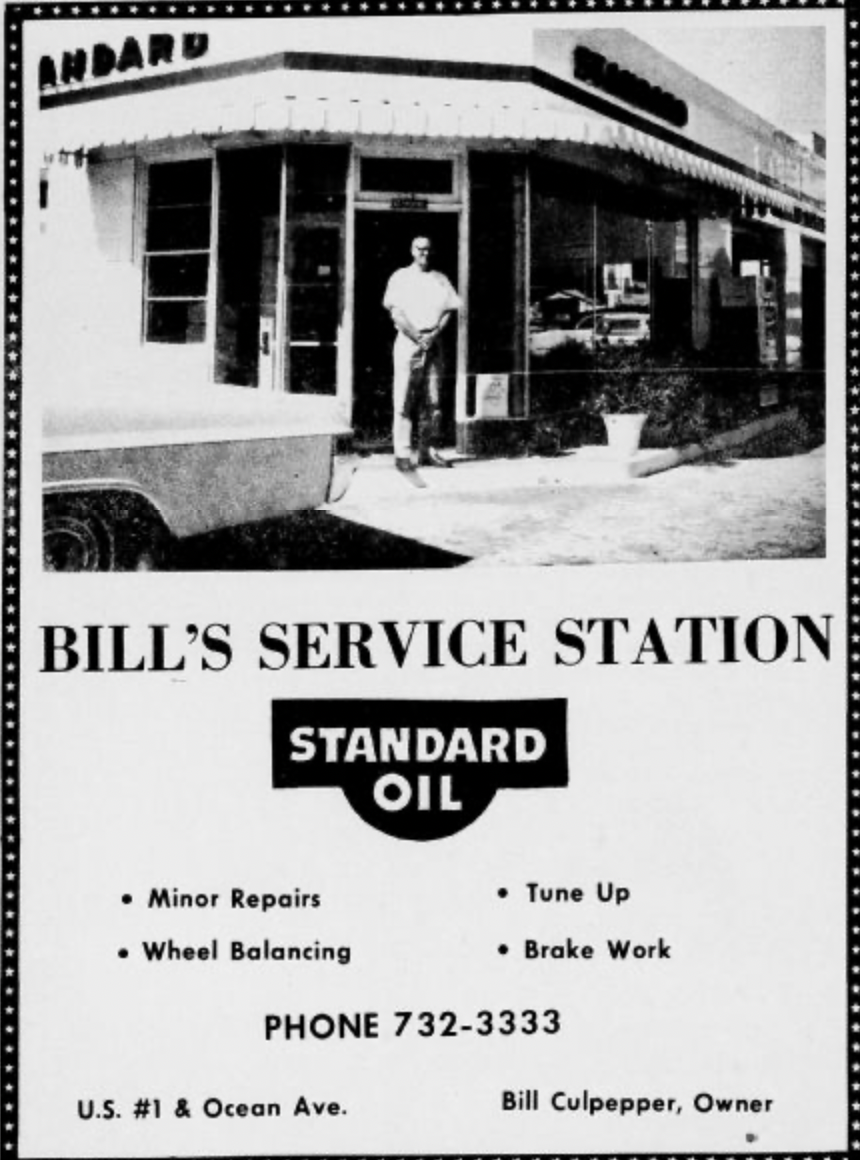
Ocean Avenue had long been the main route into downtown Boynton Beach, the historic business district near the Intracoastal Waterway.

Before the interstate era, motorists traveling north and south along U.S. 1 and Dixie Highwaynaturally passed through downtown, providing steady traffic for local shops and restaurants.

The shift in travel patterns had actually begun earlier. When the Florida Turnpike—then called the Sunshine State Parkway—opened in 1957, long-distance drivers were already being funneled onto a faster route west of the coastal towns instead of traveling through them.

The arrival of I-95 completed the bypass.


With exits only at Boynton Beach Boulevard and Woolbright Road, drivers on the interstate had no direct route into downtown via Ocean Avenue. Thousands of cars passed the city every day, but most never entered the historic business district.

Over time, traffic that once flowed naturally toward the waterfront disappeared, and businesses that depended on pass-through customers struggled. As development followed the interstate westward, downtown Boynton Beach was gradually left off the main travel route.

By the time the Boynton Beach Mall opened in 1985, much of Boynton’s retail and restaurants had closed, or moved west.

Looking back, the story helps explain why the once-busy downtown district faded. The highway that connected South Florida also redirected the traffic that had once kept Boynton’s historic center alive.


A Look Back at Boynton in 1914

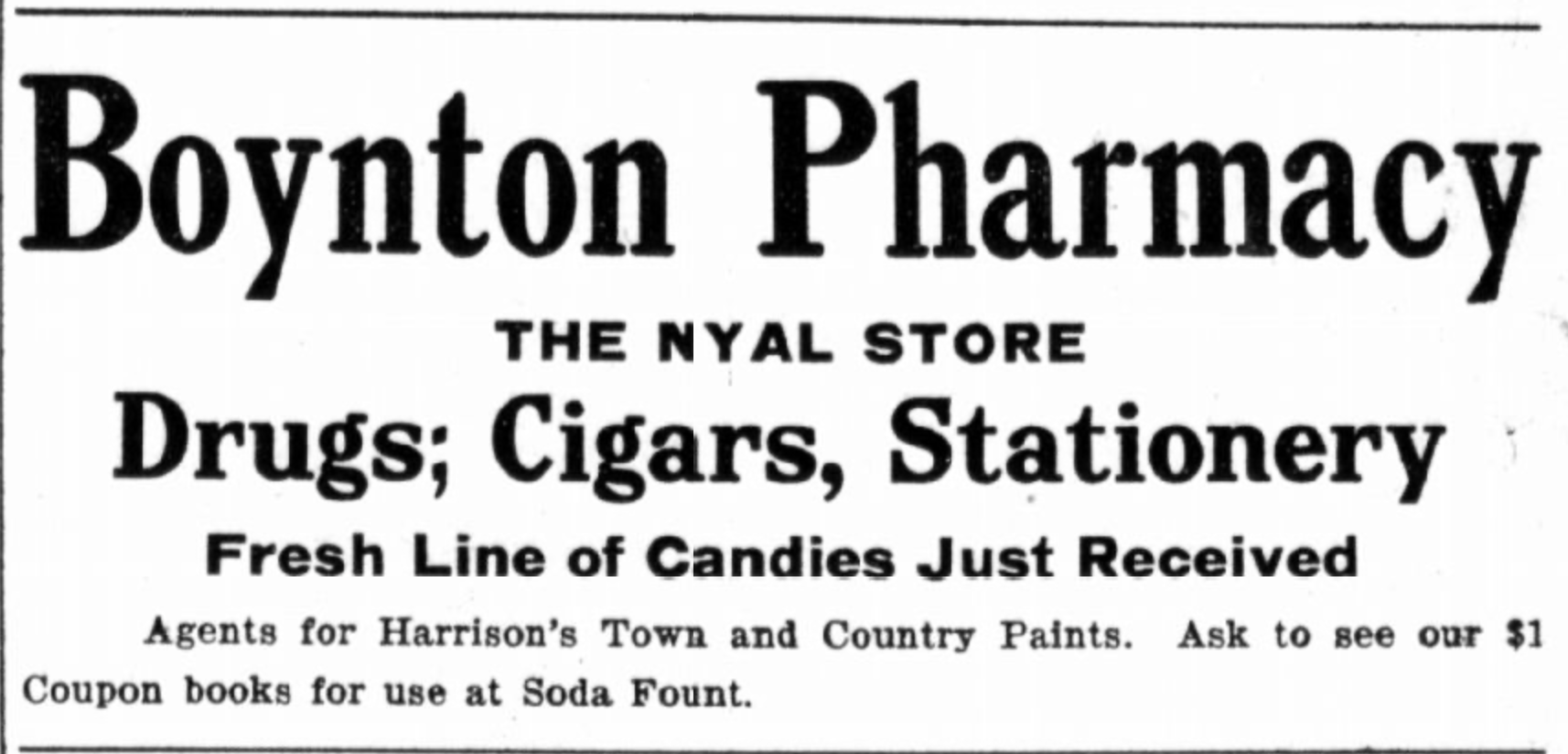
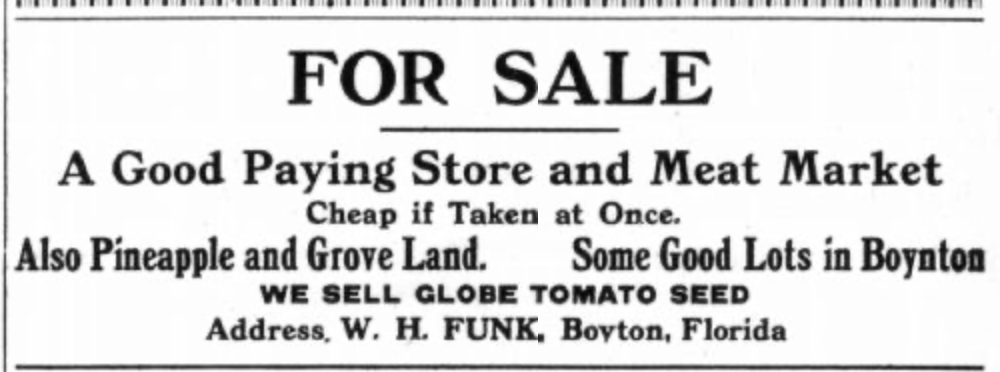
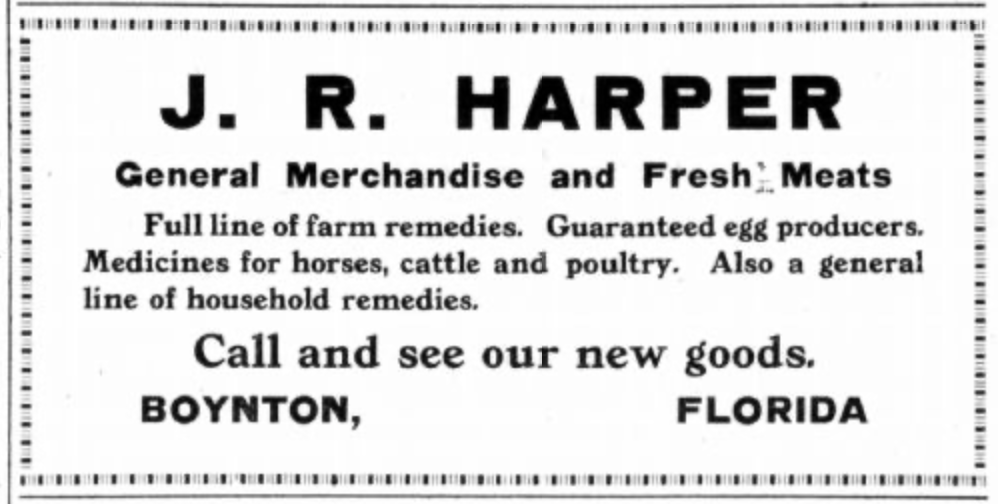
A look at Boynton’s business ads from 1914 shows a town grounded in farming and steadily growing into a permanent community.

Plenty of Cheap Land

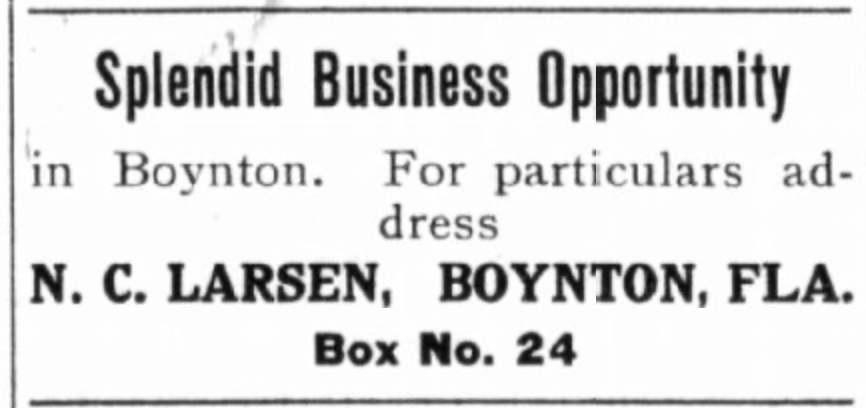
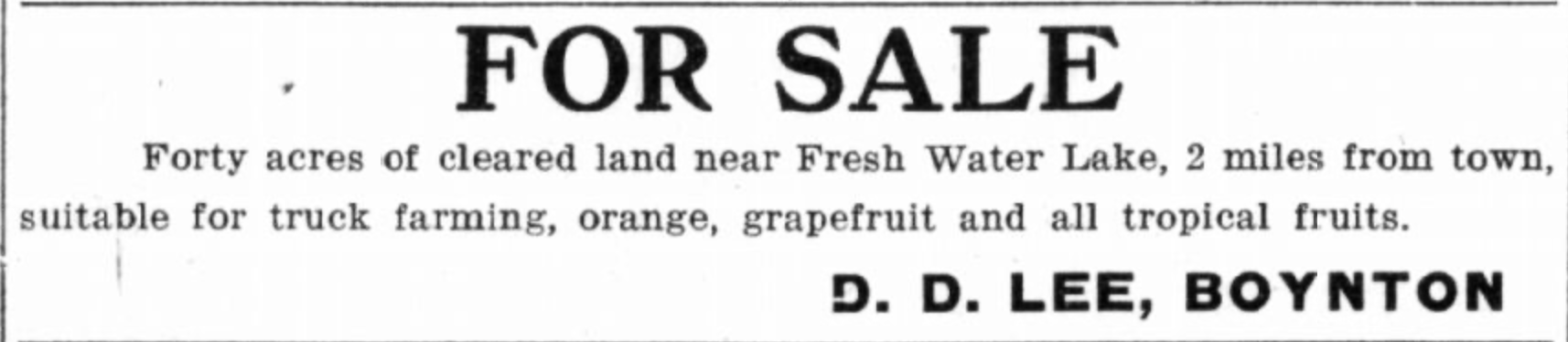
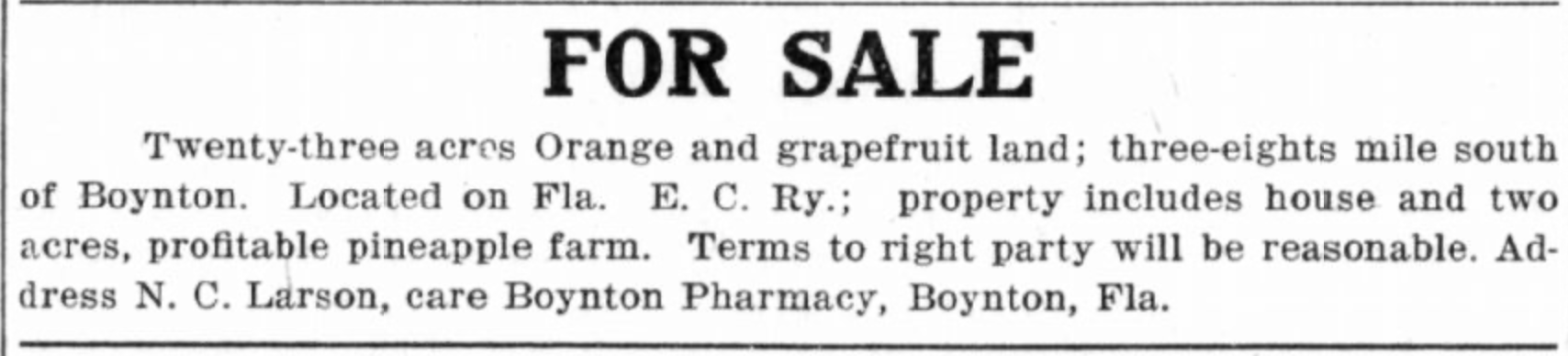
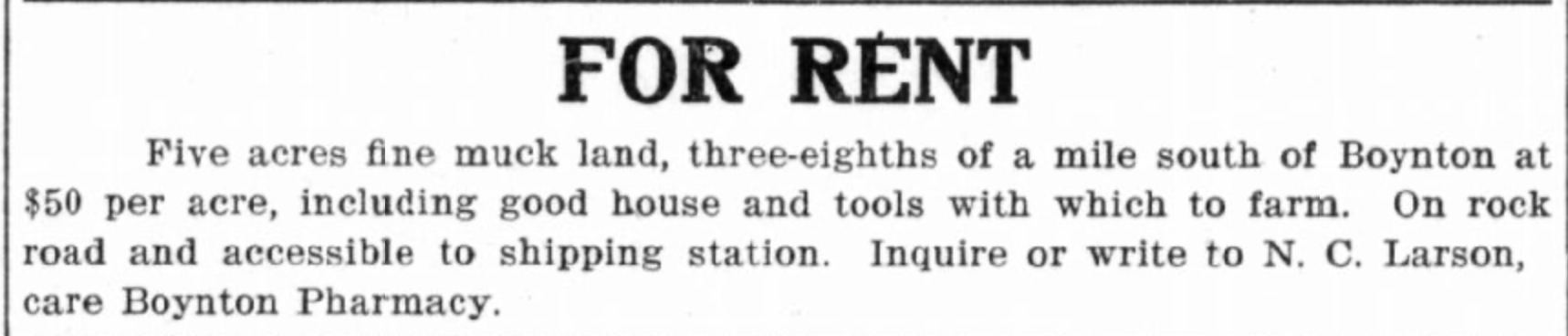
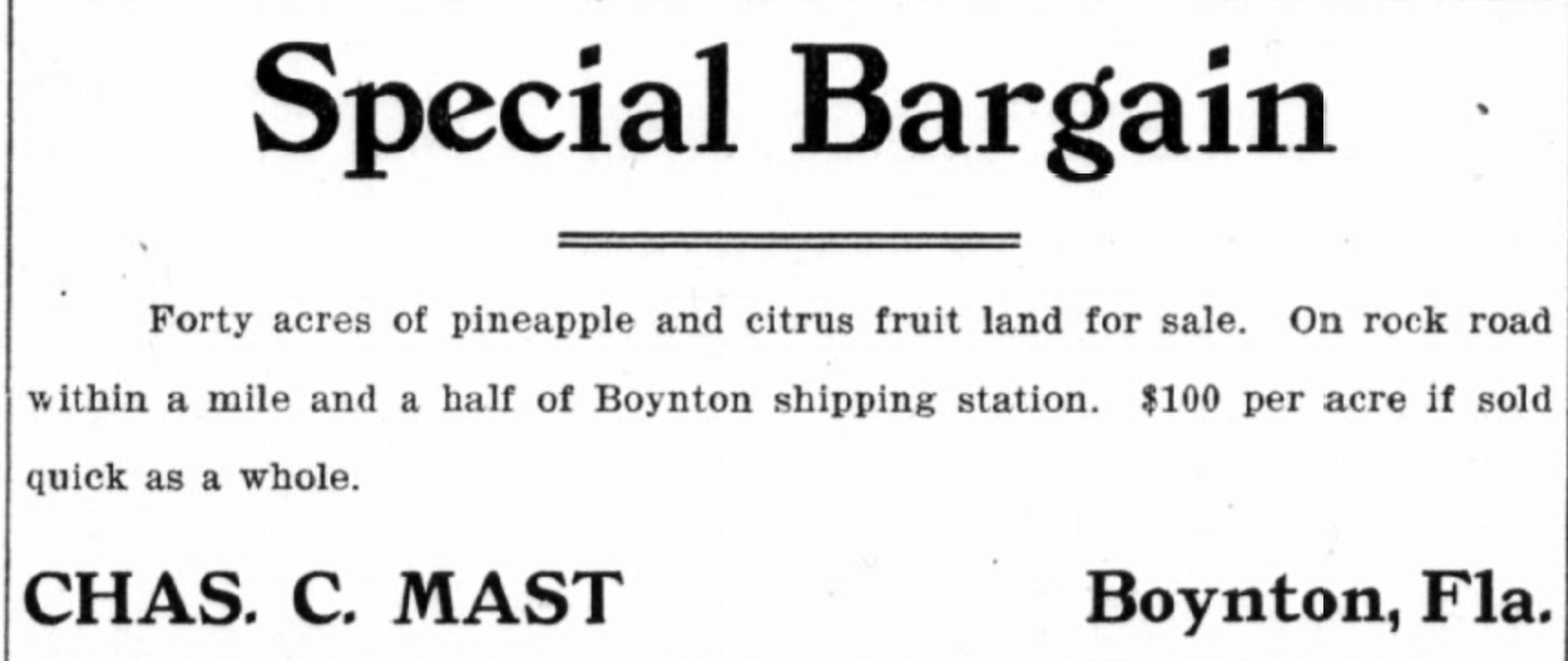
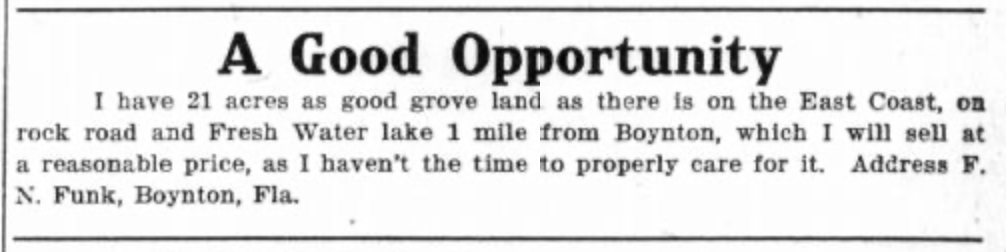
Land was actively being bought, sold, and rented. D. D. Lee offered 40 acres near Fresh Water Lake (Lake Boynton) suited for truck farming and citrus, while Chas. C. Mast promoted pineapple and citrus land close to the shipping station. N. C. Larsen handled grove property and muck land, reflecting the demand for productive acreage.

Clearing the Land

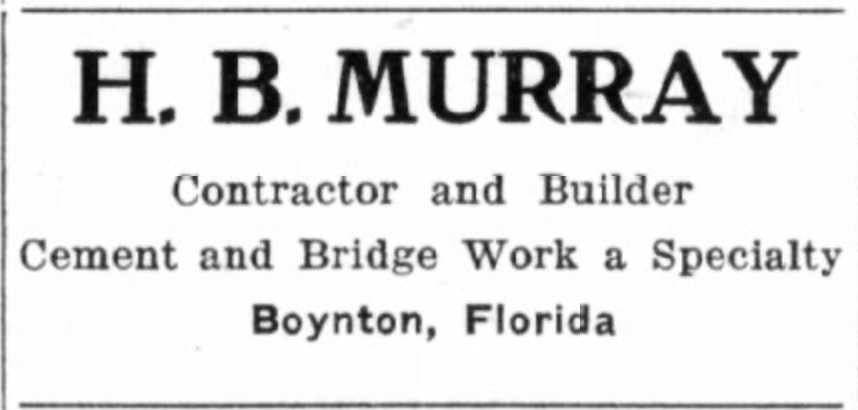
Supporting this farm economy were essential local services. A. L. Fuller provided heavy hauling, W. F. Riddle managed teaming and lighterage for muck and marl, and contractor H. B. Murray helped transform cleared land into working farms and homes by building homes and even bridges.

Shopkeepers

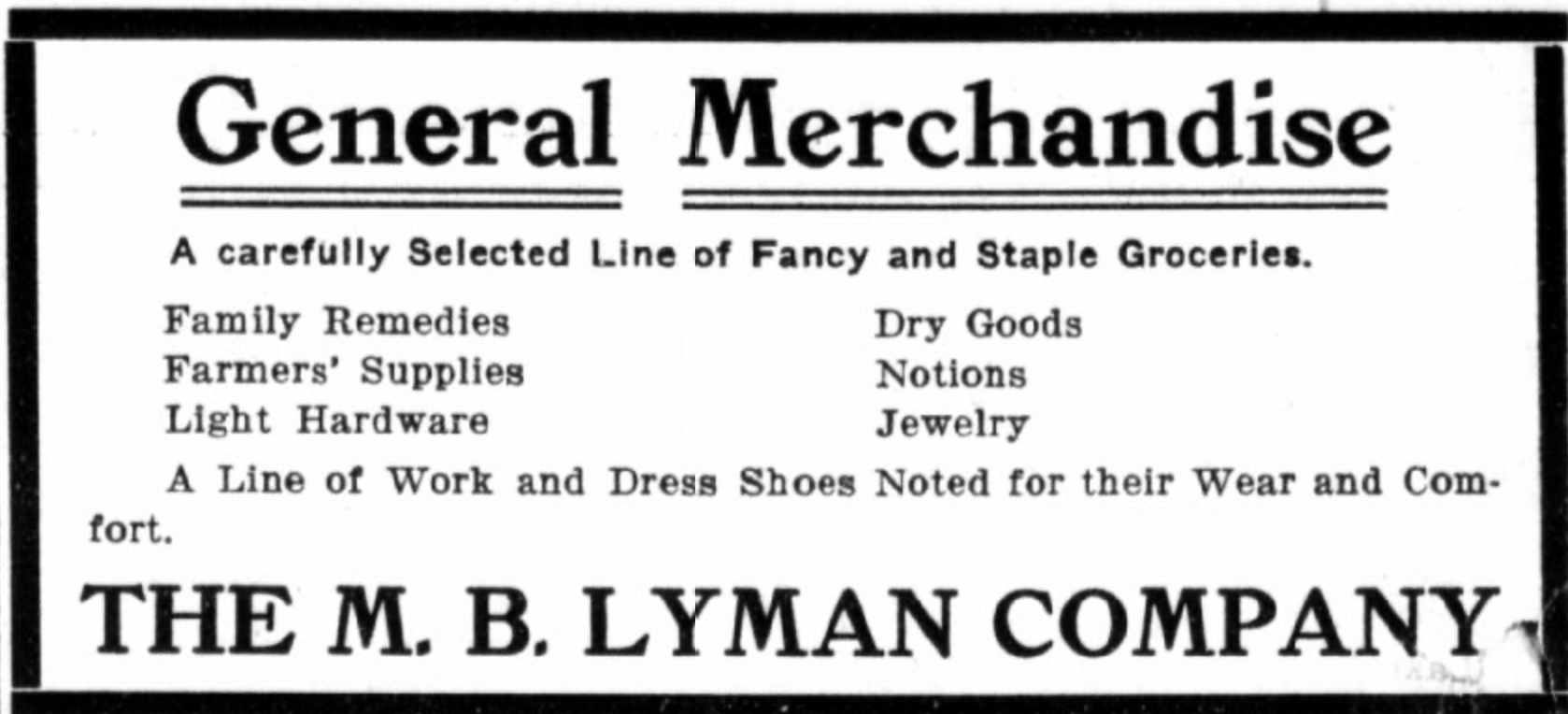
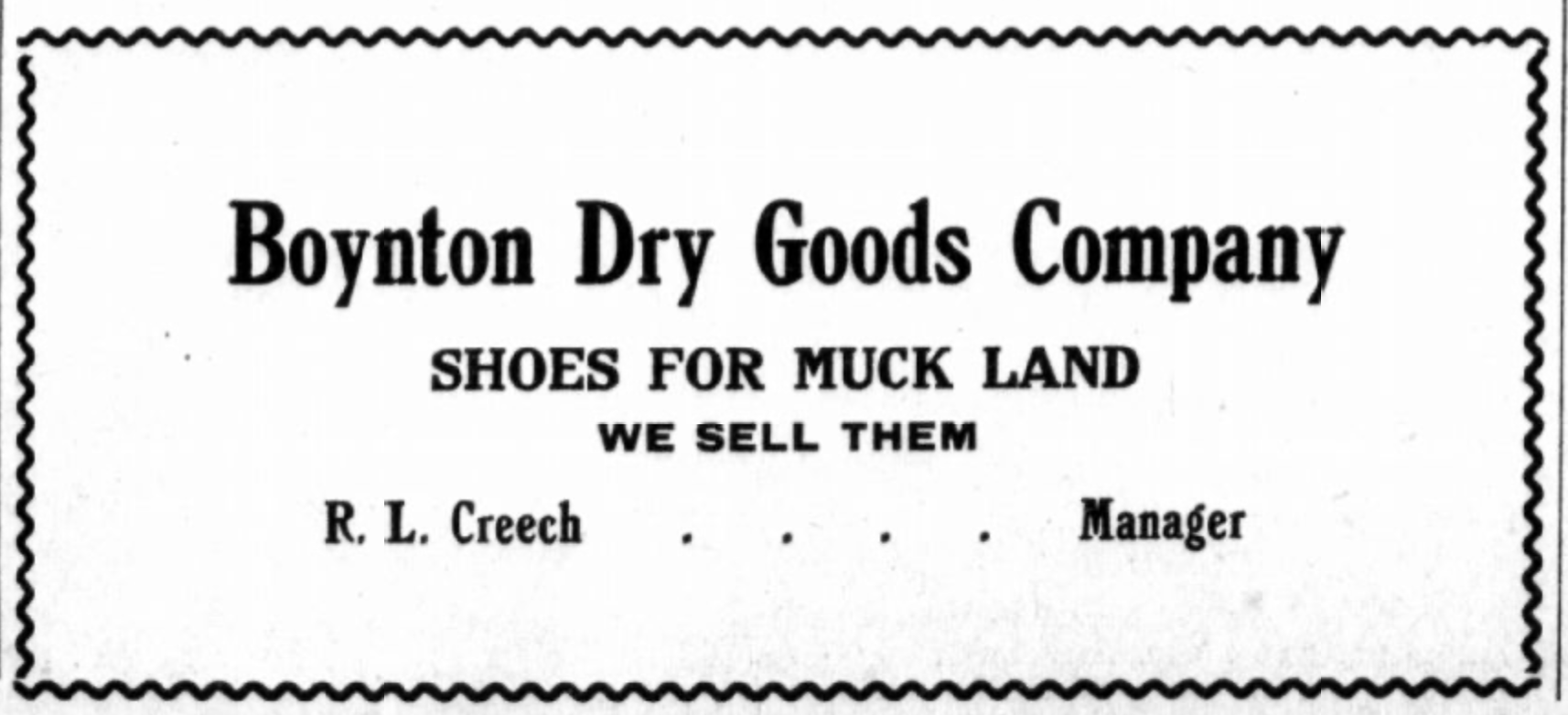
Merchants supplied both household and agricultural needs. J. R. Harper sold general merchandise, fresh meats, and livestock remedies, while the M. B. Lyman Company stocked groceries, dry goods, shoes, and hardware. The Boynton Pharmacy — the Nyal Store — carried medicines, paints, cigars, stationery, and candy.

Rooms for Rent

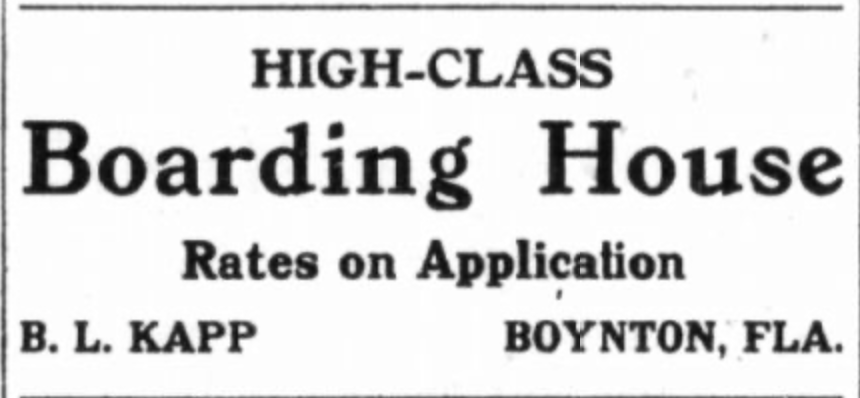
Hospitality and everyday life were also part of the picture. Hotel Vera, operated by J. F. Triplett and W. G. Keller, provided lodging and meals, while Holmes’ Amusement Parlor offered pool and billiards. Charlie A. Carter sold sprouted coconuts and even advertised a small bachelor home.

Early Developers

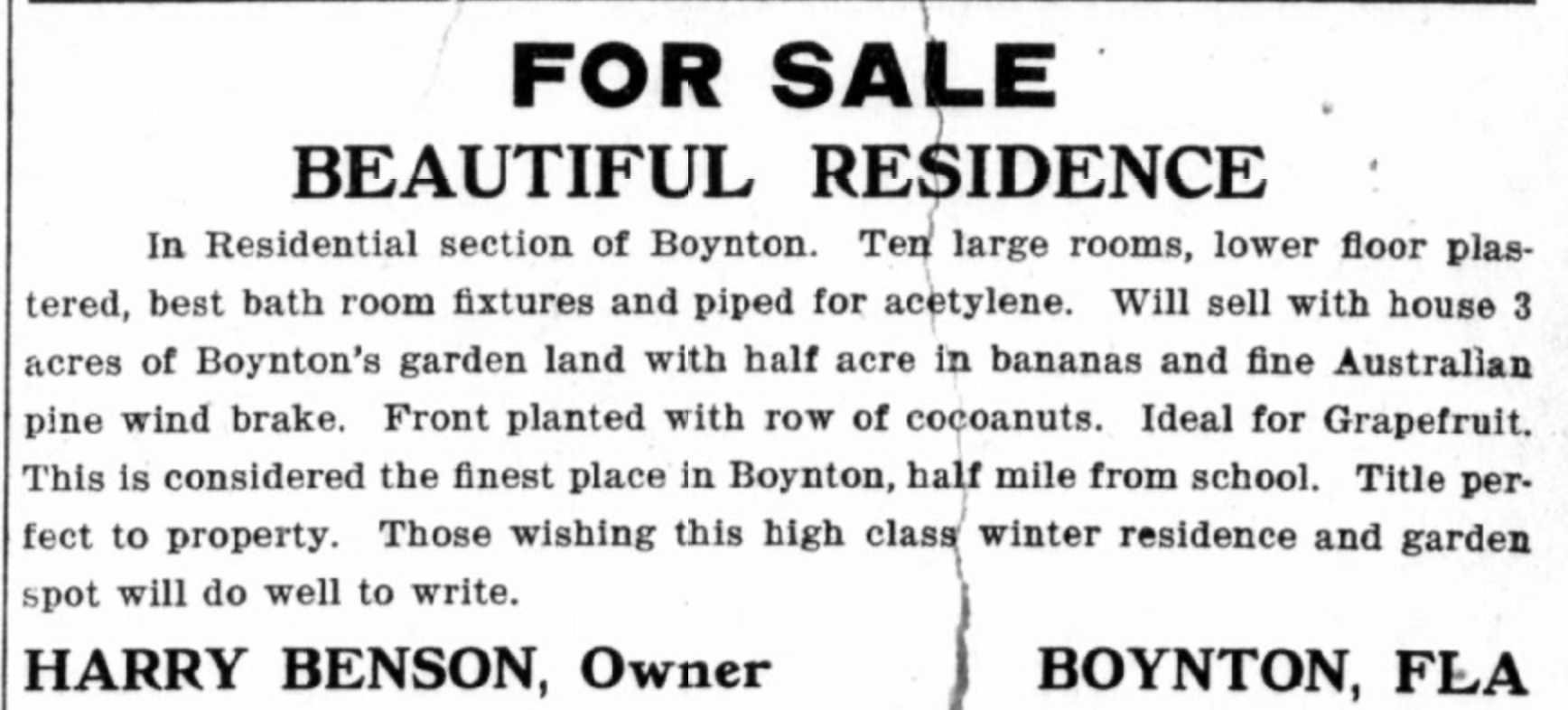
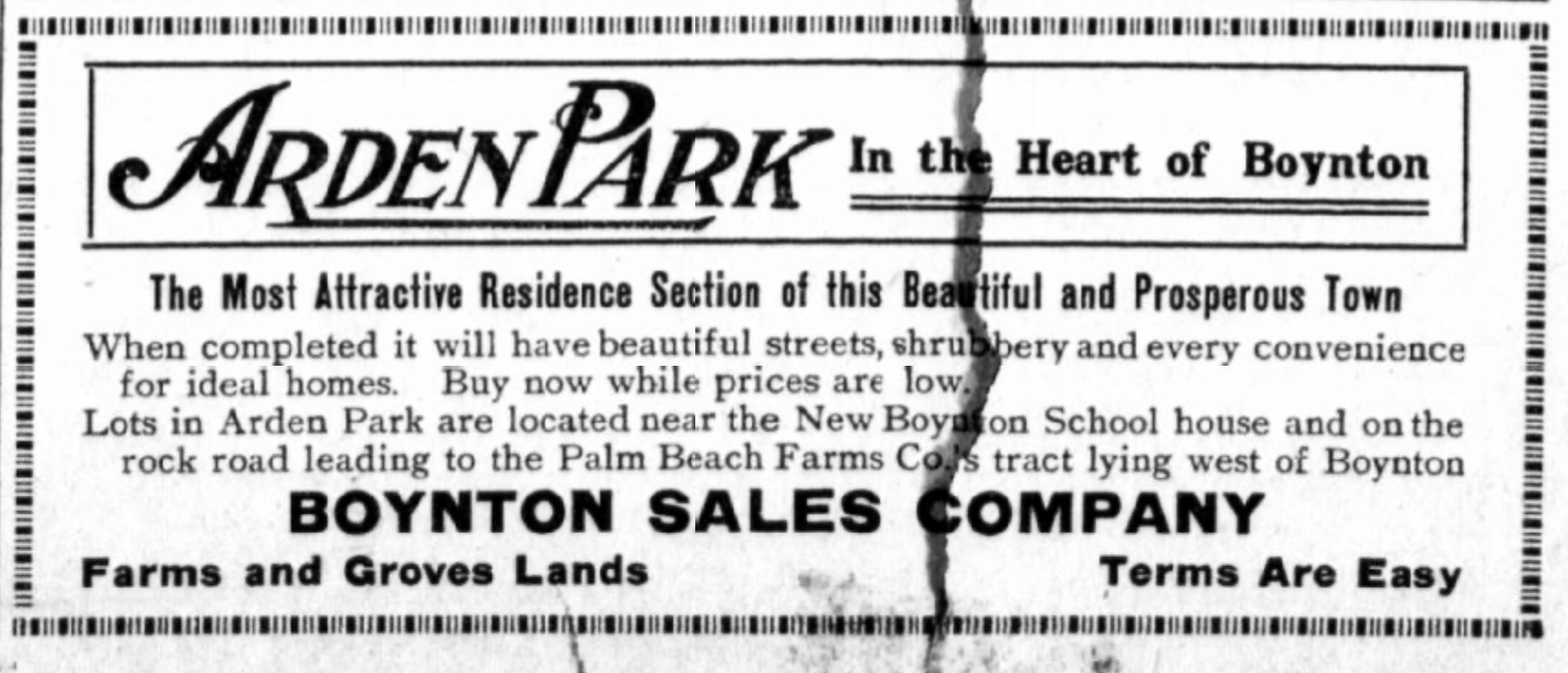
Developers were promoting Boynton’s future. Arden Park was marketed as a planned residential section near the school, and Harry Benson offered a winter residence on garden land.

These ads reflect a working agricultural town supported by tradesmen, merchants, builders, and land developers, a place where both business and community life were firmly taking hold.

Source: January 8, 1914 Lake Worth Herald


Pioneers of Boynton: Samuel B. Cade and Alonzo L. King

Did your ancestors farm in early Boynton? If you have old photos of early families like Cade, King, or others, please contact us. These stories should be documented, and shared with future generations.

Long before the formal establishment of the Town of Boynton, the area that would become Boynton Beach was a frontier landscape of palmetto scrub, tall grasses, and untamed farmland. Among its earliest settlers were two African-American families whose contributions helped lay the foundation for the community: the families of Samuel B. Cade and Alonzo L. “L.A.” King.

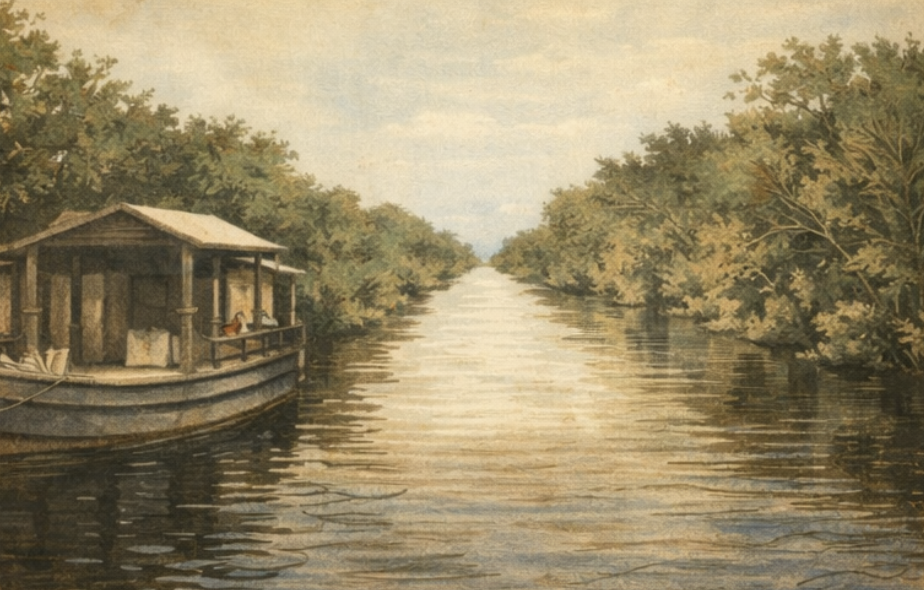
Boynton Canal, 1890s (AI Reimagined)

Farmers, Landowners, and Community Builders

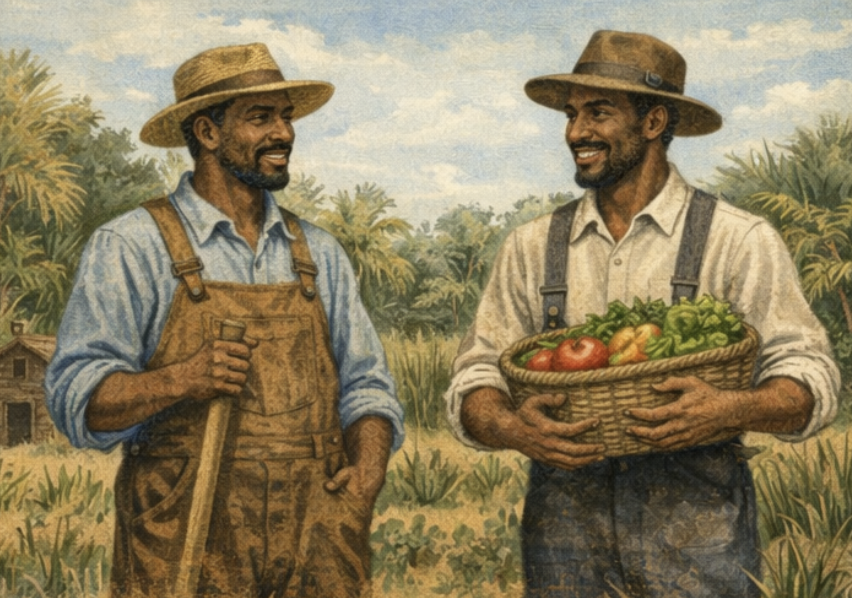
Samuel B. Cade and Alonzo L. King were working farmers who transformed raw land into family farms. Through determination and labor, they established homesteads, raised families, and contributed to the region’s early economy. When new white settlers from Michigan arrived, Mr. Cade and Mr. King taught the newcomers best practices for farming in the unfamiliar sandy soil.

Early African American settlers (AI Reimagined)

Both men brought with them experiences shaped by the post–Civil War South. Samuel B. Cade, born in Georgia in 1852, came of age during Reconstruction. Alonzo L. King, born in 1862 in Virginia, later migrated southward to Florida as part of broader patterns of African-American movement in search of land and opportunity.

Alonzo drove the surrey for the Boynton Hotel owned by Nathan Boynton and Albert & Annie Parker. Samuel Cade lived and farmed nearby, building his household alongside other early settlers. Alonzo King’s son Willie worked as a bell boy in the hotel, and later became a cook.

Census records from 1910 list both men as heads of household in Boynton, identified as farmers and neighbors. Their families were part of a tight-knit agricultural community that contributed materially and socially to the area’s growth.

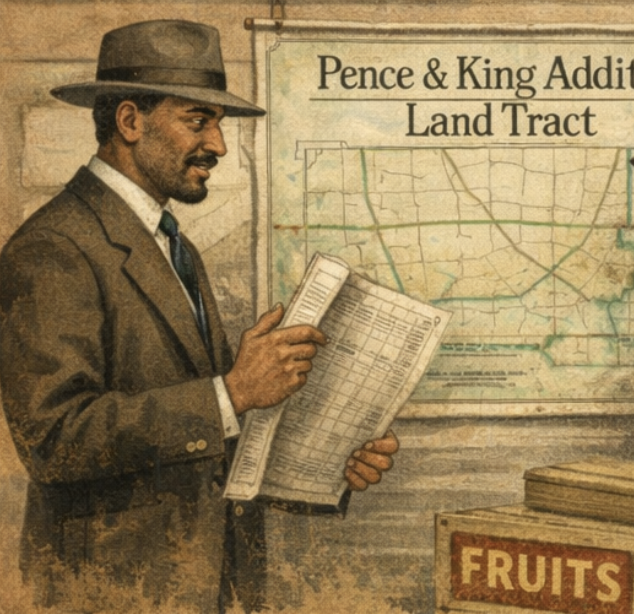
Alonzo King became a landowner of particular note. Historical records indicate his involvement in the development of the Pence/King Addition, a tract created for farming and settlement in partnership with local fruit shipper Cullen Pence. King’s name appears in county commission proceedings during the early twentieth century, reflecting a level of civic participation not always recognized in accounts of early Boynton history.

Pence & King addition (AI Reimagined)

Together, the Cade and King families formed part of a small but significant African-American farming community in the area.

Before the Town Was Platted

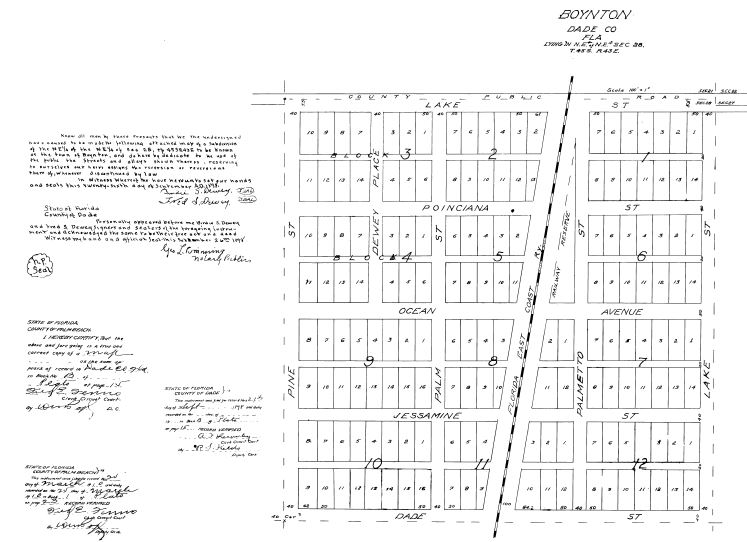
In 1898, Fred Dewey and Byrd Spilman Dewey officially platted the Town of Boynton. However, evidence suggests that Samuel Cade was already living and farming in the vicinity by the mid-1890s, and Alonzo King and his family were also established in the developing settlement.

Plat for the Town of Boynton

The birth of King’s son William in what is now called Boynton in 1884 — prior to the town’s formal platting — underscores the presence of African-American settlers before the arrival of many later residents whose names are more commonly recorded. Their story broadens our understanding of who the true pioneers of Boynton were.

Later Years and Legacy

In the 1910s, Alonzo King relocated to Jacksonville, where he worked as a mason, carpenter, and laborer until his death in 1918. Samuel Cade remained in Palm Beach County, continuing to farm and raise his family until his death in 1924.

Today, as we reflect on Boynton’s origins, it is essential to recognize that African-American pioneers such as Samuel B. Cade and Alonzo L. King were not peripheral figures in the town’s development. They were foundational settlers — farmers, landowners, parents, and citizens — whose labor and resilience shaped the community long before it was formally incorporated.

Their legacy remains an integral part of Boynton’s shared history.

There are no known photographs of Samuel B. Cade or Alonzo L. “L.A.” King. The images included here are modern artistic renderings created with the assistance of ChatGPT. They are based on historical records, census data, and documented details about early Boynton’s landscape and agricultural life.

These illustrations are meant to help readers visualize what Boynton looked like in its earliest days — a sparsely settled frontier of palmetto scrub, waterways, dirt paths, and small homesteads carved out by hardworking families.

If you or your family have photographs of the Cade or King families — or of other early African-American settlers in the Boynton area — we would be honored to scan them. Preserving and sharing these images ensures that the full story of Boynton’s pioneers is remembered and passed on accurately for future generations.

Genealogy Timeline

1852 – Birth of Samuel B. Cade

  • Born in Georgia.
  • Grew up during Reconstruction, learning farming and resilience skills that would guide his family to Florida.

1862 – Birth of Alonzo L. King

  • Born in Prince William County, Virginia.
  • Would later migrate south to Florida, joining other African-American settlers in the developing region.

1883–1888 – Births of Alonzo King’s Children

  • 1883: Anna King born in South Carolina
  • 1884: William King born in Boynton, Florida — before the town was officially mapped
  • 1888: Pembrook King born in Kings Ferry, Nassau, Bahamas — showing the family’s regional mobility

1895 (Approx.) – Samuel Cade in Boynton

  • Evidence suggests Samuel Cade was living and farming in Boynton.
  • He was part of the small African-American farming community that predated the official town plat.

1898 – Boynton Town Plat

  • Fred and Byrd Spilman Dewey officially platted the town of Boynton.
  • Samuel Cade and Alonzo King were already living and farming nearby, showing African-American pioneers were foundational to the community.

1906–1907 – Alonzo King as Landowner

  • Newspaper records list Alonzo King as a landowner in Boynton.
  • Attended county commission meetings, demonstrating civic involvement.
  • Partnered with Cullen Pence, a major fruit shipper, to develop the Pence/King Addition, expanding settlement and agricultural plots.

1910 – Census Snapshot

  • Samuel Cade: Head of household, Black farmer, Boynton resident.
  • Alonzo King: Head of household, Black farmer/landowner, Boynton resident.
  • Both families were neighbors and part of a tight-knit early African-American farming community.

1915–1918 – Later Years

  • Alonzo King moved to Jacksonville, working as a mason/carpenter/laborer, dying in 1918.
  • Samuel Cade remained in Palm Beach County, farming and raising his family until his death in 1924.

Rainbow Tropical Gardens: A Roadside Paradise in Boynton Beach

Rainbow Tropical Gardens: A Roadside Paradise in Boynton Beach

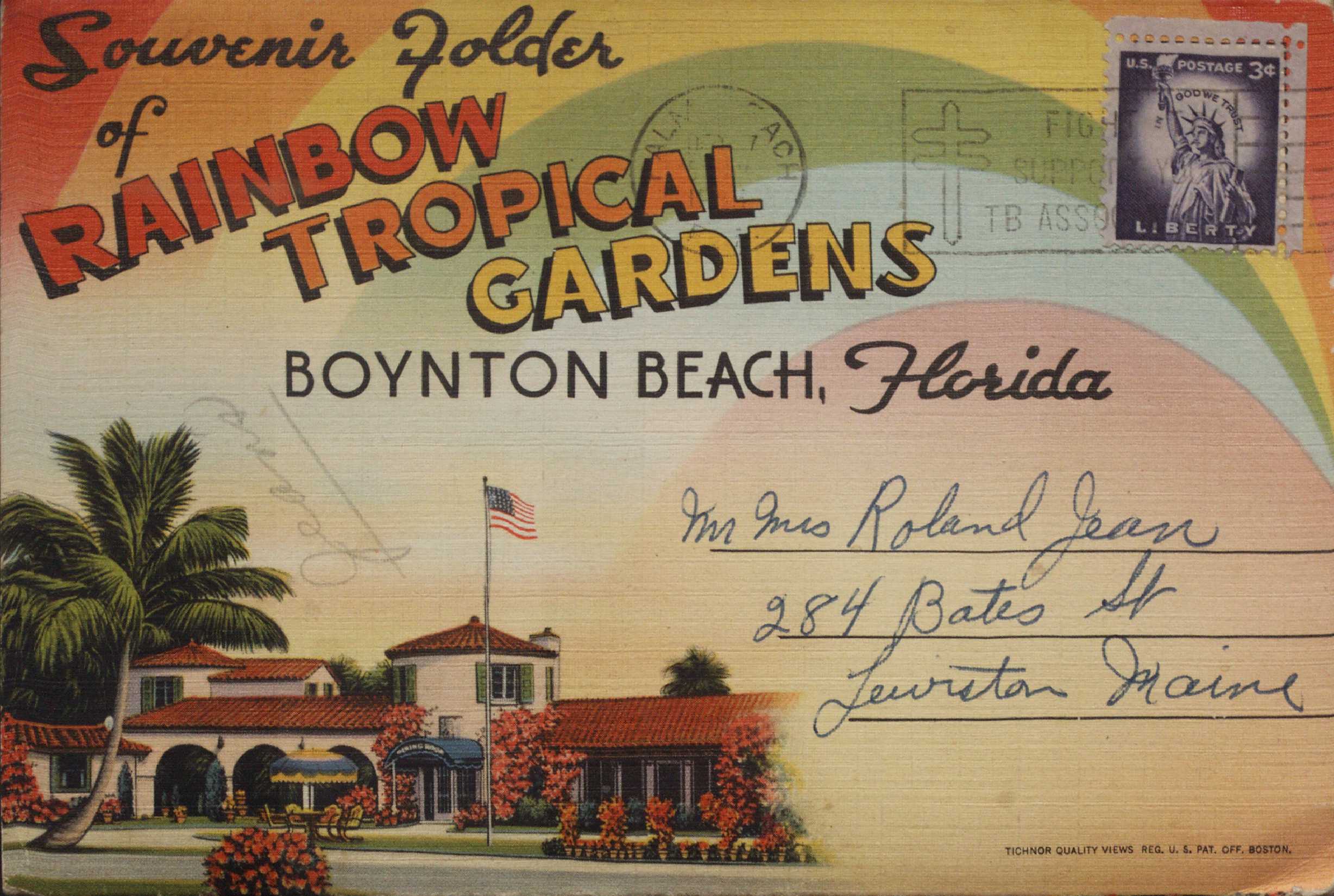
In the first half of the twentieth century, the coastal region of South Florida experienced rapid transformation. Railroads, highways, and the land boom of the 1920s brought new towns and tourism to areas like Boynton Beach. Along U.S. Highway 1, travelers encountered a landscape filled with nurseries, citrus groves, and small attractions that promoted Florida’s image as a lush, tropical destination. Among these, one of the most memorable was Rainbow Tropical Gardens, created and maintained by Clyde O’Brien Miller, a gifted horticulturist whose imagination and craftsmanship shaped the site into one of Boynton Beach’s earliest and most beloved landmarks.
Clyde O’Brien Miller and His Vision

Clyde O’Brien Miller was born in 1885 and developed an early interest in tropical plants and landscape design. He was part of a generation of horticulturists who viewed Florida not only as fertile ground for agriculture but also as a living canvas for artful gardens. Before establishing his own property, Miller worked on the gardens of Addison Mizner’s Cloister Inn in Boca Raton, where he absorbed Mizner’s use of Mediterranean Revival architecture and romantic garden design. This experience strongly influenced his later work.

By the late 1920s, Miller had settled in Boynton Beach and purchased land along U.S. 1 just north of downtown. He opened Rainbow’s End Nursery, which sold tropical plants and decorative landscape materials. Miller’s passion for creating beautiful spaces soon transformed the nursery into something larger. He began developing the grounds into Rainbow Tropical Gardens, a series of landscaped pathways, water features, and floral displays that showcased the variety and vibrancy of Florida’s tropical vegetation. Miller’s vision combined horticulture and art in a way that appealed to both tourists and local residents.
Design and Features

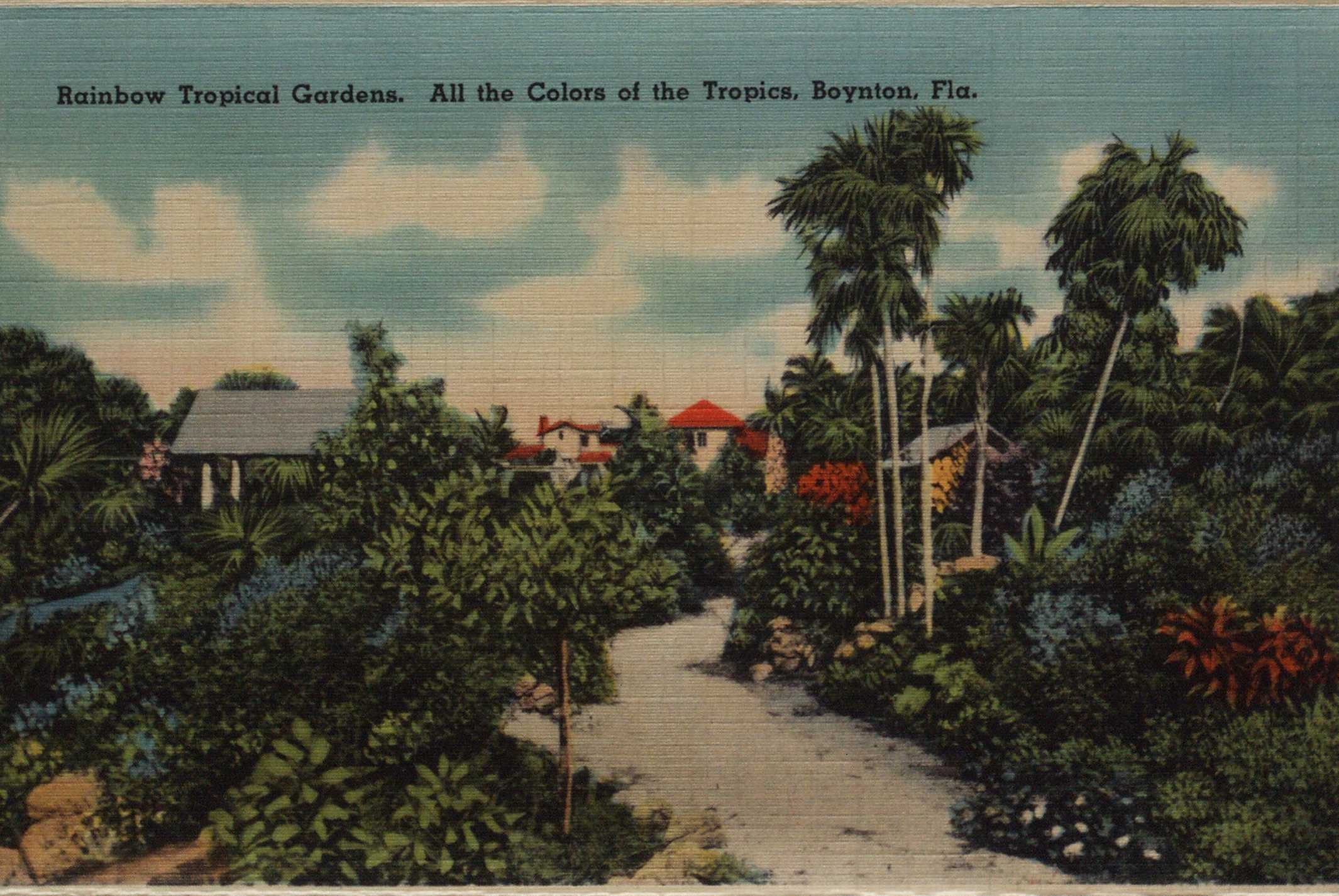
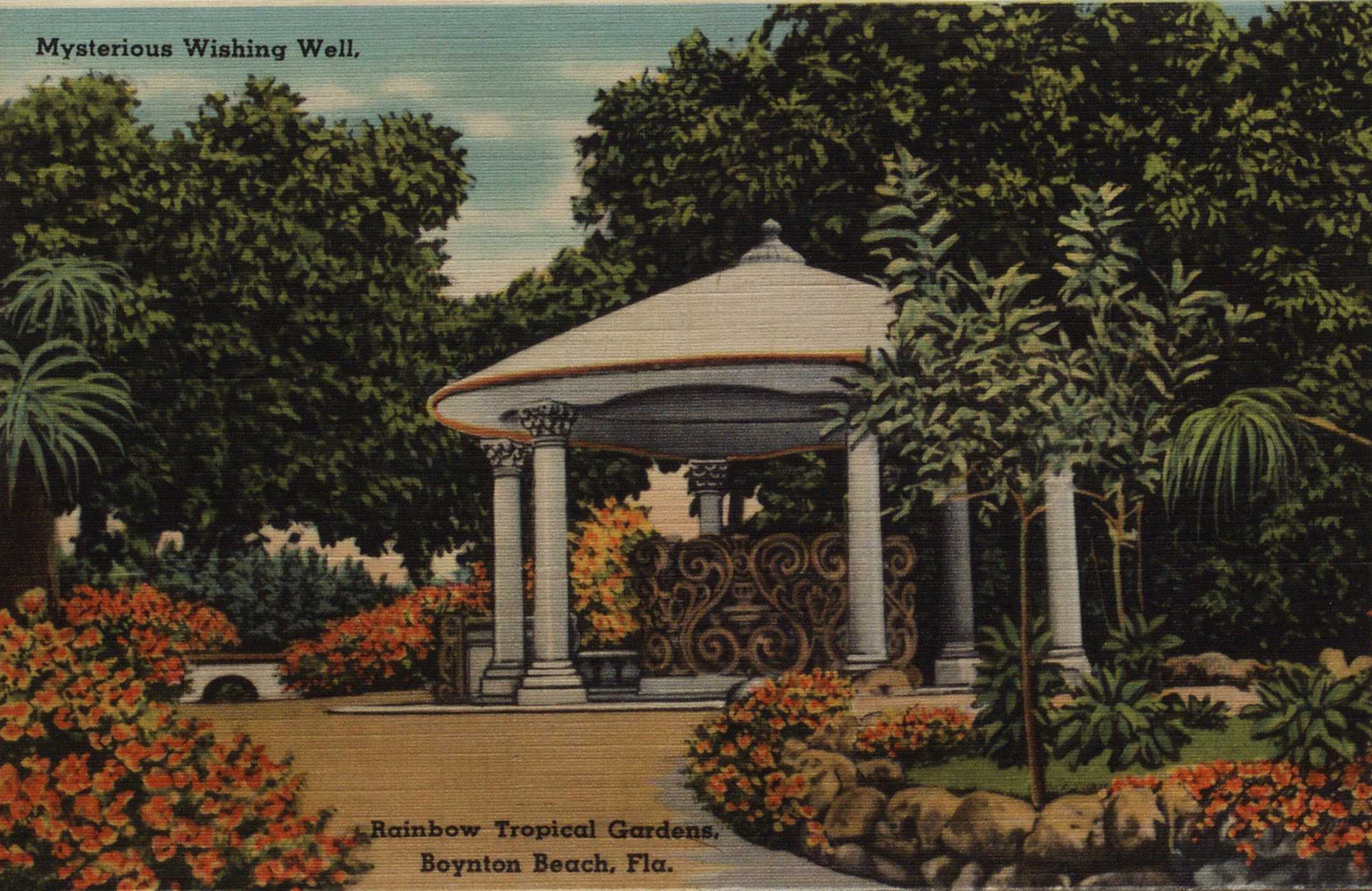
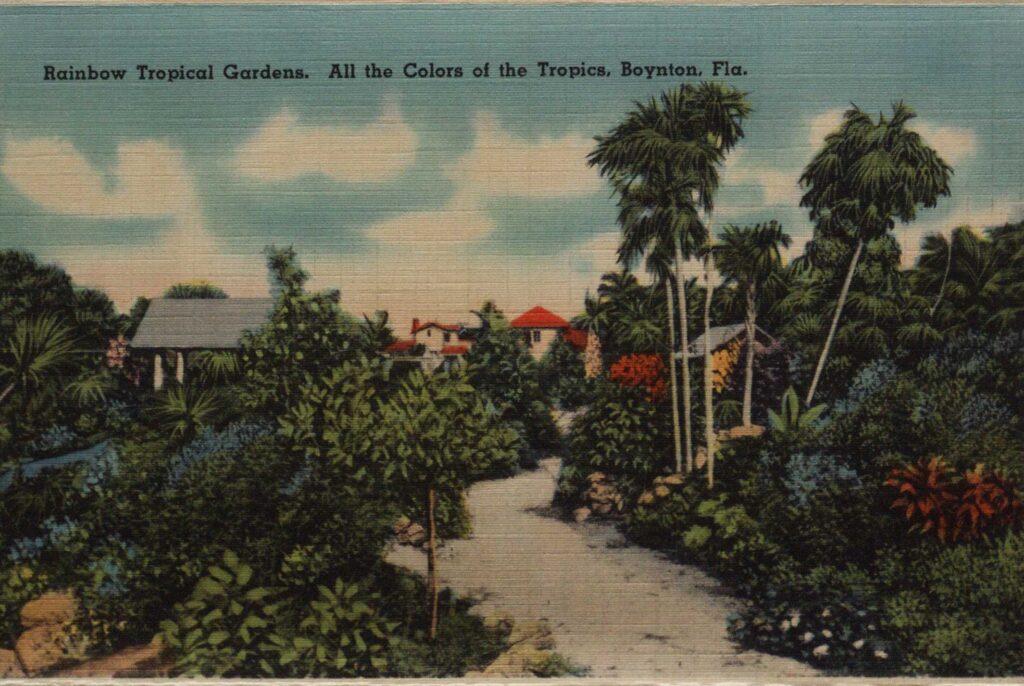
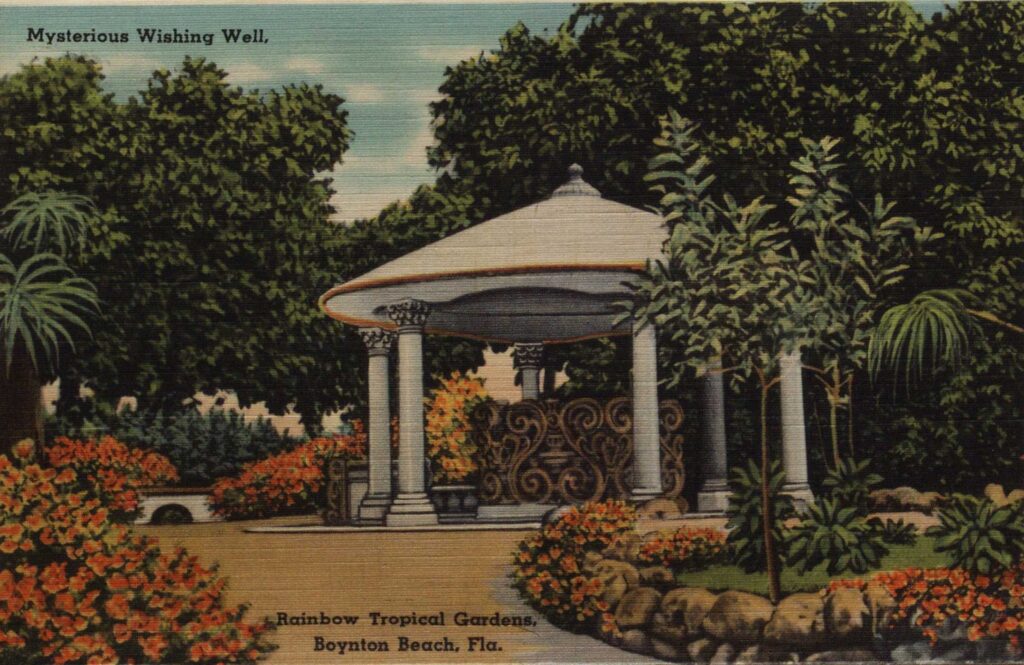
The gardens reflected Miller’s mastery of planting design and his appreciation for the visual power of color and form. He arranged winding footpaths that led through beds of hibiscus, crotons, bougainvillea, and palms. Visitors followed these trails past lagoons, fountains, and bridges, each carefully placed to frame the surrounding landscape. Stone gazebos, archways, and pergolas offered shade and a sense of discovery, while reflecting pools mirrored the vibrant foliage overhead.

At the front of the property stood Mediterranean Revival–style buildings that served as the gift shop and café. Local tradition and historical recollections suggest that Addison Mizner, who had already established himself as Palm Beach County’s most famous architect, either designed or inspired these structures. The combination of stucco walls, barrel tile roofs, and arched openings harmonized perfectly with the surrounding plantings.

Miller himself was responsible for much of the stonework and ornamental detailing throughout the grounds. His craftsmanship gave the gardens a handmade quality that distinguished them from purely commercial roadside attractions. Everything about the property reflected careful planning and artistic intent.
The Tourist Attraction Years

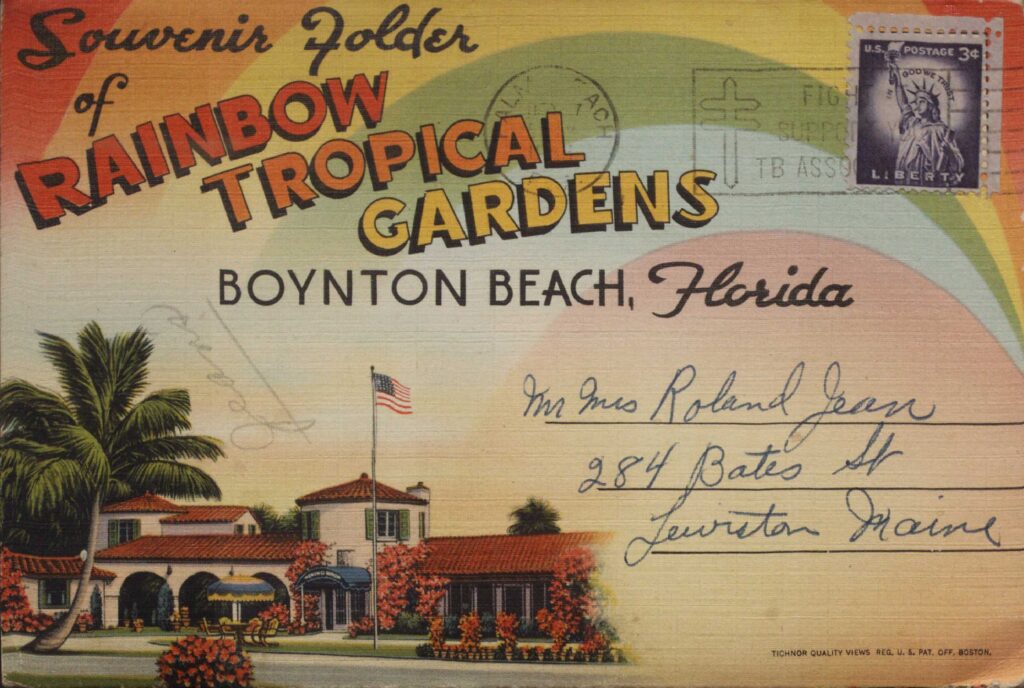
During the 1930s and 1940s, Rainbow Tropical Gardens became a celebrated stop for travelers driving the Dixie Highway and later U.S. 1. Visitors walked through the gardens, took photographs, and purchased tropical plants to ship north. The site appeared on linen postcards distributed across the country, often labeled with its motto, “All the Colors of the Tropics.” These colorful images helped spread Boynton Beach’s reputation as a place of natural beauty.

By the postwar years, Miller expanded the attraction to meet the expectations of modern tourists. The property included bird shows, alligators, and a Seminole Indian Village, reflecting the entertainment trends of the 1950s. Despite these additions, the heart of the gardens remained Miller’s landscapes and his commitment to horticultural display.

Rainbow Tropical Gardens also functioned as a community landmark. Local families held gatherings on the grounds, and the gardens served as a backdrop for countless photographs and wedding portraits. It represented the idealized Florida landscape that residents and visitors alike associated with sunshine, color, and abundance.
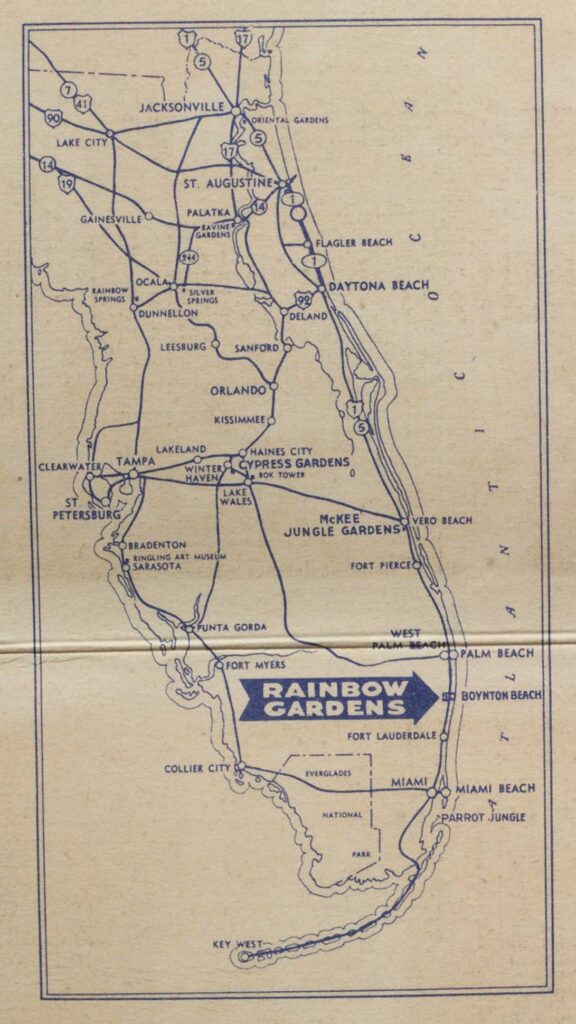
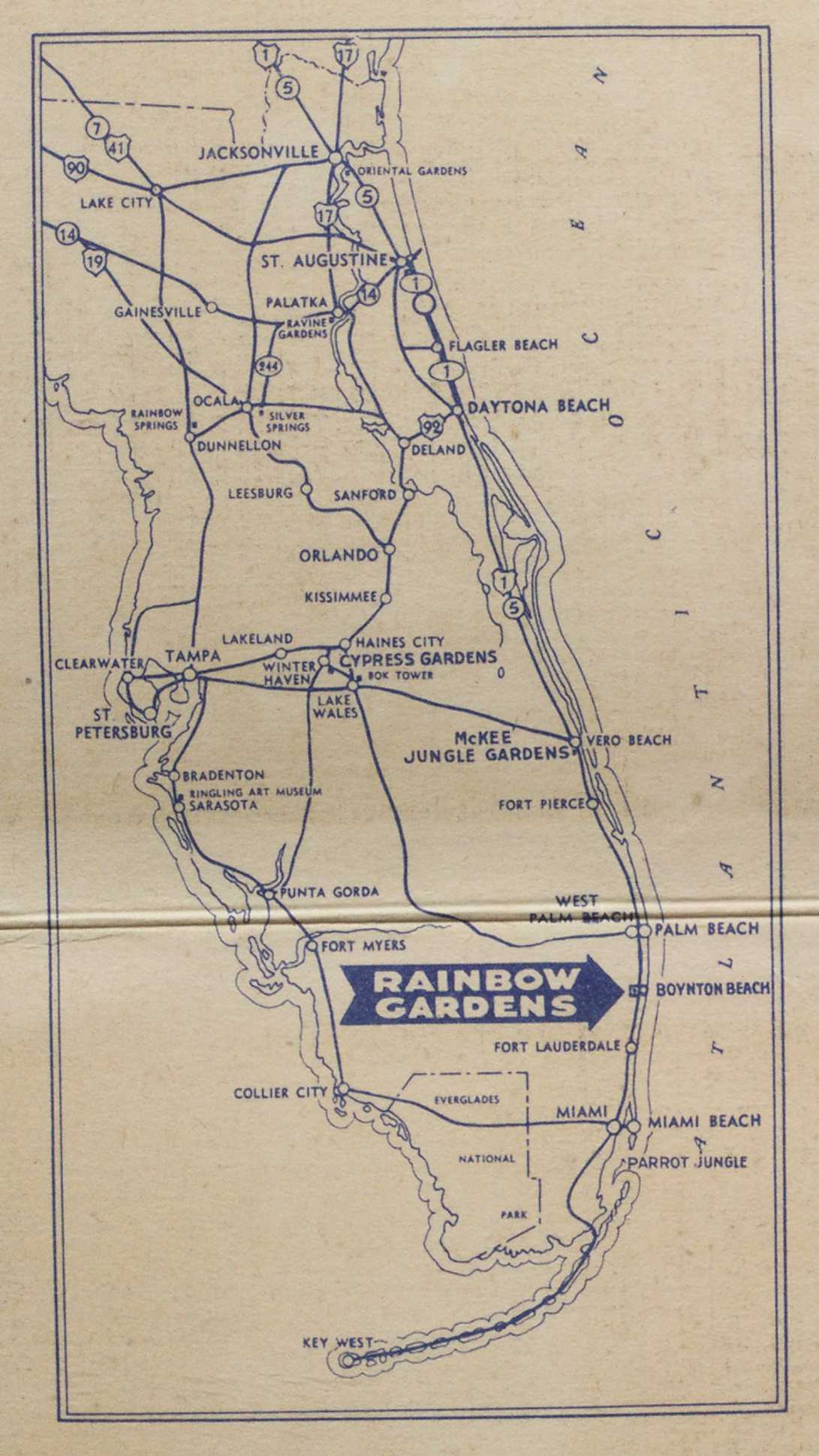
Florida map showing Rainbow Tropical Gardens

Decline and Transformation

By the late 1950s, the tourist economy of coastal Florida began to shift. The construction of the interstate highway system diverted travelers away from U.S. 1, reducing the steady stream of visitors who once stopped in Boynton Beach. Larger and more heavily advertised attractions, such as Cypress Gardens near Winter Haven, began to dominate the market. Like many independent roadside sites, Rainbow Tropical Gardens could not compete.

The property gradually closed, and much of the land was redeveloped. However, the main building, which had served as the garden’s entrance and café, survived. It was adapted for new use and today operates as Benvenuto’s Catering and Restaurant, a well-known Boynton Beach landmark. The restaurant retains many original architectural elements, including stucco walls, Spanish tile roofing, and arched porticos that date back to the garden’s early years.

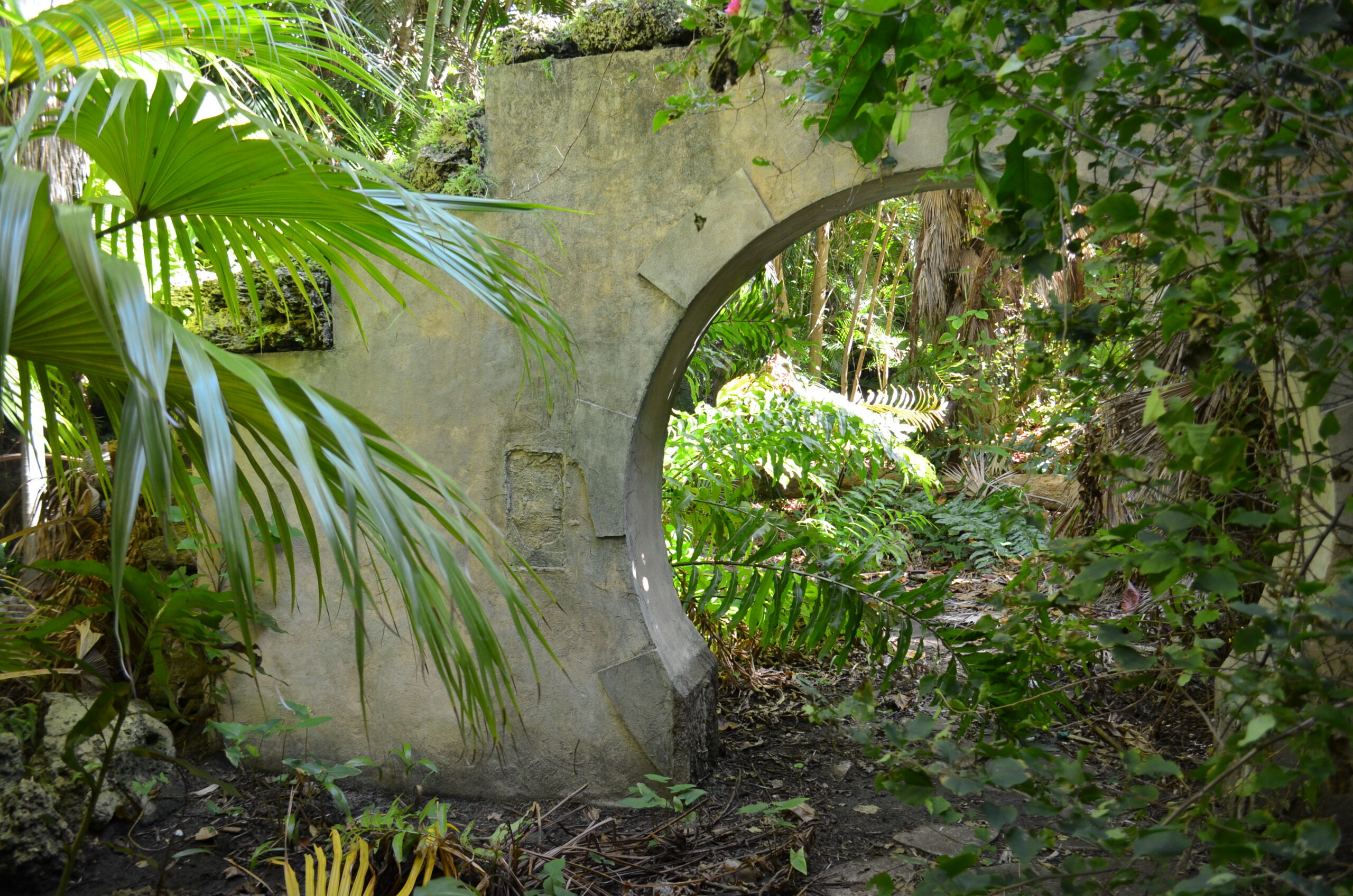
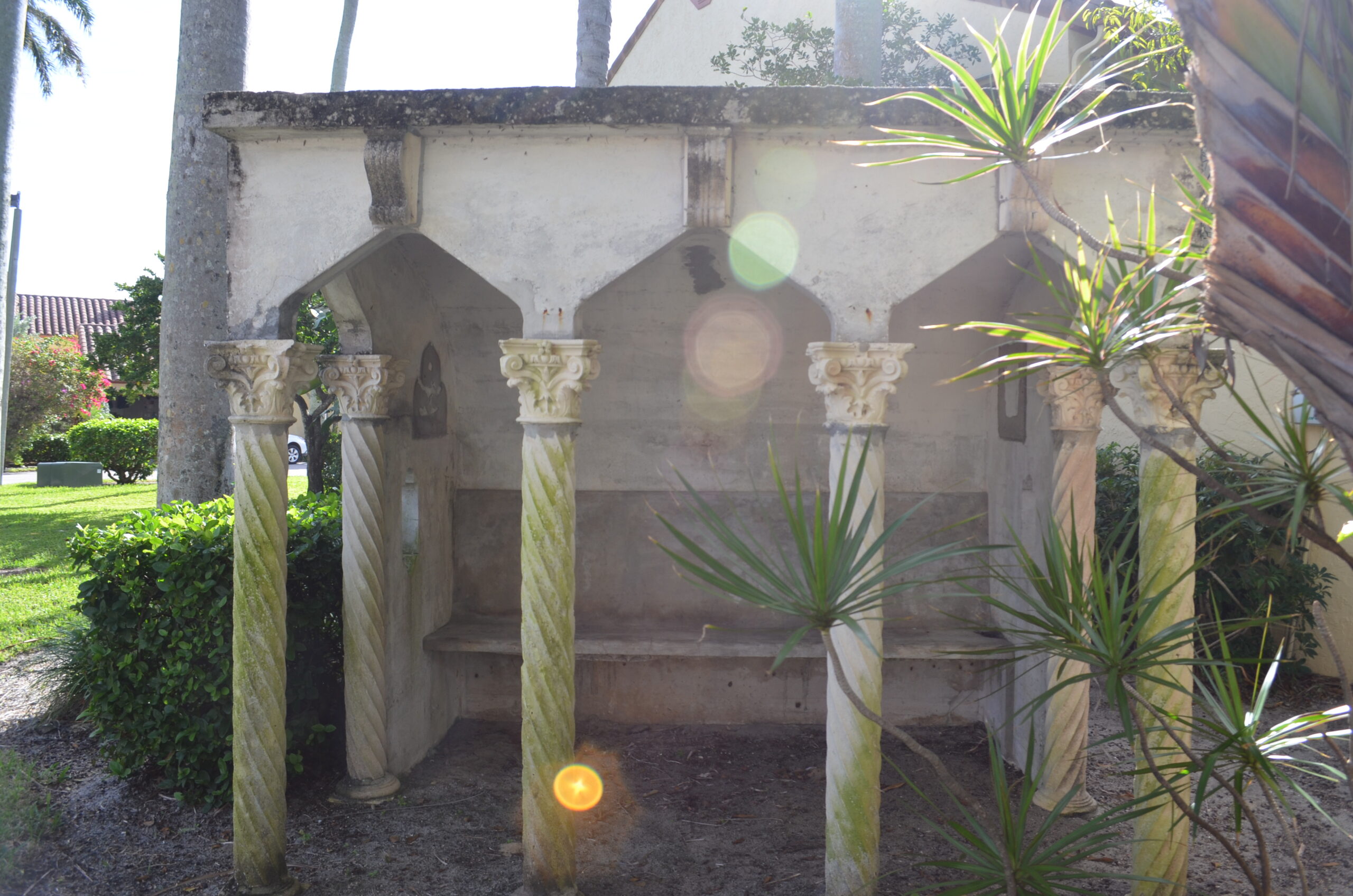
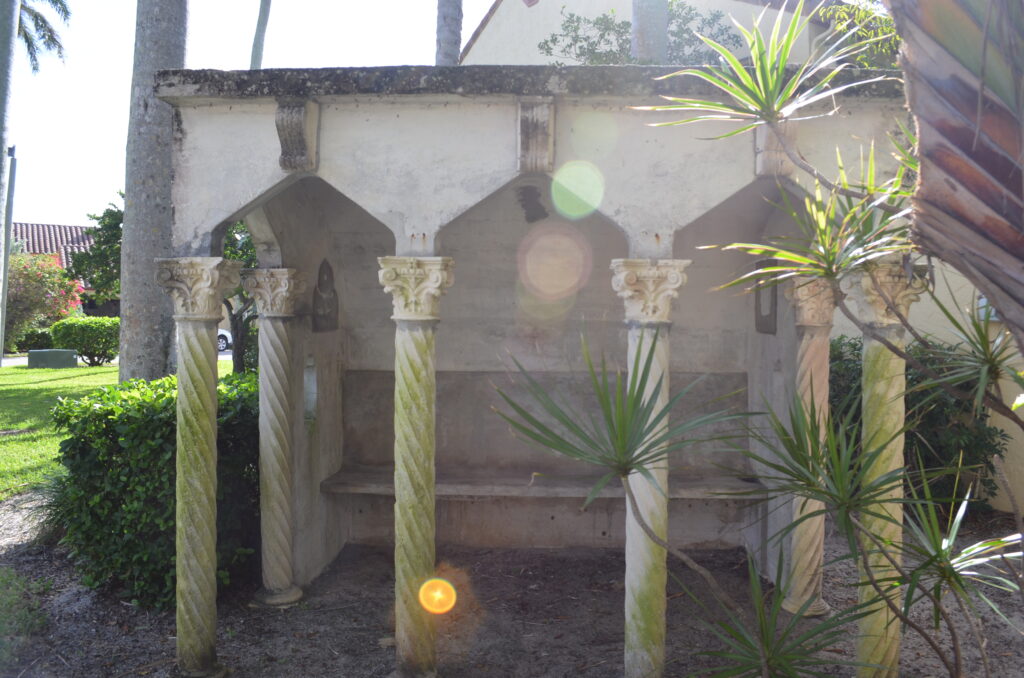
The surrounding area became part of the Dos Lagos residential community, which occupies what was once the broader landscape of the gardens. Within that neighborhood, a few of the original garden structures still exist. Stone gazebos, walls, and fragments of pathways can still be found amid newer development, quietly preserving traces of Miller’s original design.
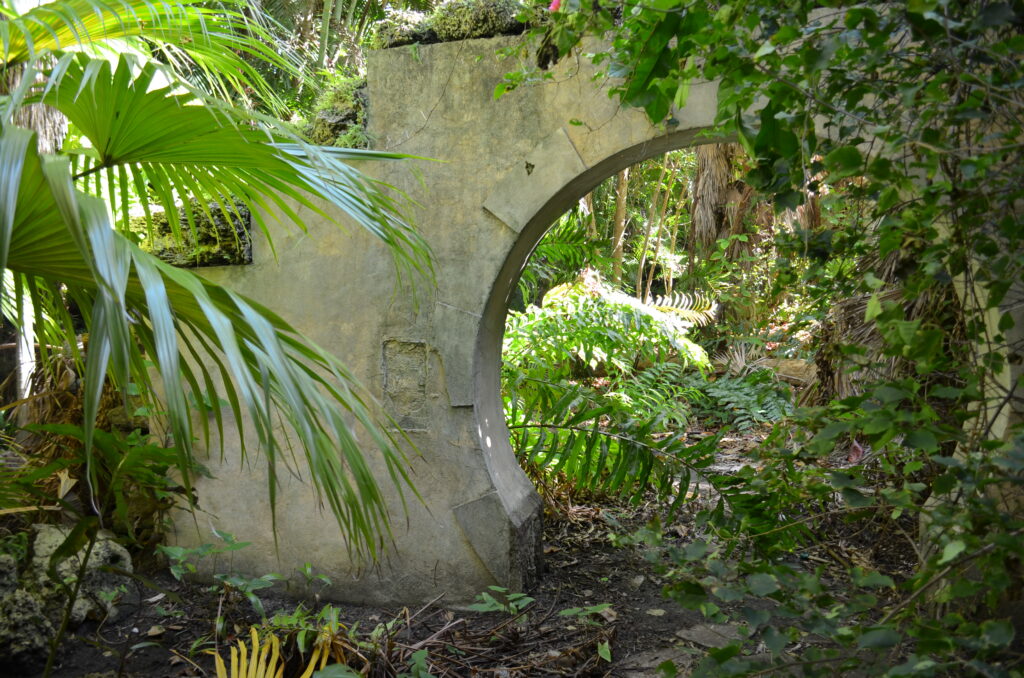
Remnant arch from Rainbow Tropical Gardens

Clyde Miller’s Legacy

Clyde O’Brien Miller’s work at Rainbow Tropical Gardens reflected his belief that horticulture was an art form capable of transforming the everyday environment. His skill as a gardener and builder made him one of Boynton Beach’s early creative figures. Although Miller was not trained as an architect, his collaboration with the Mizner aesthetic and his ability to blend structure and vegetation placed him within the larger tradition of Florida’s garden designers.

Miller’s influence extended beyond the physical site. His approach to tropical landscaping anticipated later trends in South Florida design, where color, texture, and native flora became central features of residential and public gardens. Even after the gardens closed, his example inspired other nurserymen and landscapers in the region.
Enduring Significance

Rainbow Tropical Gardens stood for three decades as a symbol of South Florida’s beauty and enterprise. It showcased the possibilities of tropical horticulture at a time when the region was defining its identity as a tourist paradise. The site’s history connects Boynton Beach to the broader story of Florida’s roadside culture and the individuals who shaped it through imagination and labor.

Although much of the original garden has vanished, the survival of Benvenuto’s Restaurant and several of Miller’s stone structures ensures that the spirit of Rainbow Tropical Gardens has not completely disappeared. For residents of the Dos Lagos community, the memory of the gardens remains embedded in the landscape itself.
Park Shores Manor: Boynton’s first Townhouse/Condominium Project

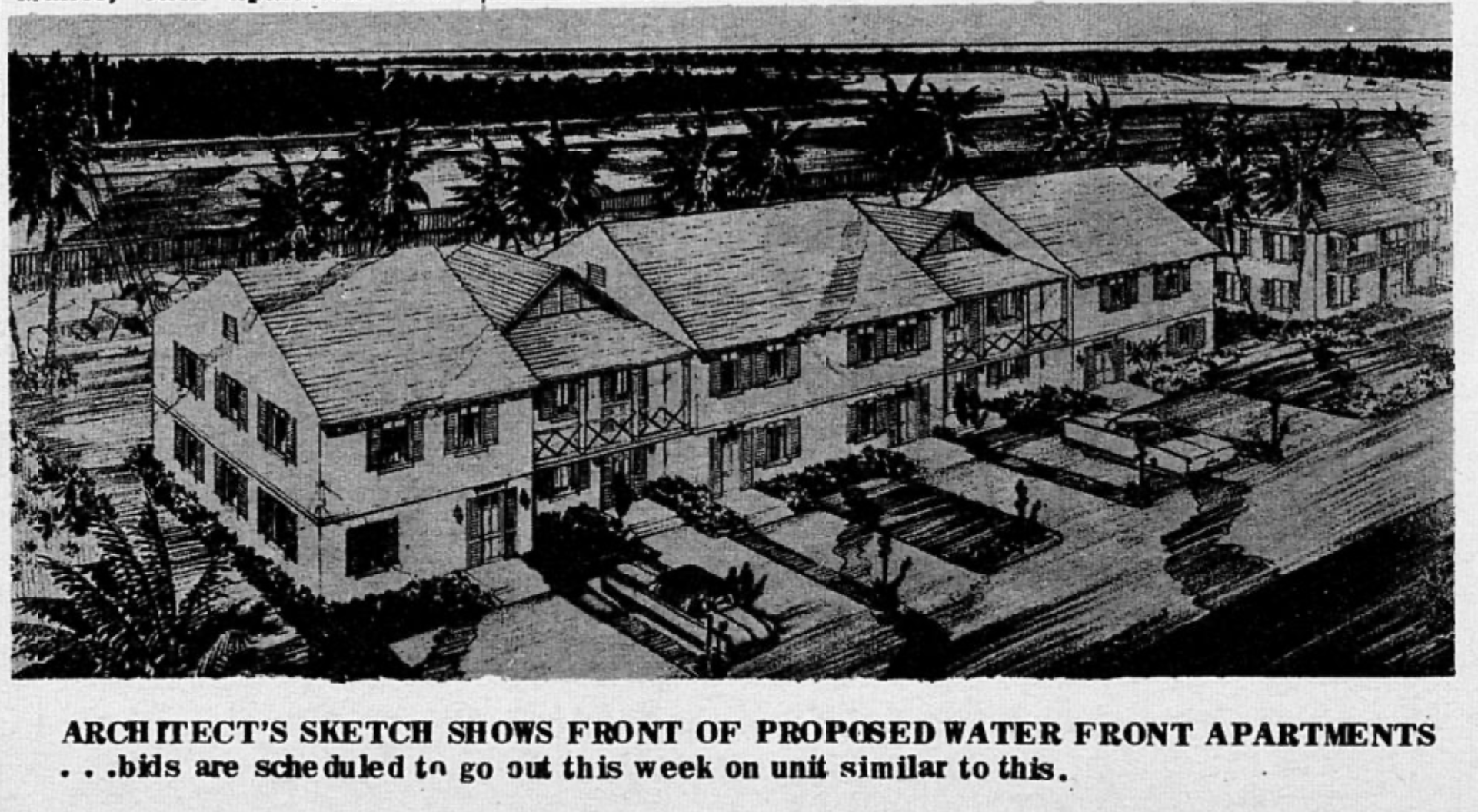
In 1963, Boynton Beach entered a new era of residential growth when former mayor J. Willard “Bill” Pipes announced plans for a $3.5 million condominium complex to be built along the west side of the Lake Worth Lagoon between Northeast 10th and 12th Avenues. The project, called Park Shores Manor, was planned as a 23-building community of two-story residences, totaling 117 living units. It represented one of Boynton Beach’s first ventures into the townhouse and condominium style of living, a concept still new to most of Florida at the time. Pipes, who had been a Pepsi-Cola executive before returning to local business, saw in Boynton Beach the ideal setting for a modern, self-contained residential community that combined independence with shared amenities.

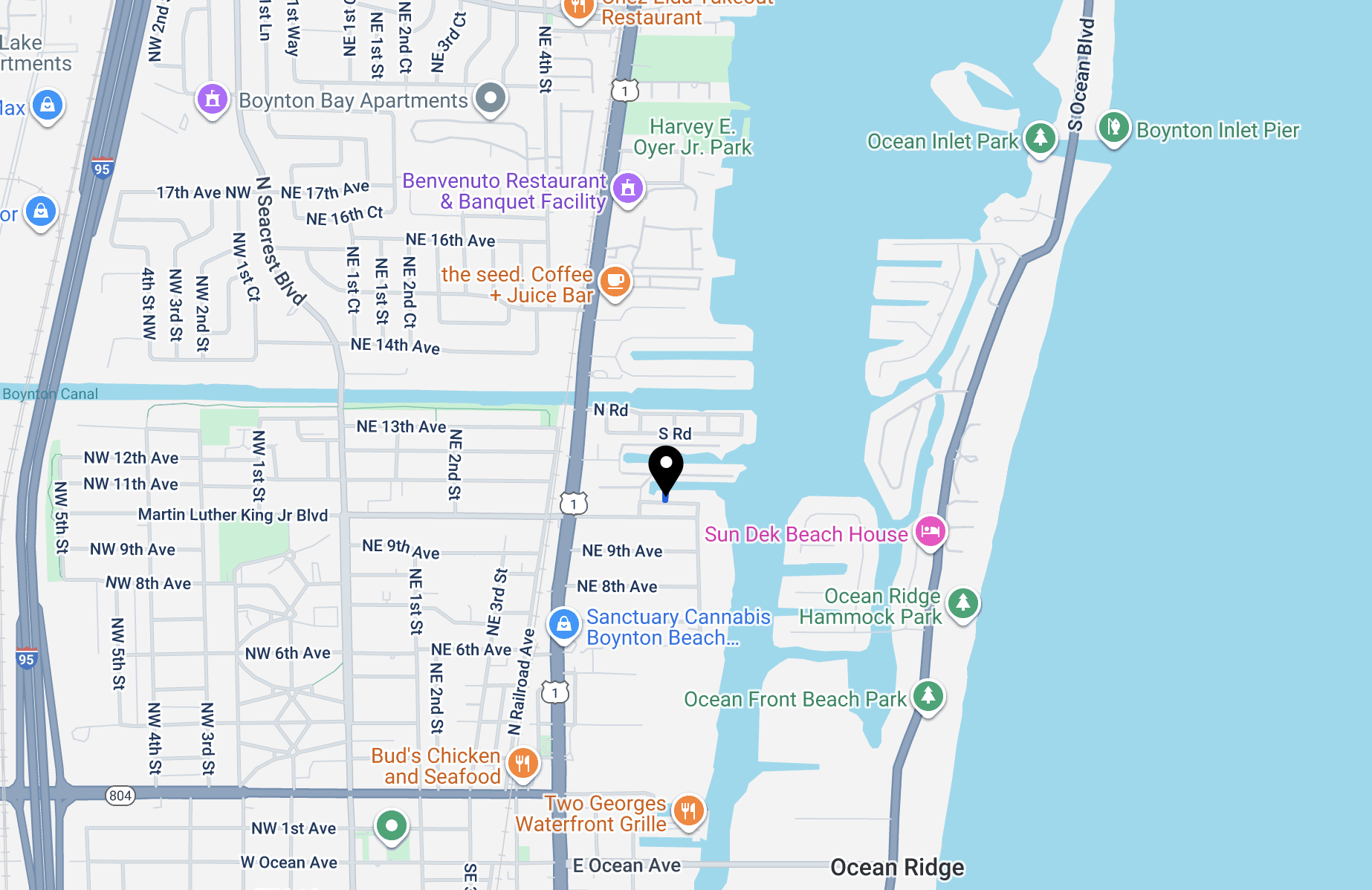
Palm Beach architect John Stetson designed the project in a “tropical, island-type” style with a Mediterranean influence. The homes were organized as townhouses with living rooms and kitchens on the first floor and bedrooms on the second. Each building faced either Lake Worth (today’s Intracoastal Waterway) or a man-made canal and included a private dock and patio. Walls and hedges separated the units, creating privacy while maintaining a sense of community. The four-acre property was located almost opposite the Boynton Inlet, offering quick access to the Intracoastal Waterway and the Atlantic Ocean.


Pipes emphasized that Park Shores Manor would be built as a true condominium, a legal arrangement that allowed each owner to hold title to their individual unit and the land beneath it. This differed from the cooperative housing model, where residents owned shares in a corporation rather than their own property. He explained that this structure gave owners the freedom to obtain mortgages, buy and sell their homes independently, and build personal equity. It was a new form of home ownership that fit the optimism of postwar Florida and the growing desire for maintenance-free living near the water.
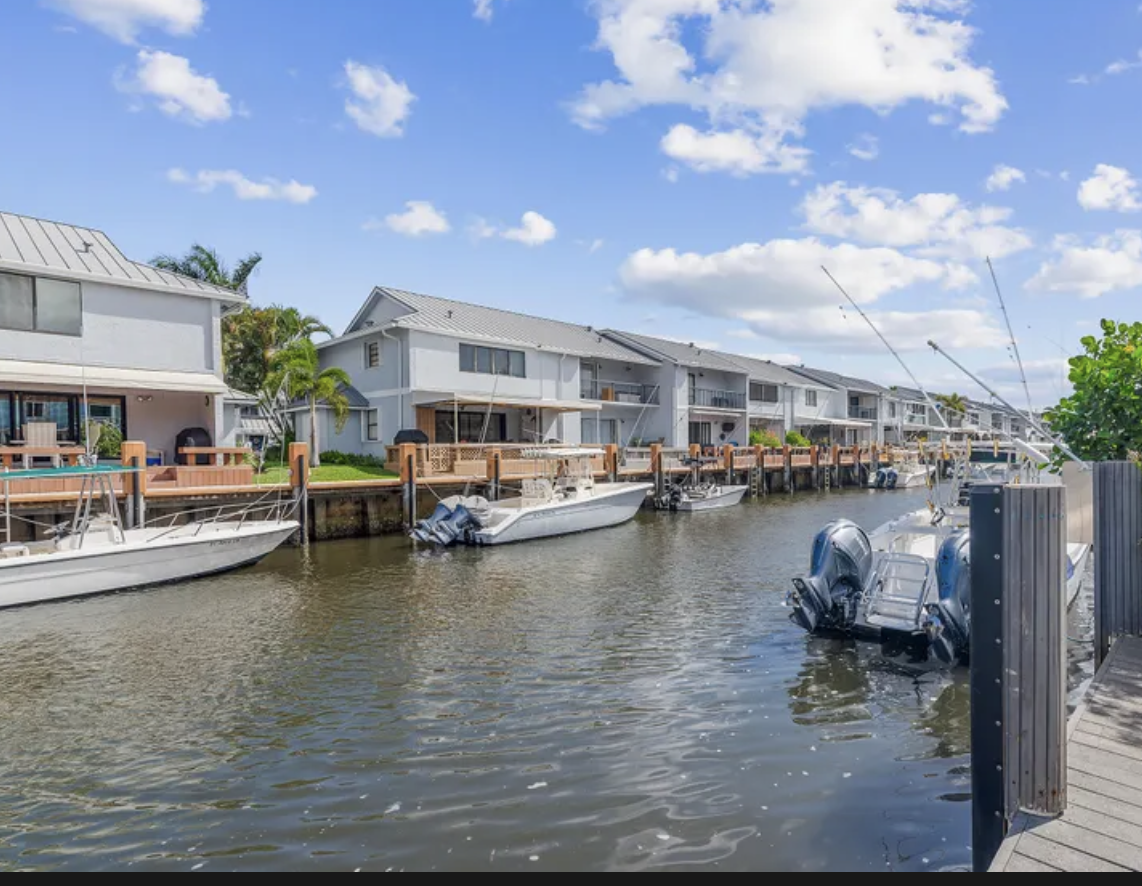
The plans included a shared clubhouse, putting green, swimming pool, and shuffleboard area. Units were offered in one-, two-, and three-bedroom models priced from $14,000 to $24,000. Each home featured individual air conditioning and heating, built-in television aerials, and access to 75-foot-wide canals. The first building, containing six units, was projected to cost about $90,000, excluding land costs. Construction was expected to begin in mid-1963, and future phases would proceed according to sales. The Jay Willard Corporation, headed by Pipes, managed both construction and sales.

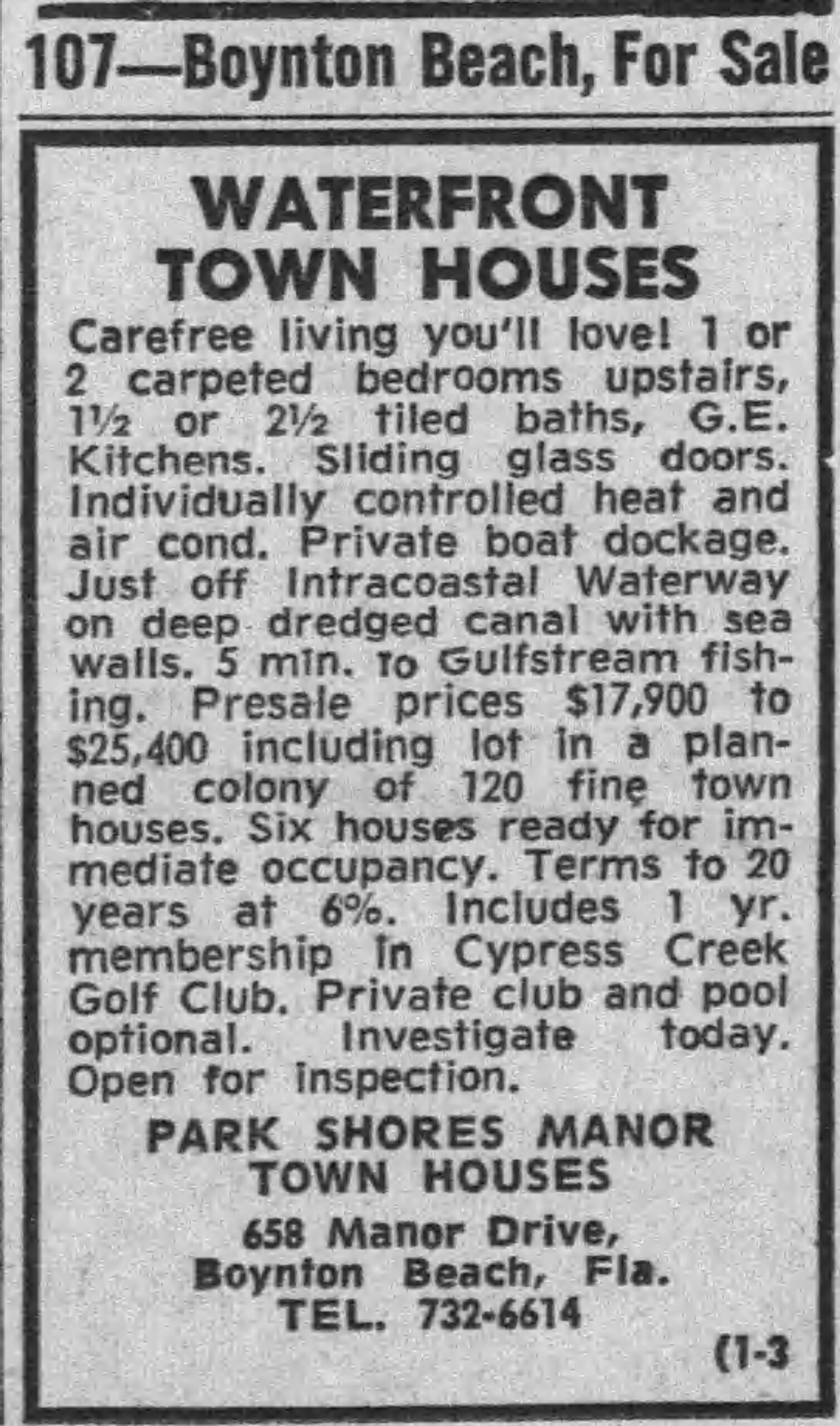
By early 1965, Park Shores Manor Town Houses had become a reality. A newspaper advertisement that January invited buyers to enjoy “carefree living” in a waterfront community. The ad described one- and two-bedroom townhouses with carpeted bedrooms, tiled baths, G.E. kitchens, and sliding glass doors. Each home had individually controlled heat and air conditioning, private boat dockage, and access to deep, dredged canals just off the Intracoastal Waterway. The community was only five minutes from Gulf Stream fishing grounds.

Presale prices ranged from $17,900 to $25,400, including the lot. Six homes were ready for immediate occupancy, with financing available for up to twenty years at six percent interest. Ownership included a one-year membership to the Cypress Creek Golf Club, and residents could join a private club and pool if they wished. The ad described a planned colony of 120 townhouses at 658 Manor Drive in Boynton Beach, offering an organized yet independent lifestyle along the water.


Park Shores Manor combined modern construction with coastal living. It offered residents the privacy of individual ownership with the comfort of shared amenities. The architecture, setting, and ownership model reflected Florida’s changing identity in the 1960s, when towns like Boynton Beach began transforming from quiet coastal communities into planned residential centers. Pipes and his team built more than a set of homes. They established one of Boynton Beach’s earliest examples of condominium-style living, setting a pattern for future developments that would define the region’s growth for decades.

Fun fact: Rider Road is named for Willard Pipes’ wife Jean Rider Pipes. Today the townhouses sell for $275-$400,000.

It’s a little piece of paradise; one that makes Boynton Beach so special.