Rainbow Tropical Gardens: A Roadside Paradise in Boynton Beach
In the first half of the twentieth century, the coastal region of South Florida experienced rapid transformation. Railroads, highways, and the land boom of the 1920s brought new towns and tourism to areas like Boynton Beach. Along U.S. Highway 1, travelers encountered a landscape filled with nurseries, citrus groves, and small attractions that promoted Florida’s image as a lush, tropical destination. Among these, one of the most memorable was Rainbow Tropical Gardens, created and maintained by Clyde O’Brien Miller, a gifted horticulturist whose imagination and craftsmanship shaped the site into one of Boynton Beach’s earliest and most beloved landmarks.
Clyde O’Brien Miller and His Vision
Clyde O’Brien Miller was born in 1885 and developed an early interest in tropical plants and landscape design. He was part of a generation of horticulturists who viewed Florida not only as fertile ground for agriculture but also as a living canvas for artful gardens. Before establishing his own property, Miller worked on the gardens of Addison Mizner’s Cloister Inn in Boca Raton, where he absorbed Mizner’s use of Mediterranean Revival architecture and romantic garden design. This experience strongly influenced his later work.
By the late 1920s, Miller had settled in Boynton Beach and purchased land along U.S. 1 just north of downtown. He opened Rainbow’s End Nursery, which sold tropical plants and decorative landscape materials. Miller’s passion for creating beautiful spaces soon transformed the nursery into something larger. He began developing the grounds into Rainbow Tropical Gardens, a series of landscaped pathways, water features, and floral displays that showcased the variety and vibrancy of Florida’s tropical vegetation. Miller’s vision combined horticulture and art in a way that appealed to both tourists and local residents.
Design and Features
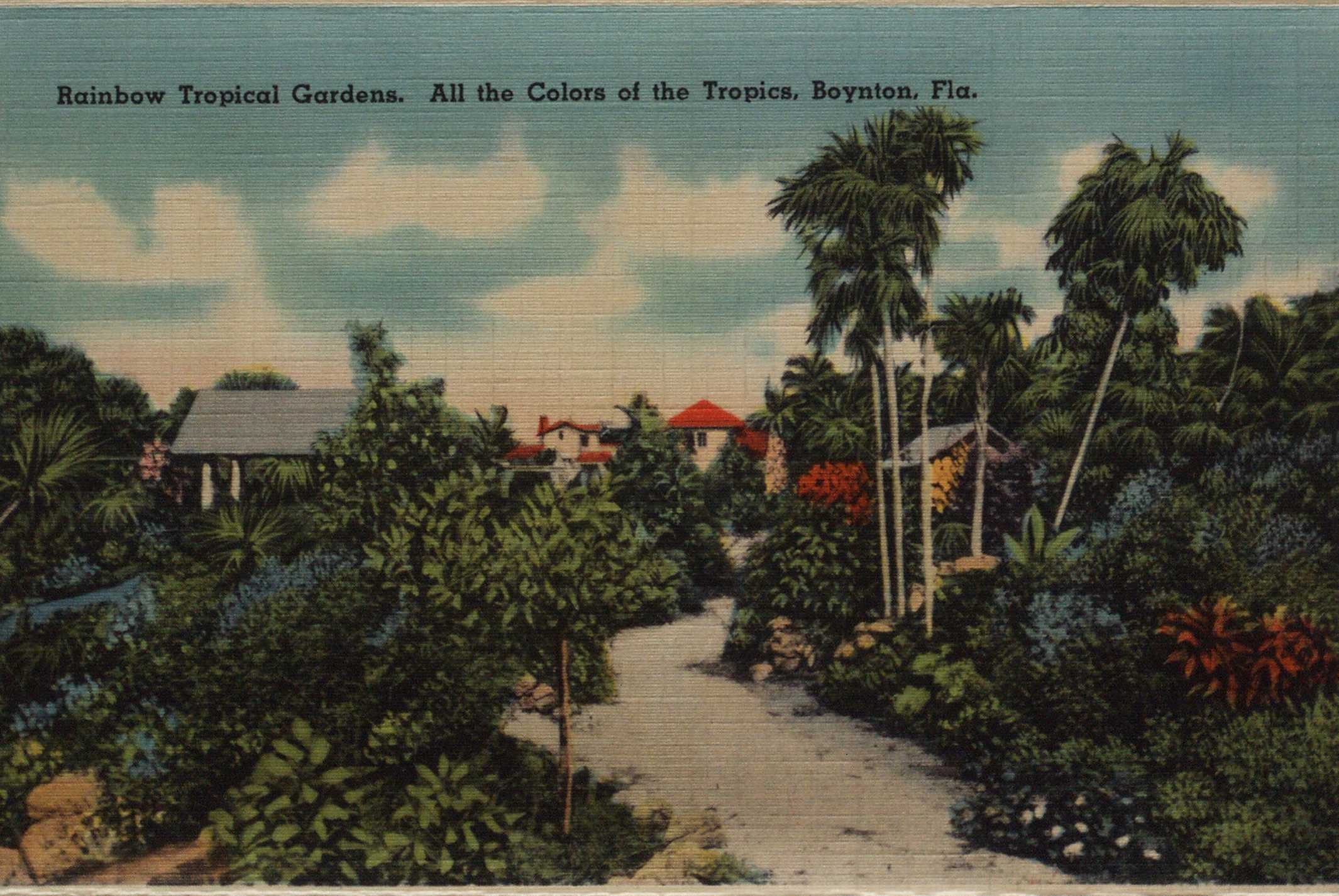
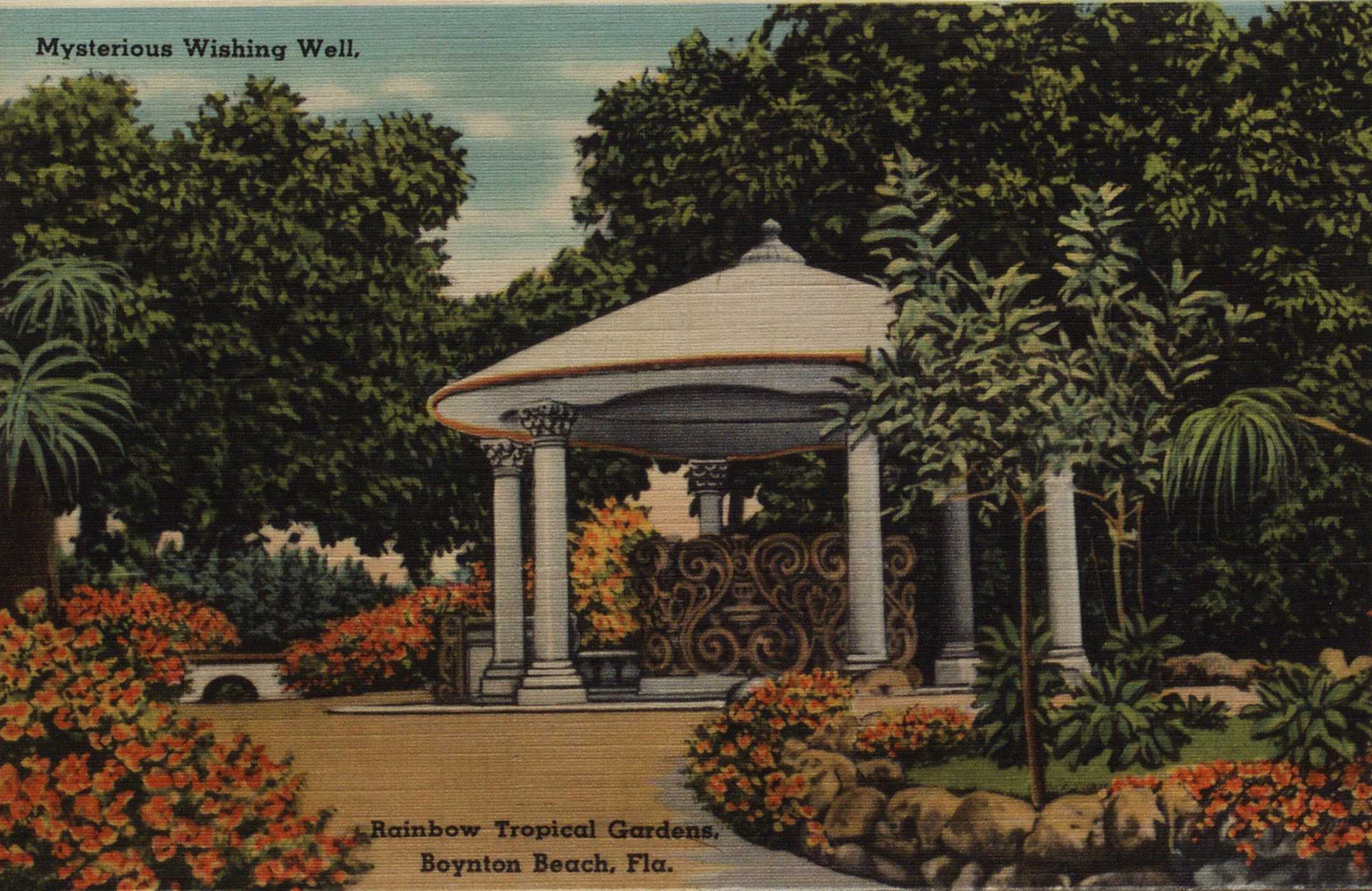
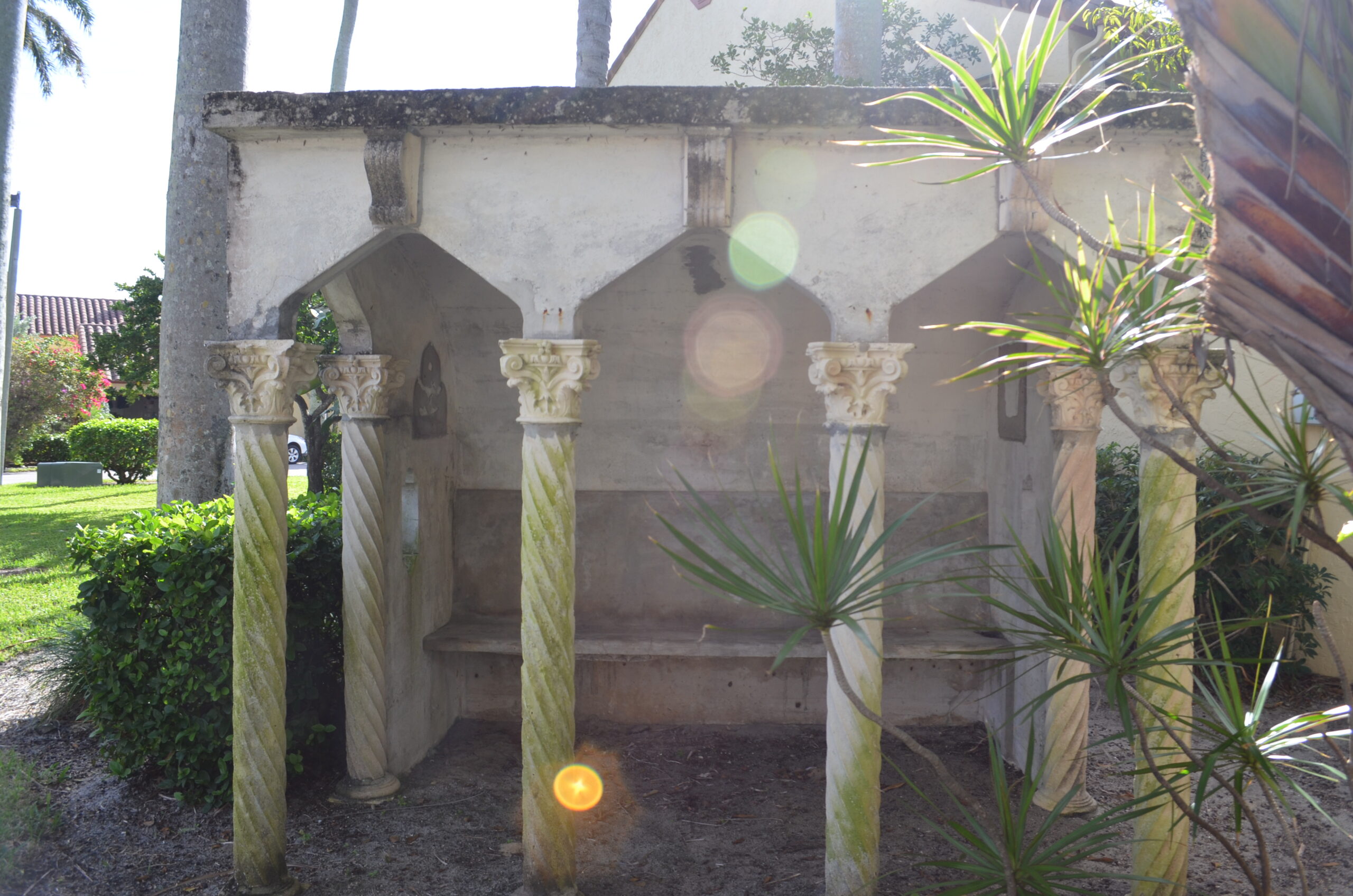
The gardens reflected Miller’s mastery of planting design and his appreciation for the visual power of color and form. He arranged winding footpaths that led through beds of hibiscus, crotons, bougainvillea, and palms. Visitors followed these trails past lagoons, fountains, and bridges, each carefully placed to frame the surrounding landscape. Stone gazebos, archways, and pergolas offered shade and a sense of discovery, while reflecting pools mirrored the vibrant foliage overhead.
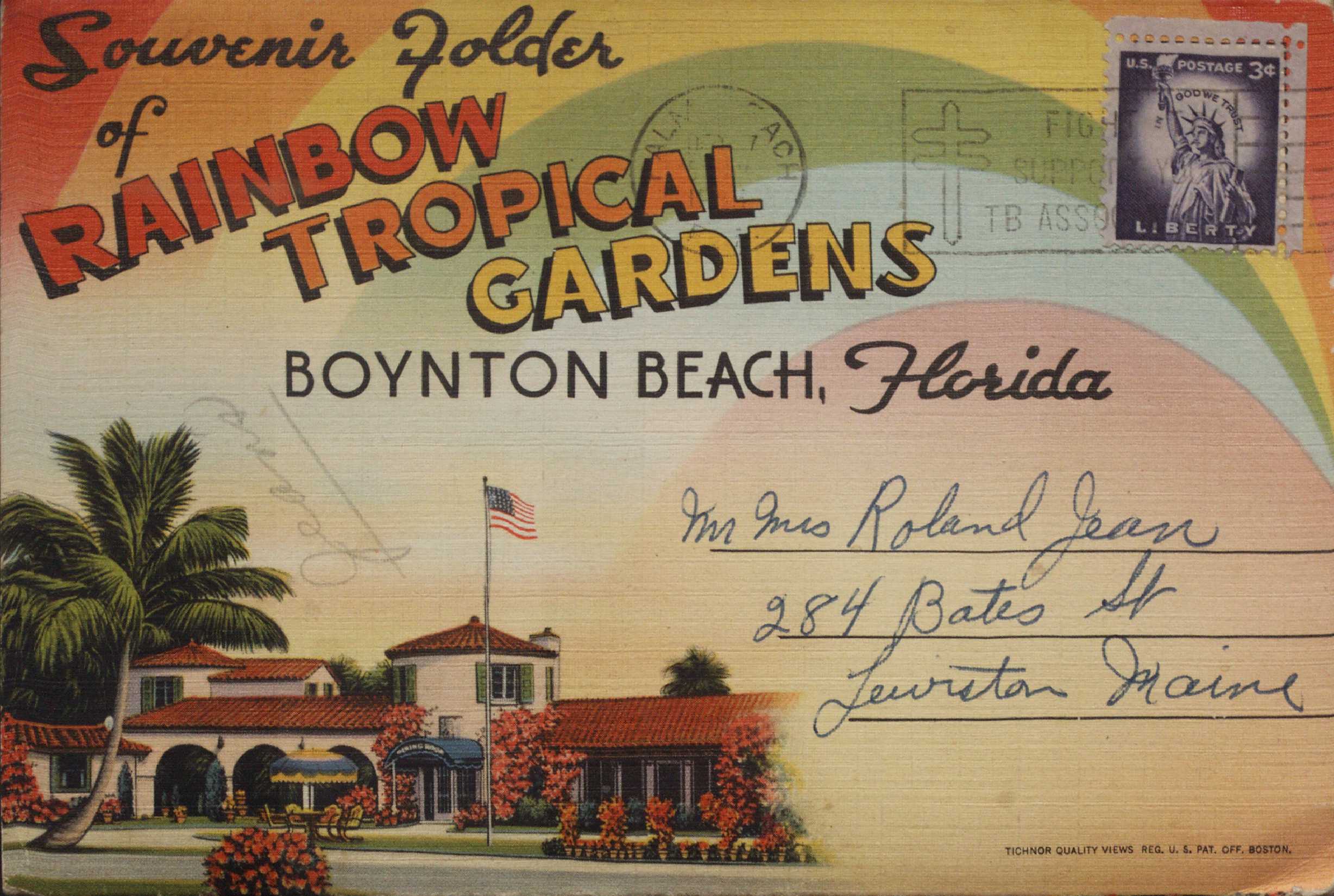
At the front of the property stood Mediterranean Revival–style buildings that served as the gift shop and café. Local tradition and historical recollections suggest that Addison Mizner, who had already established himself as Palm Beach County’s most famous architect, either designed or inspired these structures. The combination of stucco walls, barrel tile roofs, and arched openings harmonized perfectly with the surrounding plantings.
Miller himself was responsible for much of the stonework and ornamental detailing throughout the grounds. His craftsmanship gave the gardens a handmade quality that distinguished them from purely commercial roadside attractions. Everything about the property reflected careful planning and artistic intent.
The Tourist Attraction Years
During the 1930s and 1940s, Rainbow Tropical Gardens became a celebrated stop for travelers driving the Dixie Highway and later U.S. 1. Visitors walked through the gardens, took photographs, and purchased tropical plants to ship north. The site appeared on linen postcards distributed across the country, often labeled with its motto, “All the Colors of the Tropics.” These colorful images helped spread Boynton Beach’s reputation as a place of natural beauty.
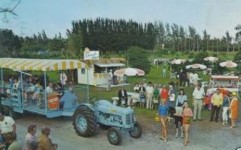
By the postwar years, Miller expanded the attraction to meet the expectations of modern tourists. The property included bird shows, alligators, and a Seminole Indian Village, reflecting the entertainment trends of the 1950s. Despite these additions, the heart of the gardens remained Miller’s landscapes and his commitment to horticultural display.
Rainbow Tropical Gardens also functioned as a community landmark. Local families held gatherings on the grounds, and the gardens served as a backdrop for countless photographs and wedding portraits. It represented the idealized Florida landscape that residents and visitors alike associated with sunshine, color, and abundance.
Florida map showing Rainbow Tropical Gardens
Decline and Transformation
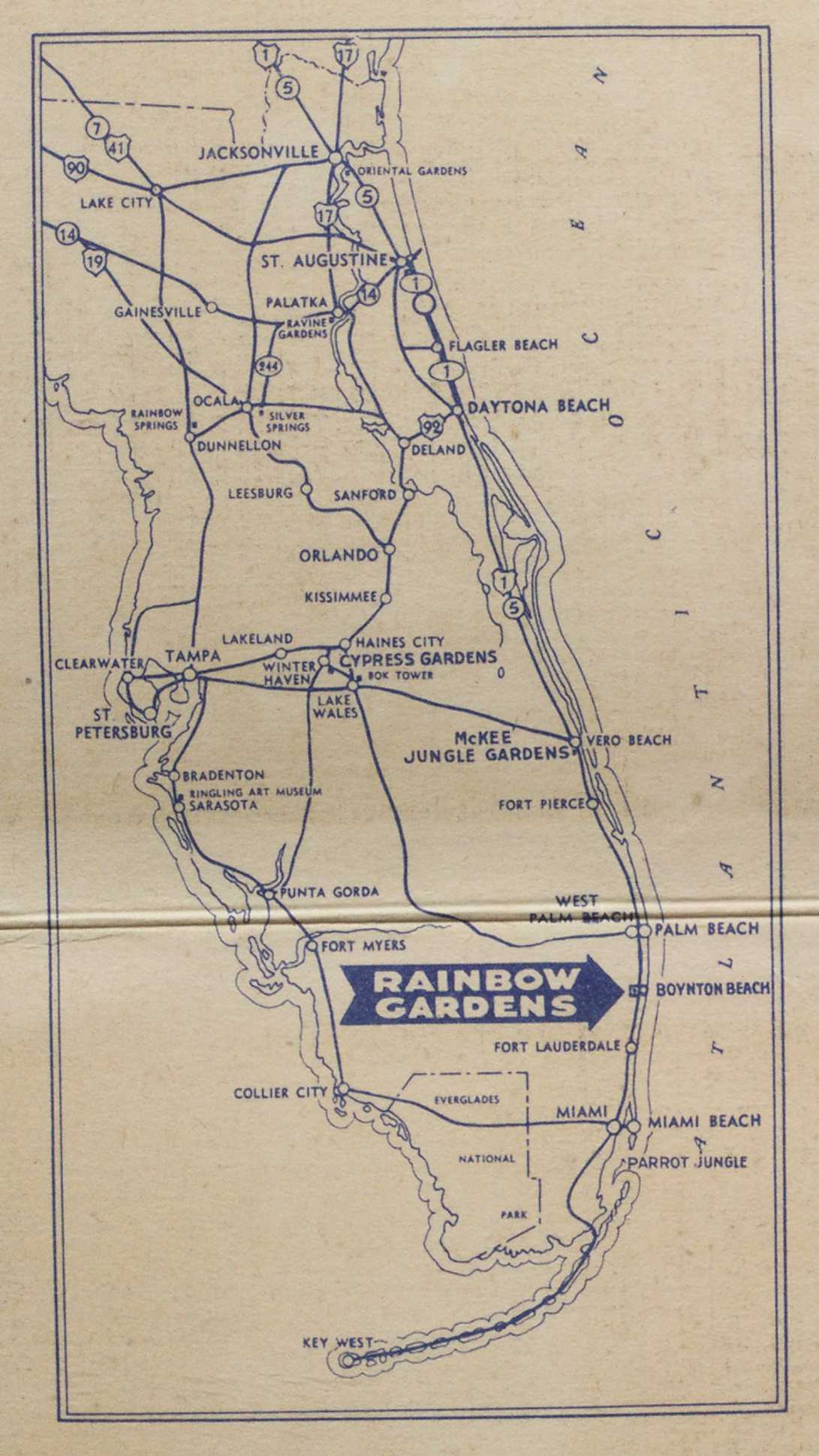
By the late 1950s, the tourist economy of coastal Florida began to shift. The construction of the interstate highway system diverted travelers away from U.S. 1, reducing the steady stream of visitors who once stopped in Boynton Beach. Larger and more heavily advertised attractions, such as Cypress Gardens near Winter Haven, began to dominate the market. Like many independent roadside sites, Rainbow Tropical Gardens could not compete.
The property gradually closed, and much of the land was redeveloped. However, the main building, which had served as the garden’s entrance and café, survived. It was adapted for new use and today operates as Benvenuto’s Catering and Restaurant, a well-known Boynton Beach landmark. The restaurant retains many original architectural elements, including stucco walls, Spanish tile roofing, and arched porticos that date back to the garden’s early years.
The surrounding area became part of the Dos Lagos residential community, which occupies what was once the broader landscape of the gardens. Within that neighborhood, a few of the original garden structures still exist. Stone gazebos, walls, and fragments of pathways can still be found amid newer development, quietly preserving traces of Miller’s original design.
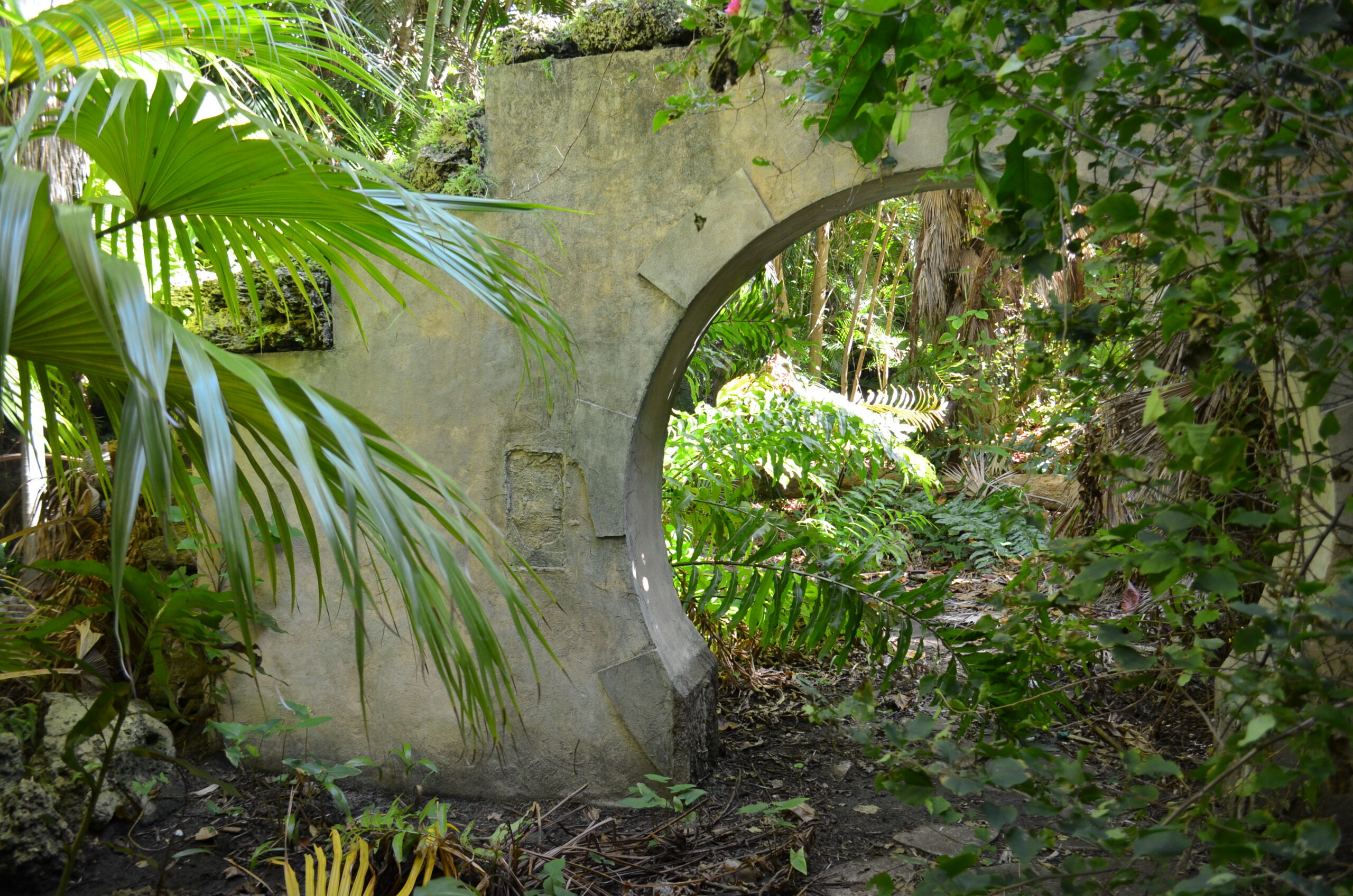
Remnant arch from Rainbow Tropical Gardens
Clyde Miller’s Legacy
Clyde O’Brien Miller’s work at Rainbow Tropical Gardens reflected his belief that horticulture was an art form capable of transforming the everyday environment. His skill as a gardener and builder made him one of Boynton Beach’s early creative figures. Although Miller was not trained as an architect, his collaboration with the Mizner aesthetic and his ability to blend structure and vegetation placed him within the larger tradition of Florida’s garden designers.
Miller’s influence extended beyond the physical site. His approach to tropical landscaping anticipated later trends in South Florida design, where color, texture, and native flora became central features of residential and public gardens. Even after the gardens closed, his example inspired other nurserymen and landscapers in the region.
Enduring Significance
Rainbow Tropical Gardens stood for three decades as a symbol of South Florida’s beauty and enterprise. It showcased the possibilities of tropical horticulture at a time when the region was defining its identity as a tourist paradise. The site’s history connects Boynton Beach to the broader story of Florida’s roadside culture and the individuals who shaped it through imagination and labor.
Although much of the original garden has vanished, the survival of Benvenuto’s Restaurant and several of Miller’s stone structures ensures that the spirit of Rainbow Tropical Gardens has not completely disappeared. For residents of the Dos Lagos community, the memory of the gardens remains embedded in the landscape itself.